
Local Governments Prepare WFH Schemes to Save Fuel Amid War Impact
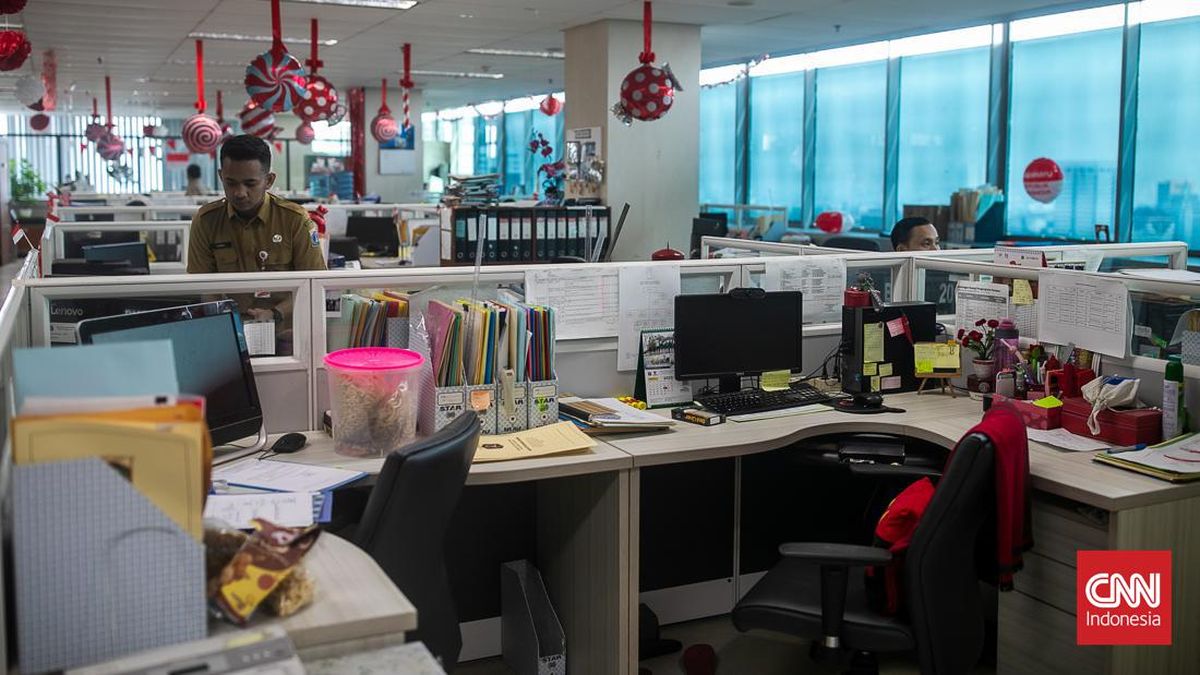
The proposal to implement work-from-home (WFH) schemes has emerged due to the war in the Middle East region following the United States (US)-Israel attacks on Iran.
The central and local governments aim to apply WFH schemes to save energy, particularly petroleum fuel (BBM).
Crude oil supplies are hampered by the blockade in the Strait of Hormuz. Global crude oil prices continue to surge after the war erupted in the Gulf region since 28 February.
Several regions, from provincial to regency/city levels in Indonesia, have declared readiness and even implemented the WFH system.
Jakarta Provincial Government Prepares to Implement WFH
Jakarta Governor Pramono Anung explained that this policy is being prepared to respond to geopolitical dynamics that directly impact BBM supplies and prices.
In response to the national energy-saving initiative, Pramono assured that aligned steps will be taken by the Jakarta Provincial Government apparatus.
He emphasised that the Provincial Government will follow directives from the Central Government.
“However the war in Iran drags on too long, it will certainly exert pressure on energy supplies, especially for gas and also for BBM,” Pramono stated at the National Monument (Monas) area, Central Jakarta, on Tuesday (17/3).
Tangerang Regency Prepares 50% WFH
Tangerang Regency Government also plans to implement a WFH work system for Civil Servants (ASN) to save BBM.
Tangerang Regent Maesyal Rasyid said his side is preparing the technical policy for implementing WFH and it will soon be formulated in the near future.
In its implementation, employees working from home are still required to conduct attendance twice, namely at the start of work at 07.30 WIB and at the end of work at 16.00 WIB.
“The President has issued a statement for us to conserve energy. Therefore, we will soon formulate policies regarding this WFH,” Maesyal said on Wednesday (25/3).
Maesyal explained that this policy will target 50% of ASN who do not directly deal with public services.
Meanwhile, employees tasked with direct public services will continue working normally or 100%. Among them are ASN at the sub-district, village, and ward levels.
WFH also applies to personnel from the Population and Civil Registration Service (Disdukcapil), Regional Revenue Agency (Bapenda), Investment and One-Stop Integrated Services Agency (DPMPTSP), Transportation Service, Environmental Service (DLH), Civil Service Police Unit (Satpol PP), and Regional Disaster Mitigation Agency (BPBD).
“ASN who directly face the public will remain 100% as usual because they carry out duties to the regions and communities,” he clarified.
East Java Provincial Government WFH Every Wednesday
Meanwhile, the East Java Provincial Government has decided to implement WFH for ASN for one day per week, namely every Wednesday.
East Java Governor Khofifah Indar Parawansa said this Wednesday WFH policy is to suppress BBM consumption.
“Starting next week, next week’s WFH falls on Wednesday,” Khofifah said in Surabaya on Wednesday (25/3).
Khofifah deliberately avoided WFH on Fridays to prevent ASN from tending to take long holidays that could potentially increase BBM use due to tourist mobility or returning home.
“If it’s a long weekend, which was originally hoped to be part of BBM efficiency, it wouldn’t add savings or not,” she stated.