
Local Food Research as a Key to Innovation as Campus–Industry Collaboration Becomes Increasingly Essential
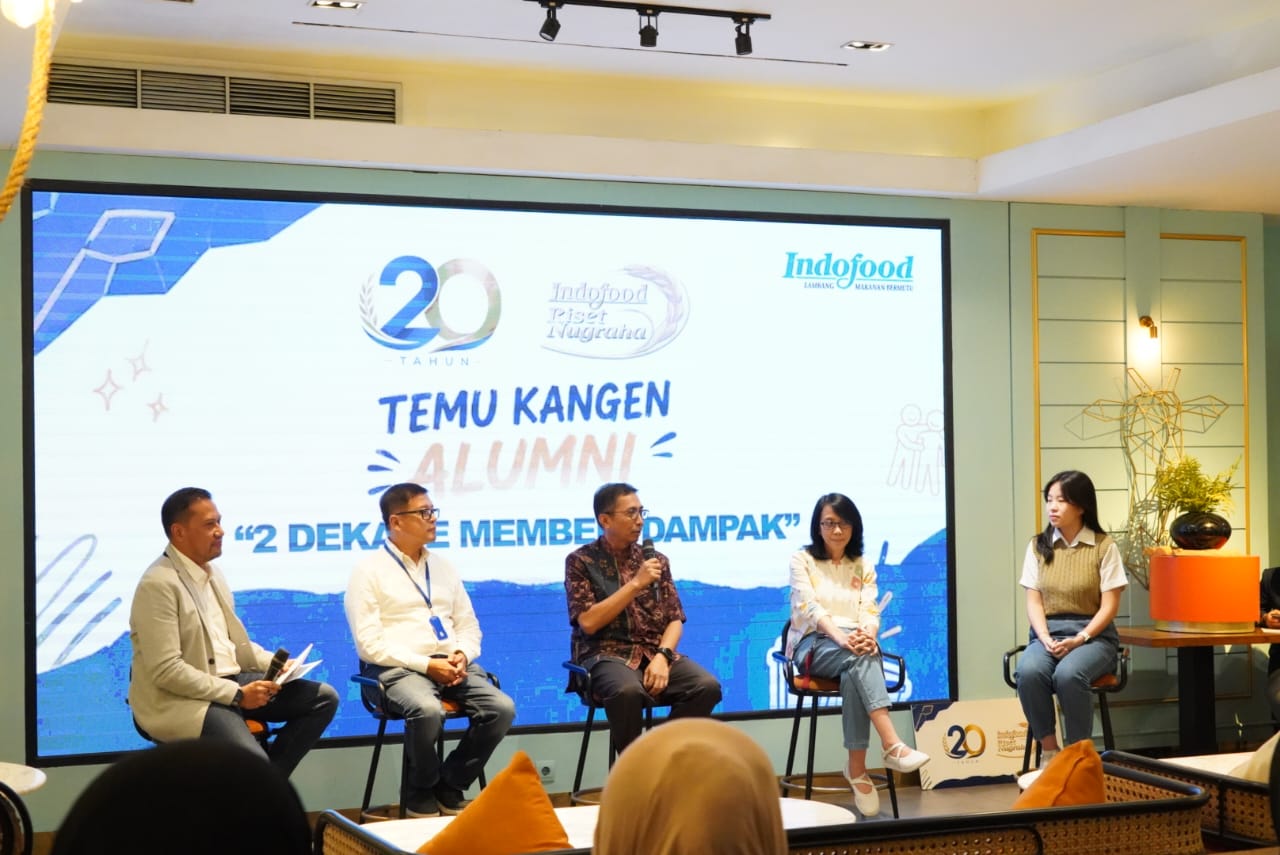
Potential of Indonesia’s local foods remains vast as a future food solution. However, amid food security challenges, changing consumption patterns and the need for health-based innovation, research cannot stop at the laboratory alone. Collaboration between business and academia is increasingly needed so that research results can develop into innovations that are relevant, applicable, and have real societal impact. This aligns with efforts to nurture a new generation of researchers who are not only academically strong but also innovative, adaptive, and possess a scientific-preneur mindset. In this context, developing agriculture research based on local potential and wisdom is deemed a strategic sector to strengthen in Indonesia. Strengthening the local food research ecosystem is partly pursued through the Indofood Riset Nugraha (IRN) programme. The undergraduate research support programme developed by PT Indofood Sukses Makmur Tbk has this year entered two decades of operation. It was launched in 2006 as a continuation of the Bogasari Nugraha Programme started in 1998. IRN is one of the programmes for developing human resources in food research that has consistently run for 20 years. Head of Corporate Communications PT Indofood Sukses Makmur Tbk, Stefanus Indrayana, said the programme is expected to continue to encourage the birth of a new generation of Indonesian researchers capable of providing solutions for the community. “This year, the Indofood Riset Nugraha Programme is entering its 20th year, a tangible manifestation of our commitment to supporting the spirit of Indonesia’s young researchers. Coinciding with National Awakening Day, we hope IRN can continue to inspire young researchers in Indonesia to become innovative scientific-preneurs ready to contribute to society and the nation, particularly in developing our local food potential into solutions and business opportunities with impact,” he said. Over two decades, IRN has received more than 8,300 research proposals and funded more than 1,100 student researches from more than 200 universities and higher education institutions in Indonesia, from Aceh to Papua. A Professor at IPB and Chair of the IRN Expert Team, Purwiyatno Hariyadi, said the younger generation has an important role in addressing Indonesia’s future food challenges. “To realise Indonesia Emas, we need a generation of researchers who are not only academically smart but also brave to explore and innovate, especially in optimising local potential and wisdom to generate future solutions,” he said. He noted Indonesia has abundant local foods and functional foods, but the challenge lies in turning research into solutions with broad impact. “The challenge is how research does not stop in the laboratory but can transform that potential into future food solutions that deliver a double impact: improving public health while spurring the livelihoods of local communities,” he explained. In addition to grant funding, IRN also involves multidisciplinary experts from various universities and the industry sector. Experts in food technology, socio-economics, agriculture, animal husbandry, nutrition and health, fisheries and marine science, genetics, and industry practitioners participate in the selection, mentoring, and evaluation process of student research results. Participants also receive soft-skills training to build researchers who are critical, creative, and resilient in facing the food industry’s developments. Over its 20-year journey, IRN has also built a cross-generational alumni network now working as researchers, academics, professionals, entrepreneurs, and drivers of food innovation in various regions and countries. One IRN alumnus, Prof. Fenny Martha Dwivany, now a Professor at ITB, said the experience of participating in IRN helped shape her critical and collaborative thinking in her research career. Another IRN alumnus from the 2017 cohort, now with Indofood’s R&D team, Mariska Priscilla, says the programme’s mentorship with a team of experts helped her see research as a solution relevant to industry and society. Other alumni, Ratu Salsabila Astrakusuma, now pursuing work as a scientific research enthusiast in Lille, France, said IRN gave the confidence to develop local food potential into competitive innovations. This year, the Indofood Riset Nugraha 2026–2027 series will commence with outreach to various universities in June 2026, followed by registration until the end of August 2026, expert team selection, and the IRN National Food Symposium in October 2026 as a space to celebrate and discuss future food innovations. (E-4) According to data from Badan Pusat Statistik (BPS) Papua, several food commodities such as broiler chicken, tuna, frigate tuna, and processed vegetables were major contributors to inflation in March 2026. The main strength of local foods lies in their natural nutrient content, capable of maintaining well-being during fasting. The Mediterranean Diet 2.0 answers this challenge by integrating local superfoods readily available in traditional markets at affordable prices. Using mung bean to tackle stunting is highly relevant due to easy access, affordable price, and high nutritional content. In a balanced nutrition pyramid, milk is only one option among protein sources. Downstream development.