
LNHAM Reveals Monitoring Results on August 2025 Riots
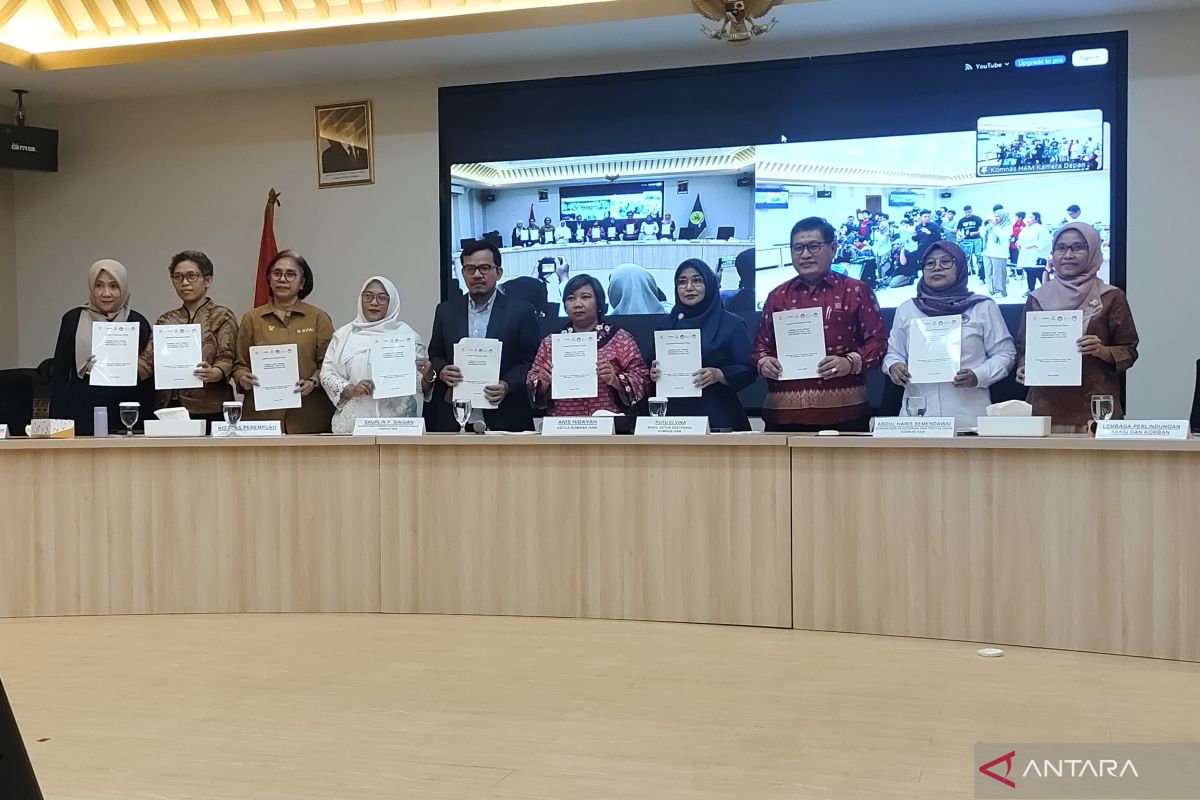
Jakarta (ANTARA) - The National Human Rights Institutions Forum (LNHAM) has revealed that it conducted monitoring and analysis of the series of protest actions and riots in August-September 2025.
From this monitoring, according to Komnas HAM Monitoring and Investigation Commissioner Saurlin P. Siagian, it is concluded that the protest and riot events have resulted in a significant number of victims.
“Both physically, psychologically, and material losses with widespread impacts in various regions,” Saurlin said at the Komnas HAM building in Jakarta on Monday.
LNHAM consists of Komnas HAM, Komnas Perempuan, the Indonesian Child Protection Commission (KPAI), the National Commission on Disabilities (KND), the Witness and Victim Protection Agency (LPSK), and the Indonesian Ombudsman.
Saurlin explained that one of the highlighted issues is the authorities’ tendency to use excessive force in maintaining public order or safety.
In addition, a recurring pattern of events with relatively similar characteristics was found in each incident. According to him, this indicates that the incidents are not isolated or incidental.
Saurlin stated that there are indications of uniformity in patterns, methods, and contexts of the events, pointing to strong suspicions of structured and widespread practices.
Therefore, LNHAM assesses that this situation cannot be viewed merely as incidental events but also reflects systemic problems.
“Systemic problems that require comprehensive, accountable handling based on human rights protection principles by all stakeholders,” Saurlin said.
Based on this, LNHAM concludes there are indications of massive and widespread human rights violations in last year’s riot and protest events. This investigation also produced joint recommendations.
On the same occasion, Komnas HAM Chair Anis Hidayah said that LNHAM has conducted field monitoring from 27 August 2025 to 27 January 2026.
The team, she revealed, has collected and verified field data related to fatalities, injuries, and detentions, as well as analysing patterns and structural root causes of human rights violations.
The monitoring covered 20 provinces across Indonesia, from Banten, West Java, the Special Region of Yogyakarta, Aceh, North Sumatra, East Kalimantan, South Sulawesi, North Maluku, Papua, Bali, West Nusa Tenggara, to DKI Jakarta.