
LMKN Establishes New Music Royalty Distribution Scheme for 2026, See the Percentage Breakdown
VIVA – The National Collective Management Agency (LMKN) has established a new policy regarding the division and distribution of royalties for songs and/or music for the 2026 period to address challenges in royalty distribution, which have long faced obstacles related to music usage data.
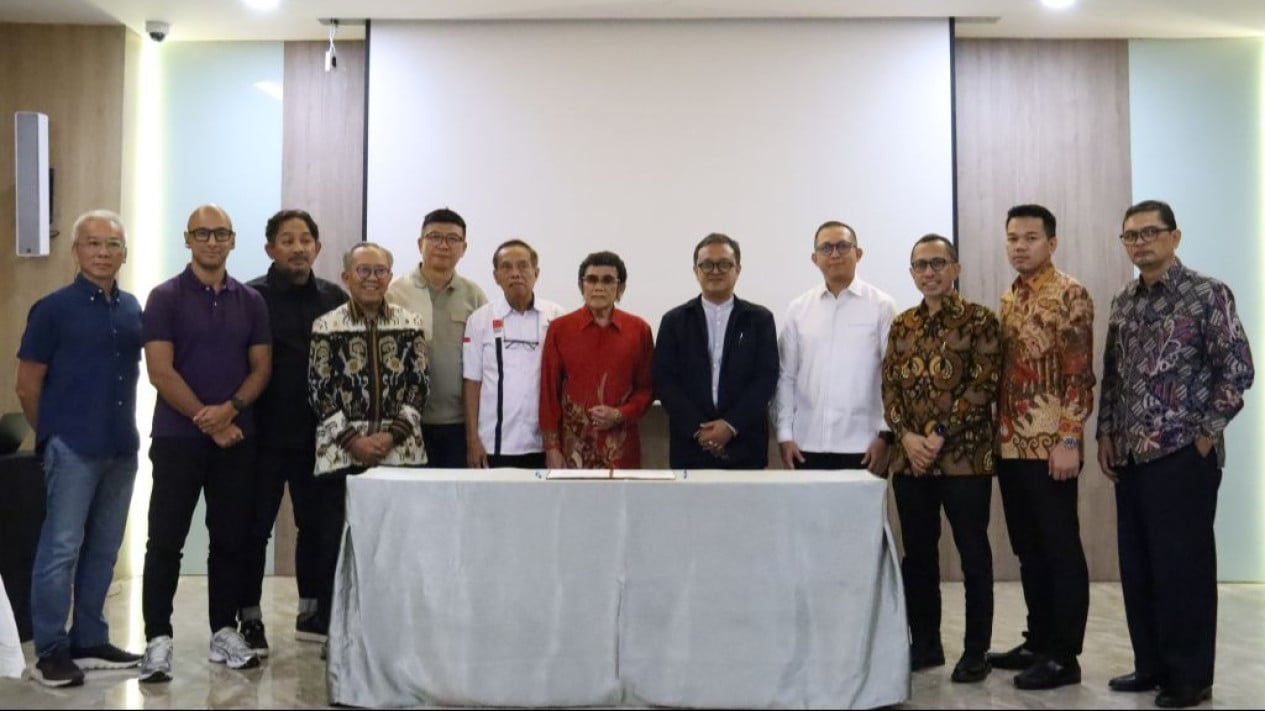
This decision is outlined in Decree Number: 001.SK.LMKN.IV.2026 on the Amendment to the Division of Royalty Rights and the Formulation of Song and/or Music Royalty Distribution for 2026, signed by the Chairman of LMKN Creators, Andi Mulhanan Tombolotutu, and the Chairman of LMKN Related Rights Holders, Marcell Siahaan.
“We want to ensure that every creator receives their rights fairly. With a data-based approach and complementary schemes such as Unlogged Performance Allocation (UPA), royalty distribution becomes more proportional and accountable,” said Andi Mulhanan Tombolotutu, Chairman of LMKN Creators, in an official statement received on Tuesday, 21 April 2026.
In this decision, LMKN revokes and declares as no longer valid Decree Number: 019.SK.LMKN.XII/2025, which previously served as the reference for 2025 royalty distribution. However, royalty distributions already carried out based on the old rules remain valid and have legal force.
LMKN’s new policy emphasises that royalty distribution prioritises the principles of proportionality and fairness, based on the availability and quality of music usage data.
Latest Formulation
In the latest formulation, LMKN divides the distribution mechanism into two categories: based on song usage data (log sheet) and without data (non-log sheet). For users who submit data, royalties will be distributed directly according to usage. For users who do not submit data, LMKN applies alternative approaches such as sampling, proxy, and the Unlogged Performance Allocation (UPA) scheme.
UPA is a complementary distribution scheme to maintain balance amid data limitations. However, LMKN sets a limit that members who receive only UPA for two consecutive periods without data-based distribution will no longer be eligible for UPA in the subsequent period.
Under its provisions, UPA distribution is based on the number of registered members in each LMK, with even division. However, there is a restriction: members who receive only UPA for two consecutive periods without data-based usage distribution will no longer be eligible for UPA in the next period.
Additionally, LMKN stipulates that royalty division is based on the share of rights for each LMK, calculated according to the royalty rates from each category of commercial users. Details of the percentage scheme and distribution weight parameters are further regulated in the attachment to the decision.
Marcell Siahaan, Chairman of LMKN Related Rights Holders, emphasised the importance of transparency in this new system. According to him, data quality is the key factor in determining the royalties received by music industry players.
“Going forward, we encourage all music users to be more disciplined in submitting song usage data. The more accurate the data, the more precise the distribution. This is a step towards a more transparent and fair system,” said Marcell Siahaan.
LMKN confirms that this policy is the result of discussions between LMKN and LMKs on Wednesday, 15 April 2026, and refers to various regulations, including Law Number 28 of 2014 on Copyright and Government Regulation Number 56 of 2021 on the Management of Song and/or Music Copyright Royalties.
With this new policy, LMKN hopes that the royalty distribution system in Indonesia will become more transparent, measurable, and accountable, while providing fairer protection for all stakeholders in the music industry.