
LKPP Deputy Concerned Over Officials Believing E-Catalogue Procurement Requires No Negotiation
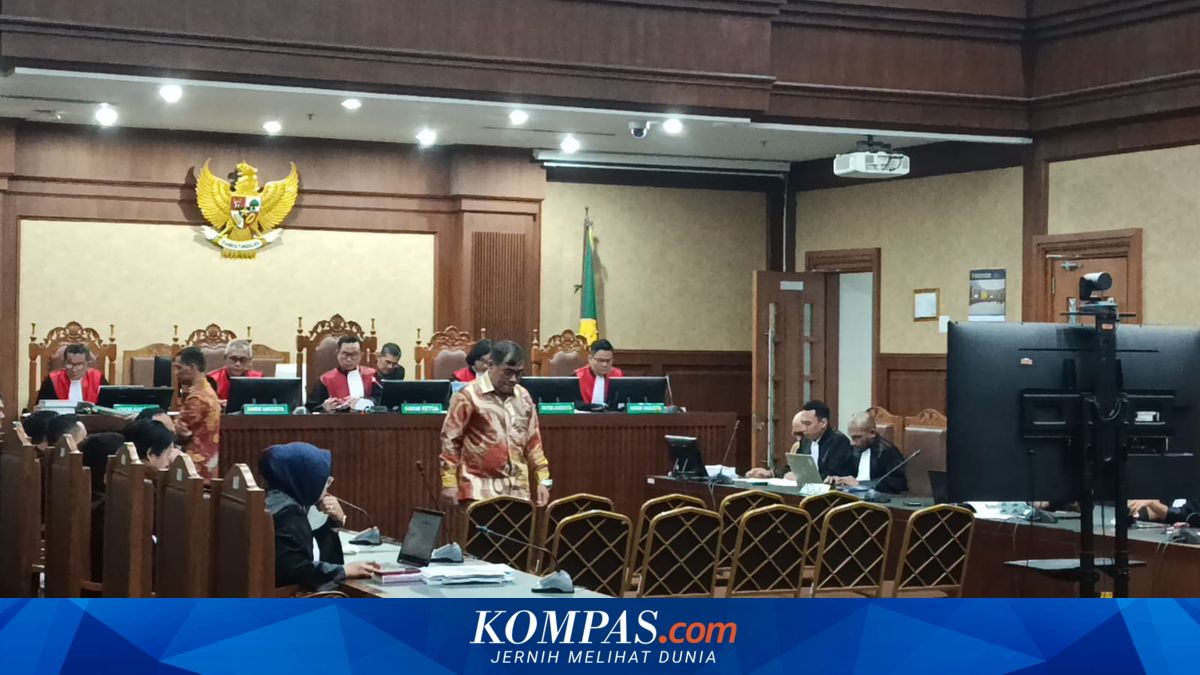
JAKARTA - Procurement expert and Deputy for Law and Dispute Resolution at the Government Goods/Services Procurement Policy Agency (LKPP), Setya Budi Arijanta, is concerned that many procurement officials in ministries and agencies (K/L) hold the view that procurement via e-catalogue does not require negotiation because the prices are deemed guaranteed by LKPP.
Setya spoke when asked for his opinion as an expert in the continuation of the trial for the alleged corruption case involving the procurement of Chromebook-based laptops for three defendants.
They are former Technology Consultant in the Ministry of Education, Culture, Research, and Technology (Kemendikbudristek), Ibrahim Arief; Director of SMP Kemendikbudristek for 2020–2021 and Budget User Representative (KPA) Mulyatsyah; and Director of SD Kemendikbudristek for 2020–2021 and KPA, Sri Wahyuningsih.
“Yesterday I was a bit concerned; when I was teaching at the Prosecutor’s Office, BPK, and K/L (Ministries/Agencies), there was an understanding that there’s no need to make that (price reference). Even there’s an understanding that the catalogue doesn’t need negotiation because the price is already guaranteed by LKPP, they say,” Setya stated during the trial at the Jakarta Corruption Court, Thursday (2/4/2026).
This means that procurement officials such as the selection team (pokmil) or the committing officer (PPK) are obliged to conduct negotiations to lower the price.
“The catalogue price is the maximum price. The pokmil and procurement officials and PPK must negotiate,” he added.
Setya reminded that the prices appearing in the e-catalogue are very high because they come from resellers, not the manufacturer’s price as the first party in the product supply chain.
“Because what’s displayed in the catalogue is the reseller’s price, retail price, sir. Retail is buying in single units like that. If you buy in bulk, you should negotiate the bulk price. Buying one versus buying a hundred, the price is different, right,” he stressed.
In this case, former Minister of Education Nadiem Makarim along with three other defendants is said to have caused state financial losses amounting to Rp 2.1 trillion.
Nadiem is charged with enriching himself by Rp 809 billion. This figure is said to come from Google’s investment in Gojek or PT AKAB.
Meanwhile, Mulyatsyah is said to have received SGD 120,000 and USD 150,000.
Nadiem is alleged to have abused his authority, making Google the sole controller of ICT procurement, including laptops, in Indonesia’s technology ecosystem.
This was done by directing the procurement study towards one product, namely Chrome-based devices which are Google’s products.
Nadiem carried out these actions together with the three other defendants, namely former Technology Consultant in Kemendikbudristek, Ibrahim Arief; Director of SMP Kemendikbudristek for 2020–2021 and Budget User Representative (KPA), Mulyatsyah; and Director of SD Kemendikbudristek for 2020–2021 and KPA, Sri Wahyuningsih.
For their actions, Nadiem and the other defendants face charges under Article 2 Paragraph (1) and Article 3 in conjunction with Article 18 of Law No. 31 of 1999 as amended and supplemented by Law No. 20 of 2001 on Amendments to Law No. 31 of 1999 on the Eradication of Criminal Acts of Corruption, in conjunction with Article 55 paragraph (1) first of the Criminal Code.