
Literacy and National Character Regarded as Keys to Generation Z Strength
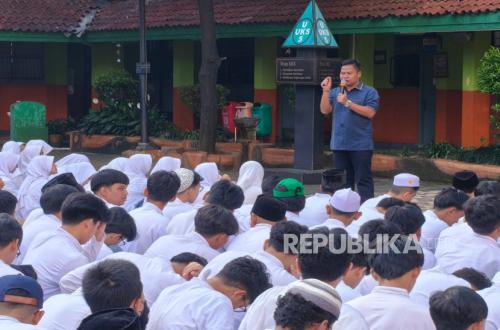
An academic and member of the Centre for National Perspectives Education (PPWK) for Jakarta Province, Dr Rasminto, has emphasised that young people and students are the nation’s primary hope in facing increasingly complex global challenges.
Rasminto made this statement during a “Pesantren Kilat” (accelerated Islamic boarding school) programme on national character at SMAN 78 Jakarta, which was attended by more than a thousand students from years 10, 11 and 12 on Friday (13 March 2026). In his presentation titled “Students and the Nation’s Hope”, he stressed that young people have a strategic role as agents of change and as reserves for national leadership in the future.
According to him, the current global situation is facing various crises, ranging from energy, food and economic crises to international political tensions that could potentially impact national sovereignty.
“In an unstable world situation like now, students must realise that they are not just participants in education, but also agents of change, social control, and reserves or backups for national leadership,” said Rasminto.
He added that Indonesian students are required not only to excel academically, but also to possess integrity, national perspective and sensitivity to the problems of society and the nation.
Rasminto warned that in the current era of digital disruption, young people are also facing serious challenges in the form of information overload, misinformation and post-truth politics that can influence the way people think.
“Social media often makes emotions more dominant than facts. Therefore, students must have strong information literacy so they are not easily influenced by hoaxes and propaganda,” he said.
Beyond digital challenges, he also highlighted social problems faced by young people in urban areas, such as the rising cases of student violence, weak spaces for youth participation and the threat of digital radicalisation.
“Cases of student violence in urban areas, especially in Jakarta, are quite high, and this also affects the weak participation of young people in positive activities, so it is necessary to build strong national values through various methods and approaches,” he said.
According to Rasminto, these conditions must be a collective concern because young people today are determining Indonesia’s future, particularly in the face of the demographic dividend momentum that is projected to last until 2045.
“The demographic dividend will be a great opportunity if young people are of quality. But it could be a problem if not properly prepared,” he said.
Therefore, he emphasised the importance of developing national character from an early age through education, building national perspective and strengthening values of unity.
“Literacy and numeracy competence must go hand in hand with national character. If young people’s identity, solidarity and creativity are strong, then the nation’s future will also be strong,” said Rasminto.