
Listen to Workers' and Ojol Drivers' Aspirations: Ibas to Champion Protection and Social Welfare
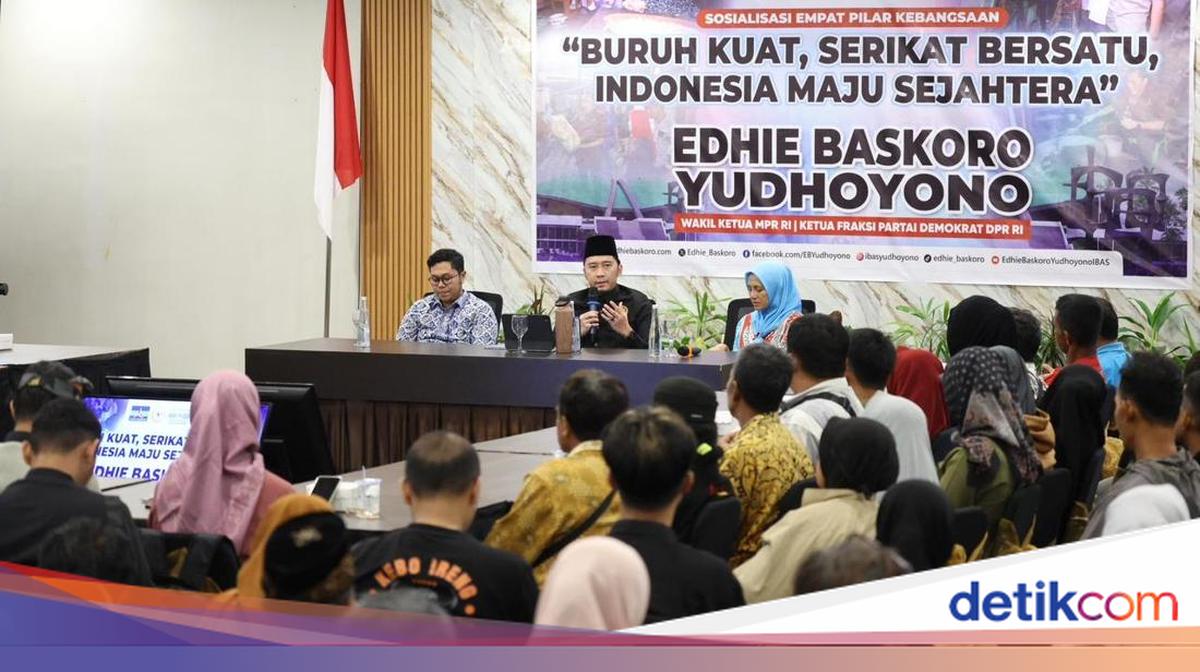
At this event, various aspirations were expressed, ranging from workplace conditions, social protection, worker welfare, to the hopes of ordinary people for continued attention from the state. Ibas views employment issues as more than just economic growth figures. Behind them lies the struggle of society to meet family needs, fund children’s education, and maintain hopes for a better life day by day. “Happy May Day 2026. May the workers be increasingly healthy, strong, advanced, and prosperous for the Indonesia we all love,” said Ibas in his statement on Sunday (10/5/2026). Ibas also urged the public to remain grateful for the opportunity to work and live peacefully amid various current economic challenges. However, he believes that gratitude must be accompanied by the state’s bias towards workers’ welfare. As a member of the Indonesian House of Representatives from the East Java VII electoral district, Ibas affirmed that he will continue to oversee labour regulations to favour workers and create a healthy balance between workers, entrepreneurs, and the government. “Local governments, workers, and entrepreneurs must continue to dialogue. These three elements cannot stand alone in building shared welfare,” Ibas stated. Ibas emphasised that every public concern must be addressed with solutions and tangible programmes that can immediately be felt. This includes access to KUR for workers and small business actors, training and capacity-building programmes for the workforce, protection through BPJS Employment and BPJS Health, maternity guarantees for female workers, and safeguards against unilateral layoffs. “We must not just listen to public complaints without providing a way out. The state must be present through programmes that truly help workers so their lives are more secure, healthier, and have a future,” he asserted. UMKM Drives Employment Programmes and Economic Empowerment Amid the dialogue, the voices of UMKM actors also drew attention. One participant, Tania, hoped that small business operators would receive attention in employment and economic empowerment programmes. She shared how she and other UMKM actors continue to strive to survive amid limitations. “We UMKM are not big factories. We want to continue to be touched by employment programmes so our spirit keeps burning. Our age in UMKM is already advanced, so we ask for more attention. We still have children and grandchildren. Our spirit as independent women wants to keep burning, but we also continuously need support from the government, from Mr Ibas, from the agencies so that our UMKM can continue to receive attention, not just factory workers,” said Tania. That statement made the dialogue atmosphere warmer and full of empathy. Many participants nodded in agreement, illustrating that the struggle of ordinary people is not just about earning income, but also maintaining family life hopes. In response, Ibas said the state must be present not only for formal workers, but also for ordinary people who have long supported family economies through independent businesses. “UMKM is the backbone of the people’s economy. The spirit of the mothers and small business actors is extraordinary. Our collective task is to ensure they do not walk alone,” said Ibas. Informal Workers Hope for Work Protection In the dialogue, the Solidaritas Ojek Online Trengalek Raya also conveyed aspirations regarding hopes for online motorcycle taxi drivers to receive free BPJS Employment coverage borne by the government. This aspiration was presented as a real need for informal workers vulnerable to work accident risks and income uncertainty. In response, Ibas said the government must continue to seek the best solutions so that informal workers like ojol drivers receive better protection without ignoring the sustainability of the business ecosystem. “The President’s desire for applicator deductions below 10 percent is certainly a shared concern and a breath of fresh air for ojol friends. But we also need to find a fair middle ground. For example, a scheme of around 9.5 percent for applicators and 9.5 percent for ojol workers could be considered, so both still have healthy room to grow and remain in line with the spirit of favouring workers,” he explained. According to Ibas, the proposal for free BPJS for ojol drivers is also an important aspiration that needs to be continuously studied and advocated through collaboration among various parties. “We want workers and ojol friends to work calmly, healthily, and have good social protection. They should not work hard every day but still feel alone facing life,” he said. Besides work protection, Ibas also highlighted the importance of creating new jobs that can truly be felt by local communities. He noted that government programmes must deliver real impacts on family economies. One that he spotlighted is the Free Nutritious Meals Programme (MBG) through SPPG kitchens, which he views as able to open many new job opportunities in the area. “If one SPPG requires about 40 workers and there are 100 SPPG in Trengalek, it means thousands of new jobs can be created. So this programme is not just about nutritious meals, but also about opening economic opportunities and improving community welfare,” said Ibas. He stated that when jobs open up, people’s purchasing power increases, small businesses move, and the local economy becomes healthier. He assessed that good economic growth must create a sense of security and optimism among the public. “If the public has jobs, income rises, purchasing power grows, businesses run well, then our economic ecosystem is strong.”