
List of the 10 Weakest Currencies Amid the Iran War: Is the Rupiah Included?
Jakarta, CNBC Indonesia - Approaching the one-month mark of the United States (US) and Israel war against Iran that broke out at the end of February, many world currencies remain under pressure.
This conflict has driven investors to seek the US dollar as a safe-haven asset, putting numerous currencies under strain over the past month. The war erupted on 28 February 2026, and since then, energy market volatility and risk-off sentiment have further pressured global financial markets.
In line with these conditions, the US dollar index (DXY), which measures the dollar’s strength against six major world currencies, has strengthened significantly by around 2%. The DXY even briefly broke through the 100 level, though it is now trading around 99.5.
Based on Refinitiv data compiled by CNBC Indonesia, here are the 10 currencies with the worst performance against the US dollar from the closing level on Friday (27/2/2026), or the day before the war, to the latest closing on Wednesday (25/3/2026).
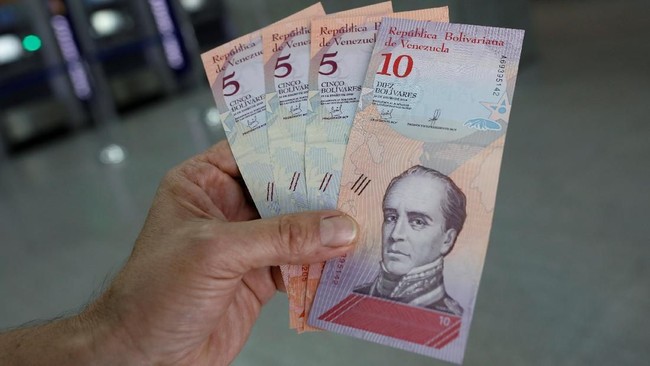
The currency with the worst performance against the US dollar in the past month is the Venezuelan bolívar.
The bolívar experienced a sharp depreciation of 11.1% against the US dollar, closing at VES 465.43/US$ on Wednesday (25/3/2026).
Pressure on the bolívar appears to be influenced not only by Middle East war sentiment but also by ongoing domestic turmoil in Venezuela following the US operation that led to the capture of President Nicolas Maduro on 3 January 2026. This event has added to political and economic uncertainty in the country, intensifying pressure on the bolívar.
Below it is the Egyptian pound, which fell 9.6% to EGP 52.48/US, followedbyLesotho′sloti, whichweakened6.6.
Interestingly, from the list of the 10 weakest performing currencies, there is one representative from Southeast Asia, namely the Thai baht, which ranks 10th. The currency of the Land of the White Elephant weakened 4.8% to THB 32.50/US$.
Pressure on the baht is inseparable from the significant impact of the war on Thailand’s tourism sector, which has long been one of the mainstays of its economy.
The conflict in the Middle East has triggered the cancellation of more than 1,000 flights to Thailand since the war began, while rising aviation fuel prices have also pushed airfare tariffs higher. This situation has made tourists more cautious about travelling and is pressuring the prospects of Thailand’s tourism sector.