
List of Most Vulnerable Developing Countries to Oil Crisis, Including Indonesia
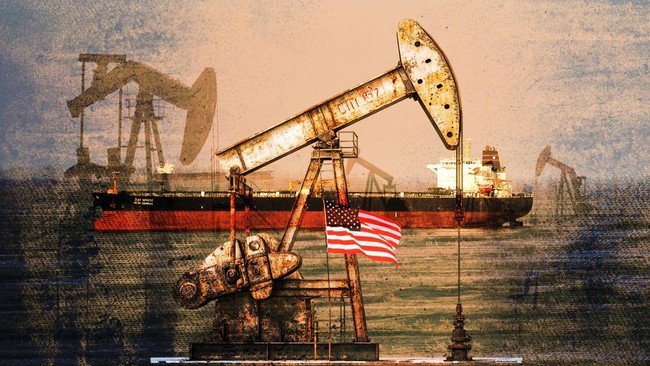
The third Gulf War has triggered disruptions in global energy supplies, significantly affecting low-income and developing countries.
The closure of the Strait of Hormuz has caused an energy availability crisis in various regions. This is evident in long queues for household gas in Nepal, reduced operational days for industries in Sri Lanka, and school closures in Pakistan.
The International Monetary Fund’s (IMF) Managing Director, Kristalina Georgieva, described the current situation as “unimaginable.” Historically, countries with weak economies bear the heaviest burden when global energy supplies shrink.
This pattern was clearly seen following Russia’s invasion of Ukraine in 2022. While advanced European countries provided energy subsidies, importing nations with limited foreign exchange reserves and fiscal space faced balance of payments crises, as experienced by Sri Lanka and Pakistan during that period.
To map the potential macroeconomic crisis at present, a country’s vulnerability is measured through two main dimensions: the level of exposure (dependence on energy imports and remittances from the Gulf region) and financial buffers (capacity to absorb shocks).
Here is the vulnerability ranking of several developing countries based on those indicators:
Countries with the Highest Risk: Jordan, Pakistan, and Egypt
Jordan records a high level of exposure with thin financial buffers, although its diplomatic relations may enable emergency support from Western and Gulf countries.
Pakistan and Egypt are in extremely vulnerable positions. Pakistan allocates around 4% of its Gross Domestic Product (GDP) to oil and gas imports, with 90% of supplies coming from the Middle East.
Meanwhile, Egypt spends about 3% of its GDP on energy imports, with nearly half sourced from the same region.
Both countries also rely on remittances from workers in the Gulf region, equivalent to 5-6% of GDP. Disruptions in the labour market due to the conflict could pressure these inflows, in turn widening the current account deficit.
The financial buffers of both countries are very limited. Pakistan’s foreign exchange reserves are currently below the minimum level recommended by the International Monetary Fund (IMF).
Vulnerability in South Asia: Bangladesh and Sri Lanka
Although they have medium exposure levels, Bangladesh and Sri Lanka face high risks due to weak financial buffers. Bangladesh’s foreign exchange reserves are only sufficient to cover import needs for less than three months.
The garment sector, which is the backbone of the country’s exports, heavily depends on imported fuel, so rising energy prices directly worsen the trade balance.
Sri Lanka is in a similar situation. The country has only recently recovered from default status in 2022 due to previous energy price shocks and currently still has very limited foreign exchange reserves.
High Exposure with Better Resilience: Thailand and Nepal
Some countries have high import dependence but are supported by solid financial buffers.
Thailand spends around 7% of its GDP on oil and gas imports. However, Thailand has strategic oil reserves sufficient for 100 days and foreign exchange reserves that can cover import needs for more than seven months.
Nepal stands out due to its high dependence on remittances, where 8% of GDP comes from workers in the Gulf region. Although its oil reserves are minimal, Nepal has strong foreign currency holdings (hard currency) to withstand initial shocks.
India’s Safe Position
India is assessed to be able to handle this shock well. Although it spends 3% of its GDP on energy imports from abroad, its financial buffers are very strong. India’s foreign exchange reserves are sufficient for seven months of imports, supported by commercial and official oil stocks for about 70 days.
Additionally, Indian refineries have the capacity to process low-quality crude oil, allowing the country to absorb supplies from Russia.
India’s power generation also relies more on domestic coal, thereby minimising the impact of rising imported gas prices on the overall economy.
What about Indonesia?
In The Economist’s analysis, Indonesia ranks 13th in the list of emerging market countries most exposed to the oil crisis. Indonesia’s net imports are very high, including from the Middle East. However, Indonesia also has sufficiently strong buffers compared to other countries.
Food Crisis Threat Looms
Beyond the risks of macroeconomic crisis, this energy shock brings humanitarian implications. Prices of nitrogen fertiliser, produced using natural gas, have surged, directly impacting food production costs in poor countries.
The World Food Programme (WFP) projects that the number of people facing acute hunger could reach a record high in 2026 if the conflict continues.
Securing import financing and stabilising currency exchange rates may prevent a financial crisis, but maintaining food price affordability will be a particular challenge.