
List of Countries Most Affected by Hormuz Strait Closure
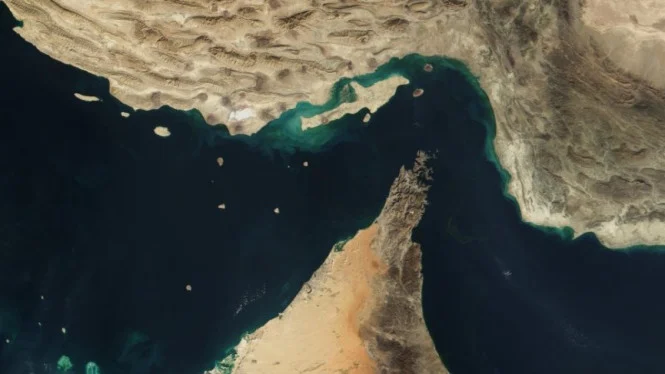
Jakarta – US and Israeli military strikes against Iran have triggered global concerns over the stability of the world’s energy supply. This is due to the potential closure of the Strait of Hormuz by Iran, which could impact Asian nations that are heavily dependent on oil and gas from the Gulf region.
Approximately 20–30 per cent of global oil and gas supply is transported through the Strait of Hormuz daily. If this shipping route is disrupted or closed, the impact would be felt not only by energy producers and companies, but also by major importing nations whose economies are heavily reliant on energy price stability.
Countries Most Affected
According to data from the US Energy Information Administration (EIA), approximately 20 million barrels of oil pass through the Strait of Hormuz daily in 2024. About 84 per cent of crude oil and condensate shipments are destined for Asian markets.
The four nations most dependent on this shipping route are:
China
India
Japan
South Korea
These four nations account for approximately 69 per cent of the total crude oil and condensate flow through the Strait of Hormuz. China alone receives approximately half of its crude oil imports through this route.
Should oil prices surge to $100 per barrel (equivalent to approximately Rp1,680,000), the greatest pressure would be experienced by nations with high energy import requirements and large manufacturing sectors.
“The Strait of Hormuz is critically important to the global energy market, as approximately 30 per cent of the world’s seaborne crude oil passes through this route. Additionally, nearly 20 per cent of global jet fuel and approximately 16 per cent of petrol and naphtha also transit the Strait,” said Muyu Xu, senior crude oil analyst at Kpler, as reported by Al Jazeera on Monday, 2 March 2026.
He added that since the conflict began, vessel traffic through the strait has experienced a sharp decline. Shipping data shows that at least 150 tankers, including crude oil carriers and LNG vessels, have anchored in Gulf waters.
A complete closure of the Strait of Hormuz could potentially disrupt approximately one-fifth of globally traded oil overnight. “A closure of the Strait of Hormuz would disrupt approximately one-fifth of globally traded oil overnight, and prices would not merely rise, but would spike sharply due to fear,” stated Ali Vaez from the International Crisis Group.