
Limiting Party Leaders' Terms for the Public Interest
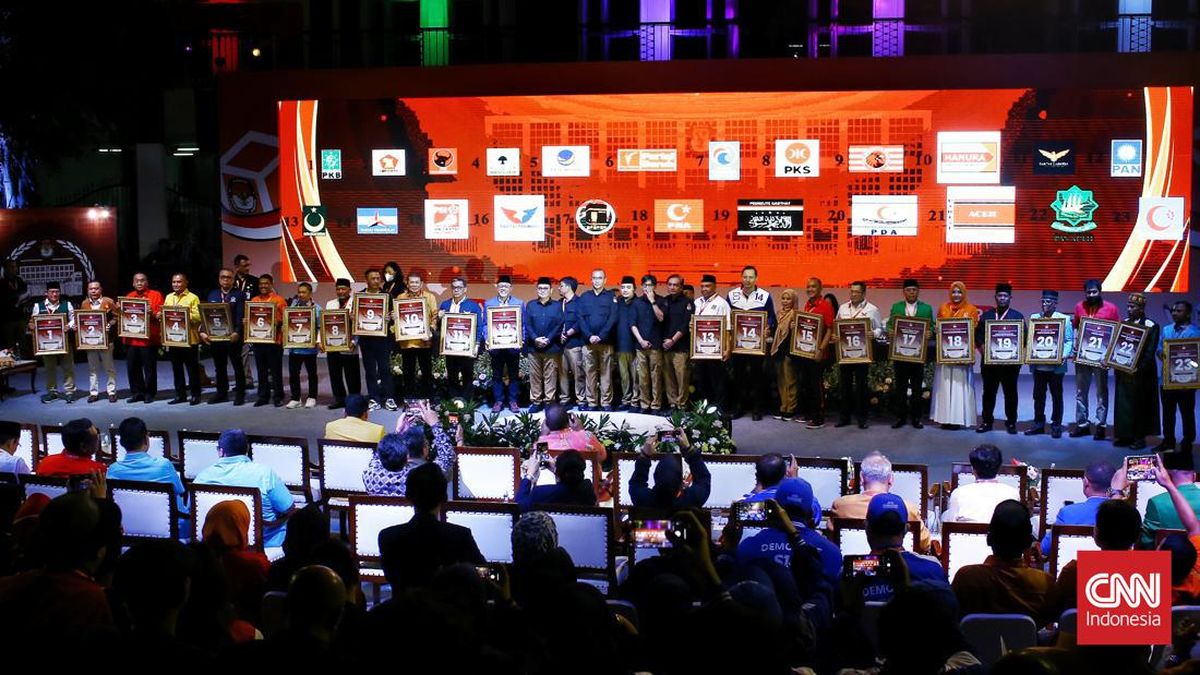
The Corruption Eradication Commission (KPK) has proposed limiting the tenure of political party general chairmen to a maximum of two terms to improve regeneration patterns and cadre systems.
The KPK’s proposal is outlined in the summary of the 2025 Annual Report of the KPK Monitoring Directorate, released on 17 April. In the report, the KPK proposes improvements to the governance of several institutions and strategic government programmes, including political parties.
The KPK has issued a total of 16 recommendations for improving political parties, one of which is the revision of Article 29 of Law No. 2 of 2011 on Political Parties to limit the tenure of the general chairman to a maximum of two management periods.
In addition, there are recommendations for parties to improve education curricula, cadre systems, nomination requirements, and financial governance.
“To ensure the implementation of cadre development, regulations are needed to limit the leadership of the party general chairman to a maximum of two management periods,” states the eighth point of the KPK’s recommendations.
Several parties in the DPR have rejected the KPK’s proposal to limit the tenure of the general chairman. PDIP, PKB, NasDem, and Demokrat have collectively stated that the KPK has exceeded its authority, as the determination of tenure is considered entirely an internal matter.
They also disagree with the KPK’s argument that limiting the tenure of the general chairman can minimise corrupt practices and improve regeneration patterns.
“Democracy within the party is not determined by limitations, but by congress mechanisms or other mechanisms for appointing the general chairman in each party. As long as the cadres who hold the votes give support and trust to their General Chairman, that is the democratic process,” said the Secretary General of the Democrat Party, Herman Khaeron, on Thursday (23/4).
Failure of democracy in parties
Executive Director of Indikator Politik Indonesia (IP), Burhanuddin Muhtadi, said that parties as institutions living within a democratic system, but the majority of them currently fail to democratise themselves.
According to Burhanuddin, one measure of this failure is the regeneration within the party that does not run well. In a concrete example, one of them is a party general chairman who can be elected multiple times.
Burhanuddin views the KPK’s proposal as a revolutionary idea to reform the party system in Indonesia.
“It is actually a revolutionary idea, part of a breakthrough for reforming our party system. Because it is strange and amazing, parties are democratic institutions but often fail to democratise themselves,” said Burhanuddin when met at UIN Jakarta on Thursday (23/4).
The Professor of Political Science at UIN Jakarta admitted that he does not agree with the assumption that party internal affairs are entirely private spaces that cannot be interfered with. As an institution that still receives state financial assistance, party internal affairs become part of public affairs.
“So I somewhat differ in opinion, because in my view, parties are public institutions, they discuss the authority and process of electing public officials,” he said.
Secondly, Burhanuddin assesses that party cadres are potential public officials, both in the legislature and executive. In those tasks, party cadres deal a lot with public rights, both through policy determination and the preparation of laws.
“Well, because parties are public entities, the processes within the party cannot be separated from public affairs,” he said.
Rules on management changes
To date, the law does not regulate the tenure of political party general chairmen. The law only regulates the provisions for changes in party management as stipulated in Article 23 of Law No. 2/2011 on Political Parties.
That article states, “Changes in the management of Political Parties at every level are carried out in accordance with the AD and ART.”
This means that the process of electing or appointing the general chairman, including its periodisation, is currently entirely left to each party. Meanwhile, currently no party limits the tenure period of its general chairman. In fact, there are party general chairmen who have held the position for more than 10 years.
The government in the same law is only authorised not to issue management decrees in the event of disputes, until there is a final decision from the party court, district court, or Supreme Court (MA) as the last legal recourse.
That provision is contained in Article 24, which states, “In the event of a dispute over the management of a Political Party resulting from the highest decision-making forum of the Political Party, the approval of changes in management cannot be carried out by the Minister until the dispute is resolved.”
Then, Article 32 states, “The resolution of internal disputes of Political Parties as referred to in paragraph (2) must be resolved at the latest 60 (sixty) days.”
Director of Trias Politika Strategis, Agung Baskoro, praised the KPK’s proposal to limit the tenure of party general chairmen. Like Burhan, Agung said that the KPK’s idea is important for democratising, regenerating, and leadership within the party.
According to Agung, as part of a public institution, parties must not be owned by individuals. This means that parties must have good management principles, such as the periodic tenure of the president limited to two terms in the constitution.
Not only the discussion on general chairmen, Agung even proposed that there should be a limit on the tenure of DPR members to just two periods.
“And hopefully this can change when talking about members of the DPR RI also limited to just two periods,” he said.