
Like Iran! This Communist Country Stands Firm Against Pressure – Becomes Trump's New Target
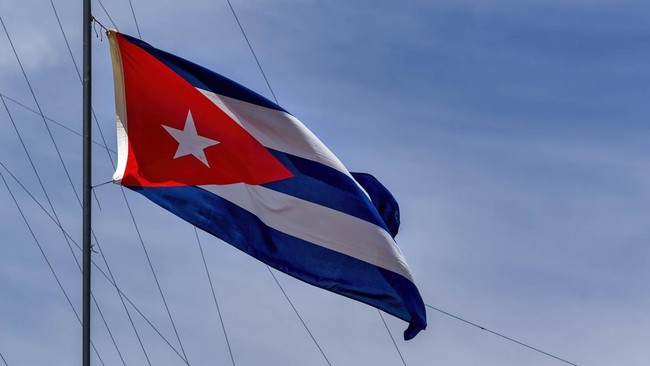
The Cuban government has asserted that its political system and presidential term are not open to negotiation in discussions with the United States. This position was expressed amid reports that Washington seeks to remove Cuban President Miguel Diaz-Canel from power.
Cuba’s Deputy Foreign Minister Carlos Fernandez de Cossio emphasised that Havana will not compromise on national leadership. He stated that the position of the president or any other officials in Cuba falls entirely under the country’s sovereignty and cannot be negotiated with foreign parties.
“I can categorically affirm that Cuba’s political system cannot be negotiated, and of course, neither the president nor any official position in Cuba can be negotiated with the United States,” Deputy Foreign Minister Carlos Fernandez de Cossio said at a press conference, quoted from Reuters on Sunday (22/3/2026).
This statement follows reports in several US media outlets that the Trump administration is preparing an economic agreement scheme with Cuba. In this scenario, easing trade restrictions is said to be accompanied by options to push Diaz-Canel to step down from his position before his term ends.
Previously, Cuba confirmed it has opened channels for talks with the US government. This step is taken amid mounting economic pressures, particularly due to the oil blockade imposed by Washington, which has deepened the crisis in the communist-led country.
However, at the same time, President Diaz-Canel has adopted a firmer tone. He warned that Cuba is preparing to face potential aggression from the United States. In his statement, he affirmed that his country will not stand idly by in the face of external threats.
“Any external aggressor will face an impenetrable resistance,” Diaz-Canel wrote on his social media.
Other reports suggest that the US plan towards Cuba resembles the approach taken in Venezuela. In that case, Washington did not form a new opposition government but collaborated with an interim leader after President Nicolas Maduro was ousted.
Nevertheless, the current power structure in Cuba is considered more distributed than during the Fidel Castro era. Authority is not solely centred on the president but also involves elites from the Communist Party, government officials, and the military.
De Cossio himself did not reveal further details regarding the location or timing of the bilateral talks. However, he assured that several issues can be discussed together, including trade relations that have long been hindered by the US economic embargo.
In addition, both countries have outstanding compensation claims. Cuba demands reparations for the impact of the embargo, while thousands of US citizens have filed claims for assets nationalised after the 1959 revolution.
“This is a complex issue, but it can be addressed through dialogue,” de Cossio said.