
Lights, camera, algorithm: China’s AI microdramas go viral – but spark copyright fears
Lights, camera, algorithm: China’s AI microdramas go viral - but spark copyright fears
While massively popular among young Chinese social media users, AI microdramas are fuelling concerns that the technology is eroding copyright - and potentially livelihoods.
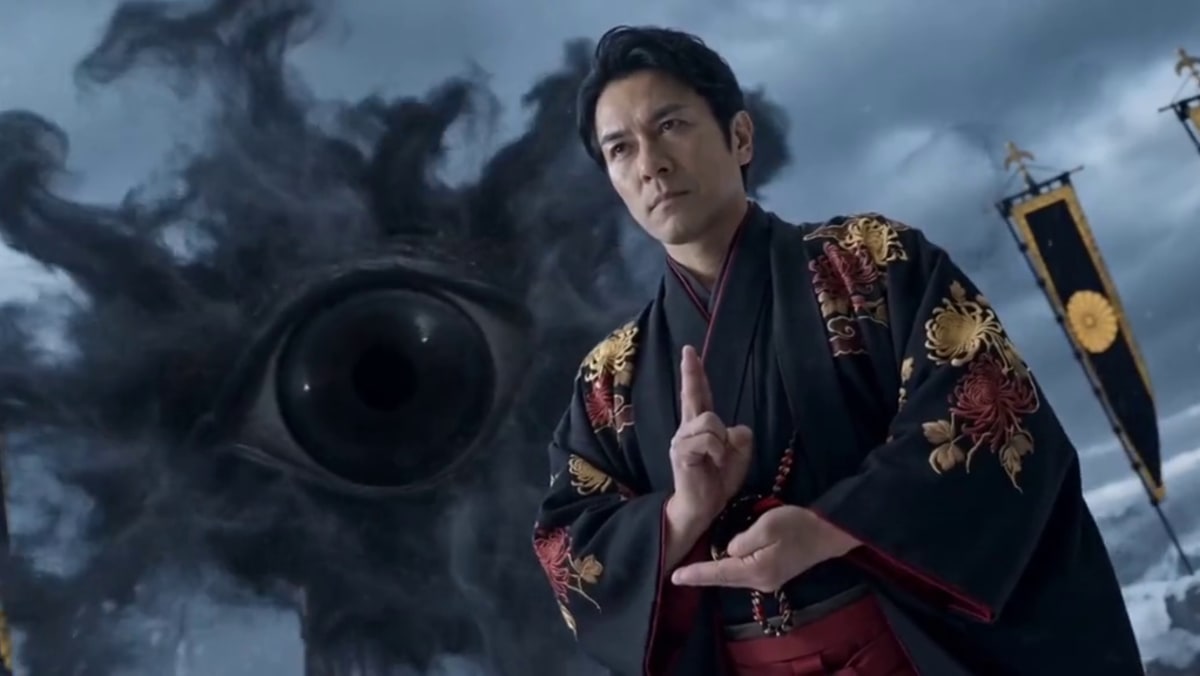
SINGAPORE: Up high on a massive snowy mountain, a Chinese Fengshui master battles a Japanese Shinto priest, as dark storm clouds gather.
Armed with a luopan, a traditional Chinese compass, he fends off giant snakes conjured by his opponent - but is ultimately overpowered and thrown off.
The dramatic showdown was not the work of actors, stunt crews or visual effects teams - instead, it was created using generative artificial intelligence (AI) tools by SocialTok, a Chinese digital marketing and AI company headquartered in Nanchang, Jiangxi.
The two-and-a-half minute video is the first episode of a 61-part microdrama series titled Master of Feng Shui - and amassed 100 million views within 12 hours of its debut on Mar 18, according to local media reports.
It has since garnered more than 1.2 million likes on the short-video platform Douyin.
AI-generated microdramas are taking China by storm. From scheming imperial palace dogs to anthropomorphic fruits looking for romance, these surreal, algorithm-driven productions have been fuelling a booming domestic industry - now valued at around 100 billion yuan (US$14.5 billion) - nearly double the country’s box office revenue, according to industry observers.
Thousands of such productions have been released monthly since the start of this year - but behind their explosive growth lies a deepening concern among actors and creatives: that the same technology driving efficiency and scale is also eroding their rights - and, potentially, their livelihoods.
COPYRIGHT CONCERNS AND “DIGITAL DOUBLES”
Controversy has intensified in recent weeks over AI-generated performers bearing striking similarities to real-life actors.
Shanghai-based production company Youhug Media drew backlash after unveiling two AI-generated actors whose appearances were widely perceived to resemble Chinese film star Zhai Zilu and actresses Zhao Jinmai and Zhang Zifeng.
The incident reignited debate over whether generative AI systems are effectively “replicating” human performers without consent.
In March, a Beijing court ruled in favour of an unnamed actress whose image rights were violated after two companies had used generative AI to create a character resembling her in a microdrama.
The issue came to light when the actress discovered her likeness had been superimposed onto a character, according to Chinese media reports.
Citing China’s Civil Code, Judge Zhao Qi said that even if an AI-generated face differed slightly from the original, it still constitutes infringement if the person is recognisable by the public.
“The segments bore a strong resemblance to the actress and public comments identified the character as her,” Zhao said, adding that the streaming platform would also be held liable for not reviewing the content and “failing its duty to prevent infringement”.
Chinese legal experts said a key criterion in determining infringement is the “identifiability”.
If the public is able to recognise an AI-generated image as a specific actor, it may constitute infringement - whether it was the result of “deliberate imitation” or “technical coincidence”, said Li Zhenwu, a lawyer at Shanghai Lizhen Law Firm.
If circumstances were serious, they could even be considered a crime, Li said.
Speaking to the state-owned Global Times news outlet, You Yunting, a lawyer from Shanghai Debund Law Offices, said that the use of personal data to train AI generative tools raises questions over whether it constitutes fair use.
If a user inputs a person’s photo or likeness into an AI tool - resulting in the individual’s likeness appearing in a short drama, the user would then be infringing on portrait rights, You said.
In a statement released on Apr 2 - the Actors Committee of the China Federation of Radio and Television Associations condemned the growing misuse of AI technology, including the unauthorised use of actors’ images and audio for AI model training.
But industry insiders said the issue is systemic. Generative AI models are trained on vast datasets scraped from the internet, often without clear consent from individuals whose faces, voices or performances are included.
“These large models rely on massive amounts of visual data,” said Niu Cong, project coordinator at Versatile Media, a Hangzhou-based virtual production company that produces AI-generated microdramas.
“But whether all of that data - especially human faces - has been properly authorised is still very questionable,” she said.
The company has only been producing AI microdramas for less than a year - but managed to release a “fully AI-generated” 12-episode fantasy microdrama series before the Chinese New Year.
Each episode is about a minute long and follows the story of male protagonist Xiao Jin and his white fox companion Bai Lu.
The series has generated nearly 18 million hits on Hongguo - a short-form drama platform owned by Bytedance, Niu said.
The series was fully generated by AI and was “really a test piece for us - from scripting all the way to the final output”, Niu said, adding that overall production time was “very short”.
The team completed the entire series in 4 to 5 days, she said. “We worked intensively to finish it before the Spring Festival and launched it online on Douyin and Hongguo.”
With AI evolving so quickly, the company has also been developing its own AI production tool called MOKE.
“It’s a very important production tool for us,” Niu said.
“It started out as something to assist our virtual production system for applications and shooting, but now it can complete a full-process content creation from a single platform - from script to visuals to video output,” she added.
“It’s very fast. We’re working on a Republican-era film using only old photos, and MOKE helps tu