
Liberating knowledge from the false dichotomy between religious and secular science
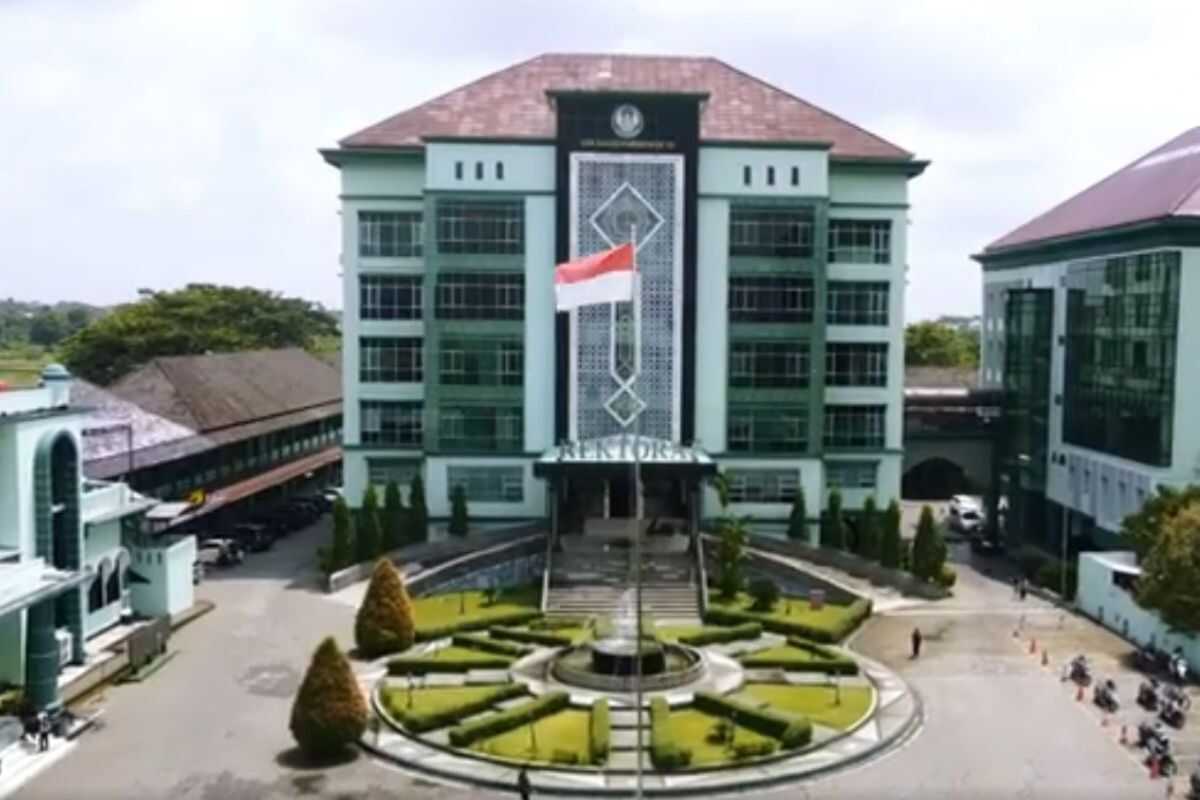
Surabaya — On the third day of Ramadhan 1447 H, I taught the Integrated Twin Towers course in the Master of Data Science programme at the Faculty of Science and Technology at UIN Sunan Ampel Surabaya (UINSA). The topic happened to be the Concept of Knowledge Integration and Philosophical Review.
Several state Islamic higher education institutions (PTKIN), particularly UINs, need to develop concepts for advancing and transforming knowledge so that it remains connected to Islamic values. For this reason, UINSA considers it important for the Knowledge Integration course to be taught.
The primary objective is to attempt to liberate itself from the constraints of the false dichotomy between general knowledge and Islamic studies. Historically, when the republic was established at the dawn of independence, the government’s attention to establishing the Ministry of Religious Affairs (formerly the Department of Religious Affairs) was to oversee and safeguard the religious life of our society, given that Indonesia is a religiously plural nation based on the first principle of Pancasila.
This authority encompassed maintaining harmony among religious communities and promoting the pace of religious education. Therefore, the existence of religious education, such as madrasahs at primary and secondary levels through Islamic higher education, is part of the development ecosystem in the field of religion and religious affairs.
Thus, in the context of Islamic higher education, what was taught at that time still revolved around Islamic sciences with various departments and faculties, such as education, Islamic law, Islamic propagation, Islamic theology, and humanities. The nomenclature of state Islamic higher education institutions at that time was still the Institute of Islamic Religion (IAIN) or State Islamic Higher School (STAIN). In short, the knowledge taught was still within a single family of disciplines.
As time progressed, the demand that Islamic higher education institutions not only needed to study Islamic sciences gained momentum. In various places and other countries, the expansion of knowledge inquiry could no longer be denied, and consequently they adopted the name university (which teaches or examines many disciplines).
In short, in the context of PTKIN in this country, the transformation from institute to university first occurred in 2002. UIN Sharif Hidayatullah Jakarta initiated the transformation from IAIN, followed by UIN Yogyakarta, UIN Malang, UIN Bandung, then UIN Surabaya.
In terms of this institutional transformation, what needs to be addressed is not only the matter of bureaucratic systems and institutional nomenclature, but also the question of values as the foundation for UINs to deliver multidisciplinary education: between religious sciences (Islamic sciences) and secular sciences, whilst simultaneously eliminating the dichotomy between the two.
Like it or not, historical fact demonstrates that the dichotomy between knowledge and religion existed, or perhaps still exists. Historically, this polarisation of knowledge began during the era of ancient civilisation and the emergence of rationality in the pre-classical period (age of ancient Greece), the period of Plato, Socrates, Aristotle, Pythagoras and others who used the logic of common sense.