
LG Energy Solution Withdraws Rp129 Trillion EV Battery Investment from Indonesia
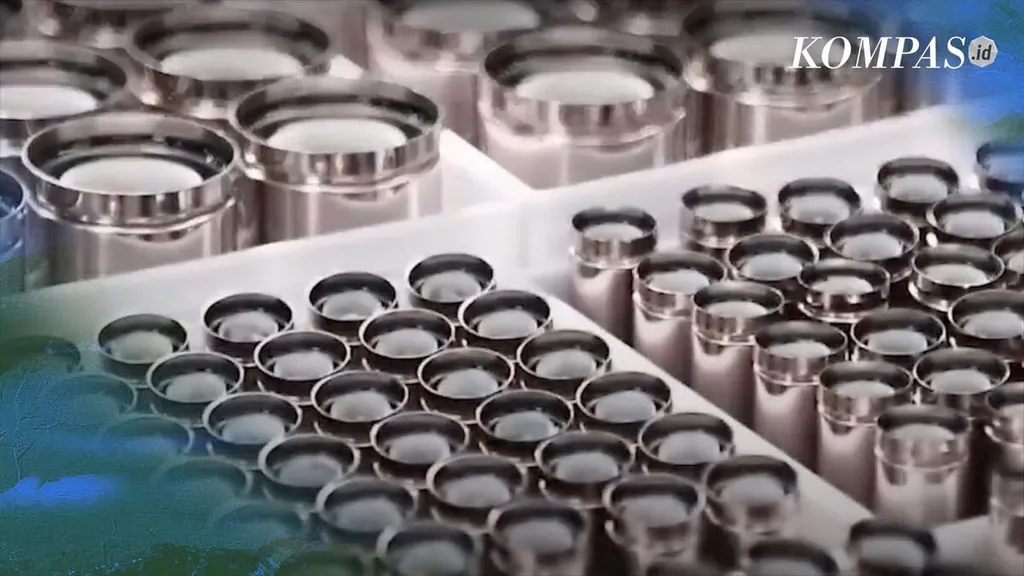
JAKARTA, KOMPAS — South Korean company LG Energy Solution has reportedly withdrawn an investment worth hundreds of trillions of rupiah for an electric vehicle battery supply chain project in Indonesia. LG’s departure is considered a loss for the country’s nickel downstreaming projects, and the government has been urged to publicly explain the situation.
Deputy Minister of Energy and Mineral Resources (ESDM) Yuliot Tanjung, when contacted on Monday (21/4/2025), said his office would first study the circumstances behind LG’s investment withdrawal. “I do not yet know precisely how far the investment withdrawal has progressed. I will check first, as coordination falls under the Ministry of Investment/Investment Coordinating Board (BKPM),” said Yuliot.
When asked for confirmation, officials at the Ministry of Investment/BKPM were also unable to provide a statement. As of publication, BKPM had not issued a press release explaining the reasons behind LG’s departure from the EV battery project in Indonesia.
Citing a report from South Korean news agency Yonhap, published on Friday (18/4/2025), the South Korean consortium led by LG decided to withdraw from the project valued at approximately 11 trillion won or US$7.7 billion, equivalent to Rp129 trillion. The consortium comprises LG Energy Solution, LG Chem, LX International Corp, and other partners, which had been collaborating with the Indonesian government and state-owned enterprises to build an EV battery supply chain in Indonesia. The partnership was forged because Indonesia is the world’s largest nickel producer, a key raw material for EV batteries. The project initiative encompassed the entire upstream-to-downstream process, from raw material procurement to precursor production, cathode materials, and battery cell manufacturing.
EVs not yet selling
Industry sources cited by Yonhap said the consortium decided to withdraw from the project after consulting with the Indonesian government. One reason was a shift in the industry landscape, referred to as the “EV chasm” — a temporary slowdown or plateau in global electric vehicle demand. This condition indicates that electric vehicles have so far only attracted a niche audience and have not yet achieved mass-market penetration.
“Considering market conditions and the investment environment, we have decided to exit the project,” said an official from LG Energy Solution. He affirmed that LG’s other investments in Indonesia would continue. “We will continue our other existing businesses in Indonesia, such as the Hyundai LG Indonesia Green Power (HLI Green Power) battery factory, our joint venture with Hyundai Motor Group,” he said.
However, EVs failing to penetrate the mass market was not the only reason. In South Korea, reports also circulated that LG’s investment failure was due to Indonesia’s political climate.
TNI Law revision
Citing a report published on News Daily, also a South Korean media outlet, one reason was the Indonesian government and House of Representatives’ recent revision of the Indonesian National Armed Forces Law (TNI Law). According to the media’s analysis, the TNI Law revision was considered controversial as it permits military personnel to hold concurrent government positions without being discharged from military service.
Currently, many South Korean companies have already entered Indonesia. Major domestic EV and battery companies, including Hyundai Motor Company, LG Energy Solution, and EcoPro, have invested in the country. Hyundai Motor Company built a factory in Indonesia in 2022 with an annual production capacity of 150,000 units and plans to expand it to 250,000 units, with US$1.55 billion (2.27 trillion won) to be invested. In addition to the car factory, they also built an EV battery plant. HLI Green Power, a joint venture between Hyundai Motor Company and LG Energy Solution, invested approximately 1.5 trillion won to build a battery factory with an annual capacity of 10 GWh, sufficient for 150,000 electric vehicles. EcoPro Group is also running its “Indonesia Drive” project to accelerate vertical battery integration by acquiring shares in Indonesian nickel refineries.
The News Daily article noted concerns that the TNI Law revision would impact the stricter labour regulatory environment faced by South Korean companies operating in Indonesia. There were also concerns that the Indonesian government would reduce tax incentives for foreign companies to secure the budget for priority programmes such as the Free Nutritious Meals (MBG) programme.
An industry insider quoted by News Daily said there were concerns that Korean companies that had invested trillions of won could “end up as pawns of Indonesia’s military regime”. The source added, “companies like EcoPro, which have not yet fully executed their investments, need to be cautious.”
Nickel downstreaming continues
Contacted separately, Corporate Secretary of PT Aneka Tambang Tbk (Antam) Faisal Alkadrie said Indonesia would remain a prime destination for EV battery investment. EV battery development projects in Indonesia involve a wide range of stakeholders, including Antam as a nickel raw material supplier. To date, Antam remains committed to its strategic plan for nickel downstreaming development, including collaboration with other potential partners.
“Indonesia remains a prime destination for EV battery investment due to its nickel wealth and policy support. Several other investors such as CBL (Ningbo Contemporary Brunp Lygend) are still actively working on similar projects,” he said.
Head of the Industry, Trade, and Investment Centre at Indef, Andry Satrio Nugroho, said the government needs to explain the circumstances surrounding LGES’s investment withdrawal as well as the problems being faced by Indonesia Battery Corporation (IBC) and PT HLI Green Power. “Because HLI is a joint venture and IBC has attempted several times to acquire a 5 per cent stake. What do the negotiations look like?” said Andry.
LG’s investment in Indonesia was intended to supply batteries for Hyundai’s nickel-based EV products. Meanwhile, Chinese manufacturers are permitted to sell completely built-up (CBU) vehicles — fully assembled imported cars — without having to first establish factories in Indonesia.
“In this regard, Hyundai is struggling to sell. Because its battery base is nickel, which is naturally far more expensive than LFP (lithium iron phosphate batteries widely used by Chinese cars), it does not receive significantly larger subsidies compared to non-nickel vehicles,” he said.
Inconsistent policies
According to Andry, reflecting on these conditions, there are inconsistent and discriminatory policies. The regulations and incentives provided by the Indonesian government to date are not exclusive to nickel. “This means all electric cars, regardless of their battery base — whether nickel or LFP — receive the same privileges. In this regard, Hyundai loses competitiveness against Chinese-manufactured cars,” Andry continued.
This inconsistency warrants scrutiny. If ignored, it is entirely possible that other investors will flee Indonesia. Andry assessed that other battery manufacturers may also consider the same course and depart. “Why bother producing nickel-based batteries? After all, Chinese cars largely use LFP. We must not end up giving incentives to all electric vehicles. The largest incentives must be given to nickel-based electric vehicles,” said Andry.
Although LGES has withdrawn its investment, Chinese EV battery producers Contemporary Amperex Technology Co Limited (CATL) and CBL continue the downstreaming process from nickel ore to EV batteries. Therefore, Andry cautioned, the government must ensure a domestic market exists to absorb these nickel-based products. The government must also ensure regulations including subsidies or incentive provisions to develop nickel downstreaming.