
LG Energy Solution Not Fully Withdrawing from Indonesia, Government Says Chinese Firm Huayou to Replace Role in Battery Projects
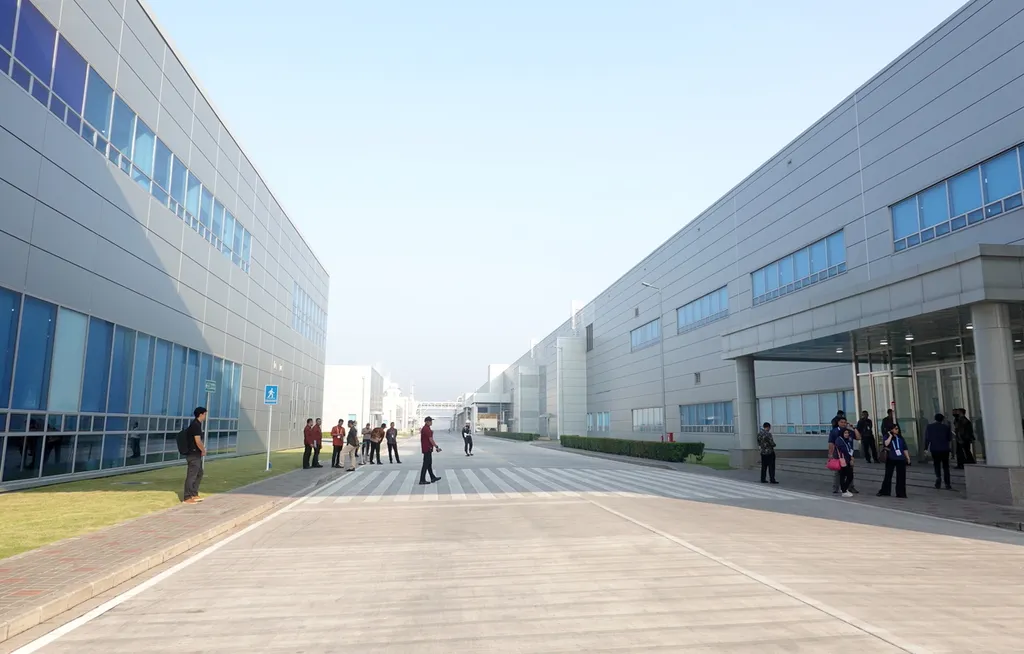
JAKARTA, KOMPAS — The government has confirmed that South Korean battery manufacturer LG Energy Solution is not entirely pulling its investment from Indonesia. The company is claimed to be increasing its investment in a battery cell factory project through a partnership with Hyundai Motor Group in Karawang Regency, West Java.
Investment and Downstreaming Minister/Head of the Investment Coordinating Board (BKPM) Rosan Perkasa Roeslani stated that LG continues to demonstrate its commitment to expanding the factory’s production capacity.
“They have currently invested US$1.1 billion. There are preliminary discussions that they wish to add a further US$1.7 billion for expansion,” Rosan said at a press conference at the BKPM building in Jakarta on Tuesday (29/4/2025).
The project is part of the fourth joint venture (JV) in the development of Indonesia’s electric vehicle battery ecosystem, operated by PT HLI Green Power. The factory officially commenced operations in July 2024 and forms part of a large-scale investment scheme called the Grand Package, encompassing battery supply chain development from upstream to downstream.
If realised, LG’s total investment in the fourth JV project would reach US$2.8 billion, or approximately Rp 46.9 trillion, in line with the initial target. Rosan also announced plans to personally inspect the factory on Wednesday (30/4/2025) to discuss further expansion plans.
Nevertheless, Rosan confirmed that LG will not be continuing its investment in three other JV projects. He explained that the investment structure within the Grand Package project is quite complex, with LG’s initial total investment of US$9.8 billion divided across four different joint ventures.
Rosan outlined that JV 1 is an upstream mining project with Aneka Tambang (ANTM), in which LG was only involved as a minority shareholder. JV 2 and JV 3 cover the construction of HPAL smelters and precursor and cathode factories.
“Each processing stage in the battery ecosystem has different partners, from nickel matte production, nickel sulphate, to battery cell manufacturing and recycling systems,” Rosan said.
Regarding LG’s withdrawal from JV 1 through 3, Rosan considered it understandable given the lengthy negotiation process and the enormous scale of the project. As a replacement, the government has established communication with Zhejiang Huayou Cobalt Co, a Chinese company that has previously invested in downstreaming projects in Morowali and Weda Bay.
“Huayou has expressed interest in replacing LG’s position and we have already met with them,” he said.
Huayou is not a newcomer to the industry. According to Rosan, the company has been part of the LG consortium since 2024 and understands the intricacies of the electric vehicle battery industry. Huayou has also invested in downstreaming projects in Weda Bay, North Maluku, and possesses the resources to enter the electric vehicle battery industry.
“Actually, Huayou was already part of the LG consortium. So now they are becoming the leading consortium member, that’s all,” he said.
On a separate occasion, Energy and Mineral Resources Minister Bahlil Lahadalia affirmed that the electric vehicle battery supply chain project under the Indonesia Grand Package scheme continues to proceed as planned.
“What has occurred is an adjustment of investment partners within the cooperation structure or joint venture,” he said.
Accordingly, the infrastructure and production plans for the integrated electric vehicle battery factory remain in line with the original roadmap. Changes have only occurred at the investor level, where LG is no longer continuing its involvement in JV 1, 2, and 3.
“This project is already underway, some parts have been inaugurated and begun production, and the remainder will continue to be overseen until completion according to targets. Nothing has changed from the original objective, which is to make Indonesia a global centre for the electric vehicle industry,” he said.
News of the LG consortium’s departure was initially reported by South Korean news agency Yonhap and several other Korean media outlets. On 18 April 2025, Yonhap reported that the LG consortium led by LGES had withdrawn from an electric vehicle battery project worth hundreds of trillions of rupiah in Indonesia.
The consortium had originally intended to cooperate with Indonesia Battery Corporation (IBC), a battery company consortium comprising four state-owned energy and mining enterprises in Indonesia, under the project name Titan within the Indonesia Grand Package scheme. The project integrates battery production from upstream nickel mining through to finished battery products.
The value of the investment abandoned by the LG consortium amounts to 11 trillion won, or US$7.7 billion, equivalent to Rp 129 trillion (at a rate of Rp 11,734 per won). The Titan project had been explored since President Joko Widodo’s administration, when Indonesia established its ambition to become a global nickel-based electric vehicle battery producer.
In Yonhap’s reporting, one of the reasons cited by LGES was a shift in the electric vehicle industry landscape. This phenomenon is termed the “EV chasm” — a situation of temporary slowdown or plateau in global electric vehicle demand. The EV chasm indicates that electric vehicles have thus far only managed to attract a small segment of consumers, but have not yet achieved sufficient appeal to penetrate the broader mass market.
Several factors prevent electric vehicles, particularly cars, from attracting a wider consumer base. These include the higher selling price of electric cars compared to internal combustion engine (ICE) vehicles, limited driving range, and excessively long charging times.
There is also information circulating in South Korean media that the LG consortium withdrew due to concerns that Indonesia’s business climate could become more restrictive following the ratification of the revised Indonesian National Armed Forces (TNI) Law.