
Lestari Moerdijat Reminds of the Importance of Complete Basic Immunisation for Children
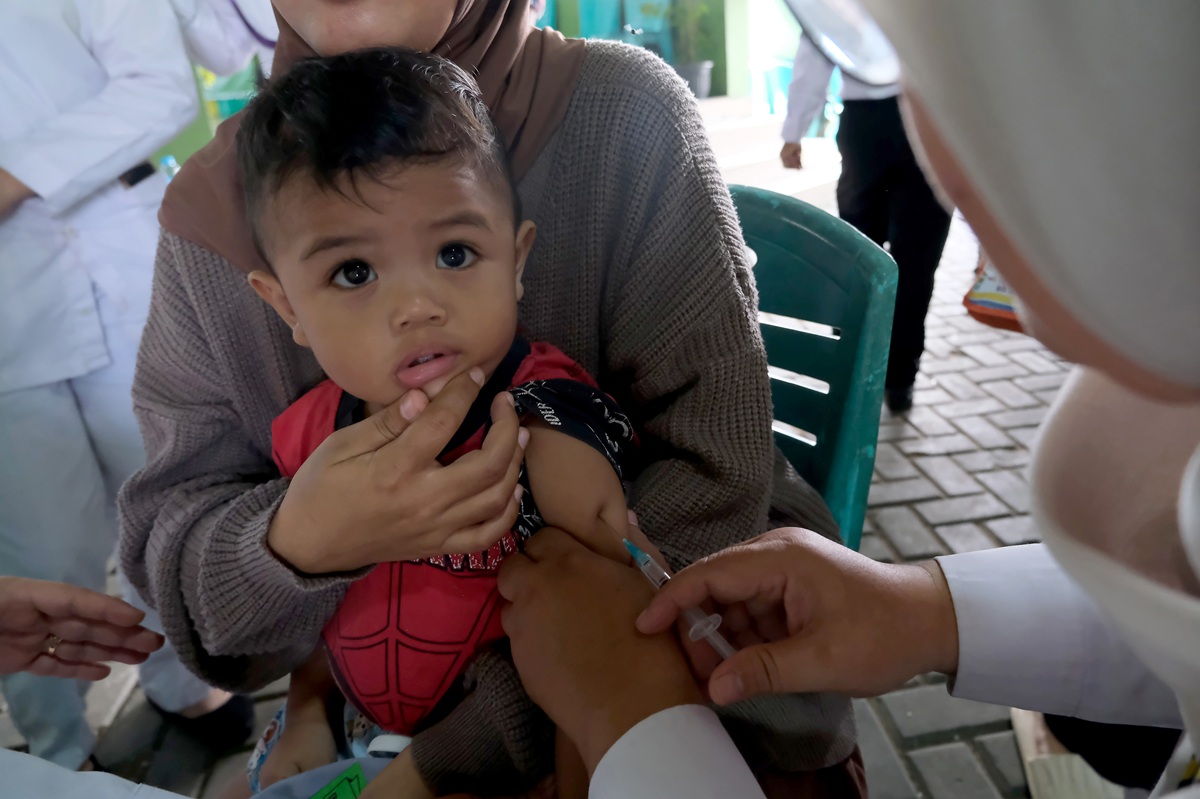
Deputy Speaker of the MPR RI, Lestari Moerdijat, has reminded of the importance of consistency in fulfilling complete basic immunisation for children. According to her, stakeholders must take this matter seriously to prevent explosions of infectious disease cases such as measles that endanger public health.
“Data from the Ministry of Health up to week 8 of 2026 shows worrying figures. There were 10,453 suspected measles cases, with 8,372 of them confirmed as measles cases. Six people were reported to have died,” she stated, as quoted from an official statement on Saturday (28/3).
Not only that, there were 45 Extraordinary Events (KLB) of measles spread across 29 districts and cities in 11 provinces. The affected areas include North Sumatra, West Sumatra, South Sumatra, Banten, West Java, Central Java, DI Yogyakarta, East Java, West Nusa Tenggara, South Sulawesi, and Central Sulawesi.
In response to this situation, she emphasised the importance of collaboration among all parties.
“Efforts to improve child health services must be a serious concern for all parties, to protect the nation’s next generation from the threat of infectious diseases like measles,” she said.
She also highlighted the government’s ongoing mass immunisation programme in 102 districts and cities. According to her, this effort needs full support from the community to successfully curb the surge in cases. According to her, there are still several obstacles in the implementation of complete immunisation.
“Some of them include low parental understanding of the importance of immunisation, concerns about side effects such as fever, the prevalence of hoaxes, and negative issues surrounding vaccines,” she stressed.
In addition, limitations in access and vaccine availability in several areas remain challenges.
She hopes that all these obstacles can be overcome soon through close cooperation between the government and the community.
“With that, efforts to produce a healthy and competitive next generation for the future can soon be realised,” she concluded.
In Indonesia, the current child immunisation schedule refers to the recommendations of the Ministry of Health as well as the latest guidelines from the Indonesian Paediatric Society (IDAI) updated in 2024.
Vaccines such as RSV, hepatitis A, hepatitis B, dengue, and meningococcus are given based on certain risks.
The government is expanding hexavalent immunisation through the strengthening of the National Immunisation Programme. Immunisation has proven effective in protecting children from dangerous infectious diseases.
The use of combination vaccines aims to reduce the number of injections, saving time and costs for visits to health facilities.