
Lestari Moerdijat: Addressing Child Suicide Requires a Systemic Response and the Involvement of All Parties
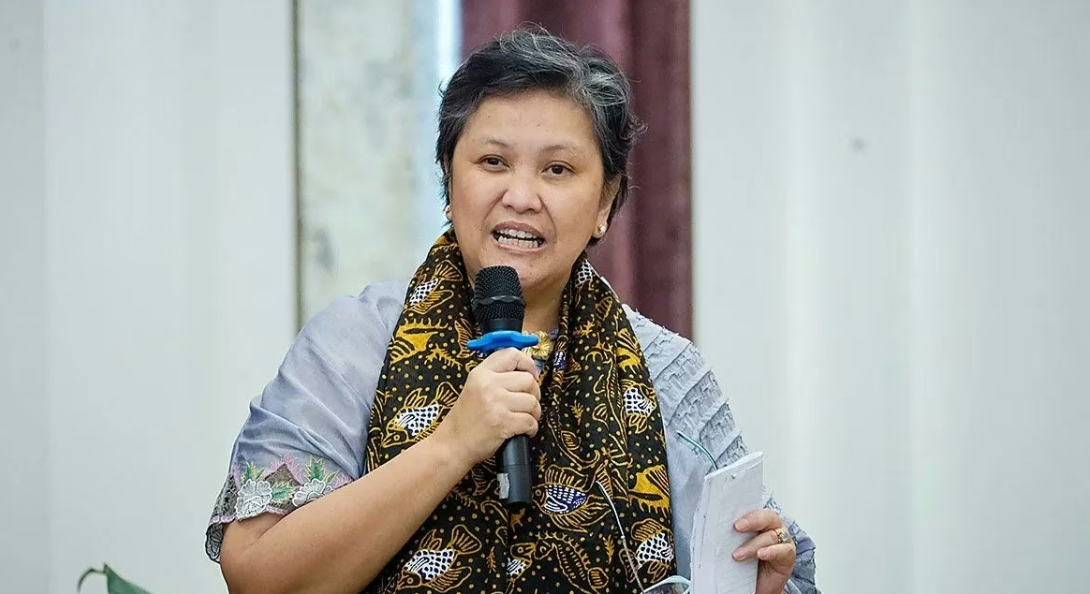
The high number of child suicide cases is considered not just a mental health issue, but a national issue that must be addressed collectively. Vice Chair of the MPR RI, Lestari Moerdijat, emphasized that this issue is directly related to the future of the nation.
“Talking about child suicide cases is talking about the future of the nation because these children are the ones who will carry the baton to build the future of the nation,” said Lestari in her speech at an online discussion themed ‘Caring for the Soul of the Nation’s Children: From Preventing Suicide to an Ecosystem of Life’, held by the Denpasar 12 Discussion Forum, Wednesday (25/2).
The discussion, moderated by Eva Kusuma Sundari, featured several speakers, including Director of Junior High Schools at the Ministry of Education and Culture, Dr. Maulani Mega Hapsari, Commissioner of the Indonesian Child Protection Commission (KPAI), Dr. Diyah Puspitarini, and Psychologist and Holistic Health Consultant, Shinta Sari Shaleh. Also present as a respondent was Member of Commission VIII of the DPR RI from the NasDem Party faction, Lisda Hendrajoni.
Citing data from KPAI, since 2023 to 2026, there have been 116 cases of child suicide in Indonesia. This number is said to be the highest in Southeast Asia and indicates that this phenomenon is recurring.
According to Lestari, this condition indicates a fragile foundation in efforts to instill values in the next generation. She believes that building a safe social space for every child should be a shared concern.
Lestari also reminded that Article 28B paragraph (2) of the 1945 Constitution states that every child has the right to life, growth and development, and protection from violence and discrimination. Therefore, efforts to prevent child suicide must be carried out systematically and become the responsibility of all elements of the nation.
The Director of Junior High Schools at the Ministry of Education and Culture, Maulani Mega Hapsari, revealed that whenever a child suicide case occurs at school, school administrators often become the ones blamed. In fact, according to her, education should take place continuously between family and school.
Maulani mentioned bullying in schools as an iceberg phenomenon that needs to be addressed seriously. The Ministry of Education and Culture, she continued, continues to encourage the development of a safe and comfortable culture through various strategic activities such as camps, student leadership workshops, and School Health Efforts (UKS) activities.
Strengthening is also carried out through national defense training and the development of positive activities at school. In addition, a number of counseling services are continuously optimized to respond to the problems faced by students.
The Commissioner of KPAI, Diyah Puspitarini, revealed that since 2023, they have issued an alert regarding the indication of an increase in child suicide cases. According to her, before a child ends their life, there are usually actions that hurt themselves.
Based on KPAI’s records, most cases are carried out by hanging. This shows the need for early detection and a rapid response to signs of crisis in children.
Psychologist Shinta Sari Shaleh believes that child suicide is not just an individual problem, but a systemic problem that has not been able to provide a safe space. She believes that there are no children who wake up and immediately want to end their lives without a trigger.
According to Shinta, suicide often occurs because the system around the child is slow to respond to their mental needs. Therefore, a national education is needed for teachers and parents to understand the child’s growth and development comprehensively.
The Member of Commission VIII of the DPR RI from the NasDem Party faction, Lisda Hendrajoni, appreciated a number of programs from the Ministry of Education and Culture in preventing bullying. However, she questioned whether these programs have reached all students, including the effectiveness of counseling services at school.
“Is the ratio of counselors and students comparable?” said Lisda.
In response to KPAI’s data, Lisda believes that a rapid and measurable response is needed to anticipate the potential for suicide in the child’s environment. She emphasized the strengthening of the pillars of family, school, community, and the state to build a safe and comfortable ecosystem.
“The state must be able to build a comprehensive child protection system, without that we are building a fragile future for the nation,” said Lisda.
Senior journalist Usman Kansong linked the phenomenon of suicide to the theory of Emile Durkheim, who researched the relationship between suicide and social ties. According to him, social ties that are too loose or too tight can both trigger this action.
Usman believes that the child suicide cases that are happening now are triggered by the loosening of social ties in the family environment. He highlighted the phenomenon of children who prefer to confide in AI because they feel judged when they talk to people around them.
He invited the public to re-examine the quality of social ties in their environment proportionally so that they are not too loose or too tight.
The government is paying serious attention to cases of children who end their lives due to problems that are considered trivial but end tragically.
The Deputy for Fulfillment of Children’s Rights at the Ministry of Women’s Empowerment and Child Protection, Pribudiarta Nur Sitepu, emphasized that the tragedy of a student committing suicide in NTT should not have happened.
The Ministry of Education and Culture views the incident of a student committing suicide in NTT as a very serious incident, and reminds that the psychosocial well-being of children is a complex issue.
A student from an elementary school in East Nusa Tenggara (NTT) with the initials YBS, who committed suicide because he allegedly could not afford to buy notebooks and pens, is considered as clear evidence of the state’s failure.
IN RESPONSE to the case of a child committing suicide in NTT, a child psychologist, Mira Damayanti Amir, said that this condition may be caused by learned helplessness, here is the explanation.