
LESTARI KOTA Programme Promotes Urban Farming as a Solution for the Future Food System
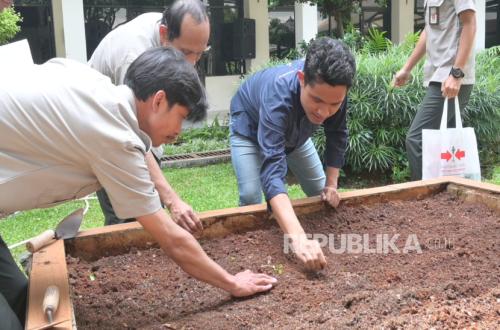
Efforts to strengthen national food resilience are not only conducted through large-scale agriculture but also through the utilisation of increasingly limited urban land. In response to these challenges, the LESTARI KOTA Programme was officially launched via the signing of a memorandum of understanding between the Directorate General of Horticulture of the Ministry of Agriculture of the Republic of Indonesia and PT East West Seed Indonesia (EWINDO).
The LESTARI KOTA Programme is a practice-based educational initiative that provides gardening classes, urban farming mentorship, and hydroponics training that is easily applicable in urban environments. The programme is designed to impart understanding as well as practical skills in horticultural cultivation on limited land, which is increasingly relevant amid growing pressures on land availability and food needs in urban areas.
The activities will run from April to August 2026, starting with a kick-off on 30 April 2026. Participants will then attend practical classes and mentorship sessions every two weeks, with a hands-on learning approach from planting to harvesting. The entire series of activities will be conducted within the Directorate General of Horticulture environment, utilising available garden areas and facilities as direct field learning resources.
The programme involves employees within the Directorate General of Horticulture as active participants. Through a participatory approach, participants not only receive materials but also engage directly in the cultivation process, from planting to harvesting. Regular mentorship is a key component to ensure the learning process is sustainable and yields practical, applicable results.
The implementation of the LESTARI KOTA Programme is driven by the need to enhance human resource capacity in horticulture, while also promoting the adoption of urban farming practices as a solution for utilising limited urban land. Amid issues of climate change, urbanisation, and potential disruptions to food supply chains, the ability to produce food independently becomes increasingly important, including for communities in urban areas.
Based on the 2023 Agricultural Census, the number of Individual Urban Farming Enterprises was recorded at 13,019 units. Meanwhile, the DKI Jakarta Provincial Food Security, Maritime, and Agriculture Office (DKPKP) noted that in 2023, urban farming produced 80,834.64 tonnes of horticultural crops and 1,326.41 tonnes of food crops, an increase from 2022 which reached 65,215 tonnes for horticulture. These data indicate that with the support of innovation and appropriate cultivation practices, limited urban land has the potential to produce sustainably.
Therefore, the LESTARI KOTA Programme also emphasises that innovations in the agricultural sector do not always have to be large-scale. Impactful innovations are those that are accessible, understandable, and directly applicable by the community, including in urban environments. Through simple approaches such as hydroponic techniques, selection of superior seeds and appropriate varieties, and efficient cultivation practices, the programme presents relevant and easily implementable solutions in everyday life.