
Lessons from the Severe Traffic Jam in Gilimanuk: This Turns Out to Be the Root of the Problem
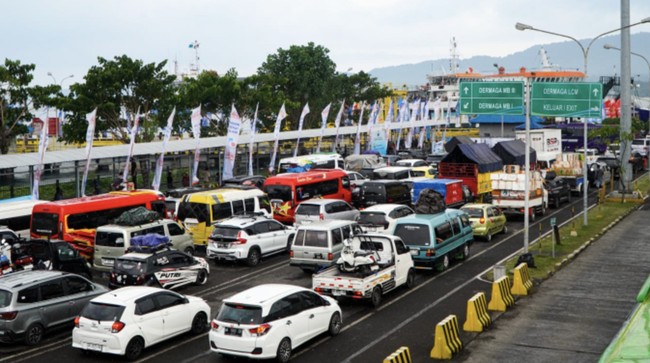
Severe traffic jams at Gilimanuk Port in Bali, on the crossing route to Ketapang in Banyuwangi, drew sharp criticism during the Eid exodus in mid-March 2026. Vehicle queues snaked for dozens of kilometres, with travellers reportedly facing journeys of over a dozen hours from Denpasar to Gilimanuk.
Where exactly is the main problem? What needs to be done for future improvements?
Many parties initially blamed the close timing between Nyepi Day and Eid al-Fitr as the primary trigger. However, Researcher at the Institute for Transportation Studies (Instran), Ki Darmaningtyas, believes that view is not entirely accurate.
“If it were solely due to Nyepi and Eid being close together, the previous year should have experienced the same. In fact, it did not see congestion as severe as now,” he told CNBC Indonesia on Thursday (26/3/2026).
This year’s extreme congestion was more influenced by a combination of structural factors that were not well anticipated. One trigger was the change in public movement patterns due to the expansion of operational Trans-Java toll roads further east.
“In 2025, the new toll road only reached Probolinggo, whereas in 2026 it was approaching Banyuwangi. This made the public more inclined to use private vehicles, both to Bali and vice versa,” he explained.
This surge in private vehicles, he continued, was not matched by the port’s infrastructure capacity. Both Gilimanuk and Ketapang ports have serious limitations, from the number of docks to parking areas.
“There are only four docks, and parking space is limited. There is no buffer zone to accommodate unticketed vehicles. This causes vehicles to pile up onto the main roads,” he said.
The presence of a buffer zone could actually serve as a solution to dampen density in the port area. Another equally crucial issue is the weak governance of ferry transport. The suboptimal ticketing system leads to uncontrolled vehicle arrivals.
“Everyone arrives at the same time, whether they have tickets or not. This differs from transport like planes or trains, where passengers arrive according to schedules,” he revealed.
He also highlighted the implementation of the Ferizy online ticketing system, which is deemed inaccurate between app data and on-site conditions.
“The app often shows tickets as sold out, but upon arrival, many are still available. This leads people to speculate and arrive without tickets,” he said.
According to him, this lack of synchronisation sets a bad precedent by encouraging undisciplined user behaviour towards the system.
Beyond transportation technical factors, Darmaningtyas also sees the influence of public psychology due to global issues, particularly the conflict in the Middle East.
“There is concern over fuel price hikes or shortages due to war. This prompts some people to choose to travel home earlier, all at once,” he said.
This situation ultimately worsens the vehicle surge in a short time. To address this issue moving forward, improvements are essential from infrastructure to management aspects.
“Adding docks and enhancing their quality is urgently needed to match the vehicle surge,” he said.
Additionally, he proposes building a buffer zone several kilometres before the port to hold vehicles without departure schedules. From the system side, he urges a complete overhaul of the electronic ticketing mechanism.
“ASDP needs to learn from airlines and KAI. The ticketing system must be precise between what’s shown in the app and on-site conditions,” he stated.
He also believes the ticketing sales system should not rely on a single platform to make it more flexible and transparent. No less important, intermodal transport integration is seen as the key to the long term in reducing dependence on private vehicles.
“If movement from Java could use trains more, even if only to Ketapang, it would significantly reduce traffic burden,” he concluded.