
Legislator Reminds Government to Protect Pilgrims and Mitigate Hajj Financing Risks
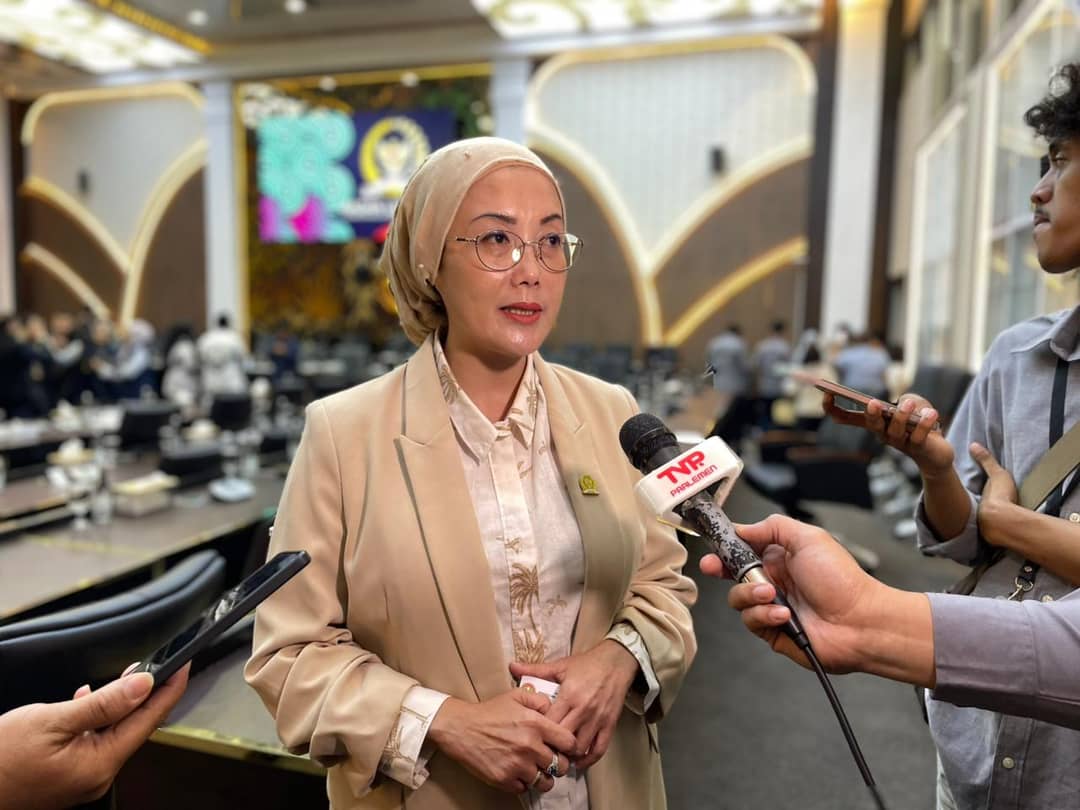
A member of Commission VIII of the Indonesian House of Representatives, Selly Andriany Gantina, has reminded the government to strengthen protection for Umrah pilgrims whilst maintaining the financial stability of hajj services. This step is necessary as a response to geopolitical tensions in the Middle East, which are beginning to impact the weakening of the rupiah’s exchange rate against the US dollar.
“The raging Middle Eastern conflict affects all aspects, from security to economics. Therefore, comprehensive mitigation is needed, including bringing Umrah pilgrims home safely and ensuring hajj finances are not disrupted,” Selly said in a written statement on Wednesday (11 March).
The situation in the region has intensified due to conflict between Iran, Israel and the United States, including the blockade of the Strait of Hormuz. As a result, the rupiah’s exchange rate has plummeted to touch Rp17,000 per US dollar.
On the other hand, the Government of Saudi Arabia has established several important deadlines ahead of the hajj season. These include the submission of Umrah visas on 19 March 2026, the final deadline for Umrah pilgrims to enter Saudi Arabia on 2 April 2026, and the requirement for all Umrah pilgrims to leave Saudi Arabia no later than 18 April 2026.
After that date, all Umrah activities will be halted to prepare for the conduct of hajj worship.
The escalation of conflict also has a direct impact on the stability of international flights, logistics routes, and rising world energy prices.
“We are anticipating all possibilities, including worst-case scenarios. If there is an escalation that affects flight mobility or access to enter and exit Saudi Arabia, then the protection of Indonesian pilgrims becomes the top priority,” said the former Deputy Regent of Cirebon firmly.
The legislator from the Indonesian Democratic Party of Struggle faction has given special attention to independent Umrah pilgrims. This group is considered the most vulnerable because they often lack understanding of the latest regulations from Saudi Arabian authorities.
“We must ensure that during any crackdown or sweeping operations to empty the holy cities such as Mecca ahead of the hajj season, no Indonesian pilgrims are left behind, lack valid travel documents, or end up being deported. Such situations not only harm pilgrims but could also potentially result in sanctions against Indonesia,” she said.
Regarding the financial aspect, Selly reminded that emergency financing scenarios should be prepared if hajj pilgrims are forced to stay longer in Saudi Arabia due to emergency conditions. However, she cautioned that the use of such funds should not disrupt the long-term sustainability of hajj savings.
“In such circumstances, we cannot simply burden the entire situation to the funds managed by BPKH (Hajj Financial Management Agency). Hajj funds must maintain their sustainability. We cannot allow all financial resources to be used to salvage a short-term situation, only to find that the following year there are insufficient funds to send out pilgrims,” she explained.
Another potential challenge is flight routes. If the main routes are disrupted, airlines such as Garuda Indonesia or Saudi Arabian Airlines may have to take longer routes, for instance routing through Africa, which would certainly increase operational costs significantly.
“Therefore, the government must prepare various options from now on, ranging from diplomatic coordination, airline readiness, to emergency financing schemes, so that the safety and certainty of pilgrims’ return is guaranteed,” concluded Selly.
Commission VIII of the House of Representatives remains committed to continuously monitoring this situation to ensure the state fully supports the protection of pilgrims, both those currently performing Umrah and those preparing for the 2026 hajj season.