
Legislator Pushes for National AI Regulatory Framework
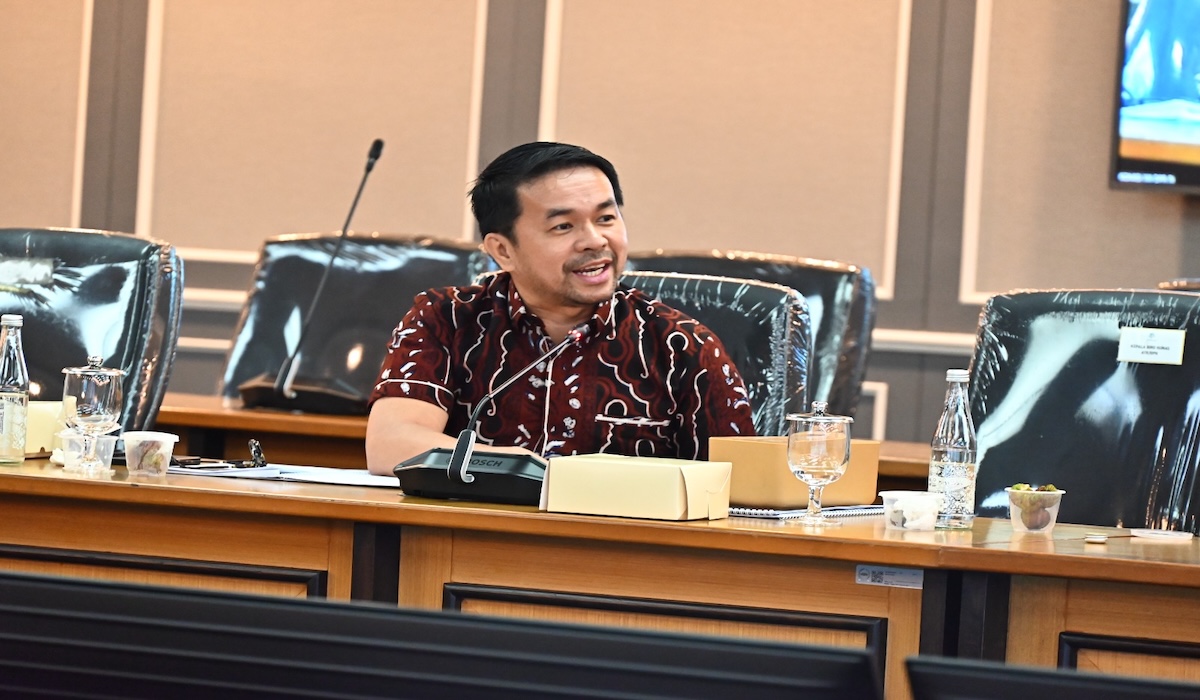
Indonesian House of Representatives (DPR) member Marinus Gea has urged the government to begin preparing a comprehensive national framework for artificial intelligence (AI) governance. His proposal includes establishing a dedicated agency or authority as the lead sector and drafting a national AI law.
Marinus made the proposal during a Public Hearing (RDP) with the Directorate General of Intellectual Property (DJKI) at the DPR building on Tuesday (26 May).
Marinus stated that AI’s rapid development has had wide-ranging impacts across various aspects of life. Therefore, AI regulation cannot be confined to intellectual property perspectives or merely amending the Copyright Law.
He noted that AI affects numerous sectors, including copyright, trademarks, industrial designs, patents, law, technology, digital economy, and issues directly related to humans.
“If only one aspect is addressed, all laws will be affected. For instance, AI-generated outputs in trademarks, industrial designs, patents, and beyond. Not just intellectual property, but all aspects of life are now influenced by AI,” Marinus said.
He stressed the need for a holistic approach to prevent AI regulation from being fragmented across sectors. Separate rule changes, he warned, could lead to overlapping policies in the future.
Therefore, Marinus proposed that the government consider establishing a dedicated agency to lead the formulation and implementation of national AI policies.
“Why not propose a single agency or entity as the lead sector for the AI law? This way, the AI law can encompass all other laws affected by AI,” he said.
Marinus viewed AI as a new regime requiring strong regulatory foundations from the outset. He cautioned the government not to focus solely on downstream issues but to build legal frameworks from the root.
“If only that is discussed, it will become a tangled mess. Do not just look from the intellectual property framework. We must address the root, not just the end,” he said.
During the hearing, Marinus also mentioned AI regulation developments in other countries. He noted that the United States, a global AI hub, still faces challenges in protecting AI-generated outputs.
In Europe, he said, regulatory approaches focus more on protecting the technology or tools used, rather than AI outputs themselves.
Marinus said this presents an opportunity for Indonesia to act early in developing comprehensive, adaptive AI governance aligned with national interests.
He hopes Indonesia will not only be a technology user but also build robust regulatory systems to ensure AI benefits society, business, and national development. (Z-10)