
Legislator: Punish the Perpetrator of Santriwati Abuse in Pati in Accordance with the TPKS Law
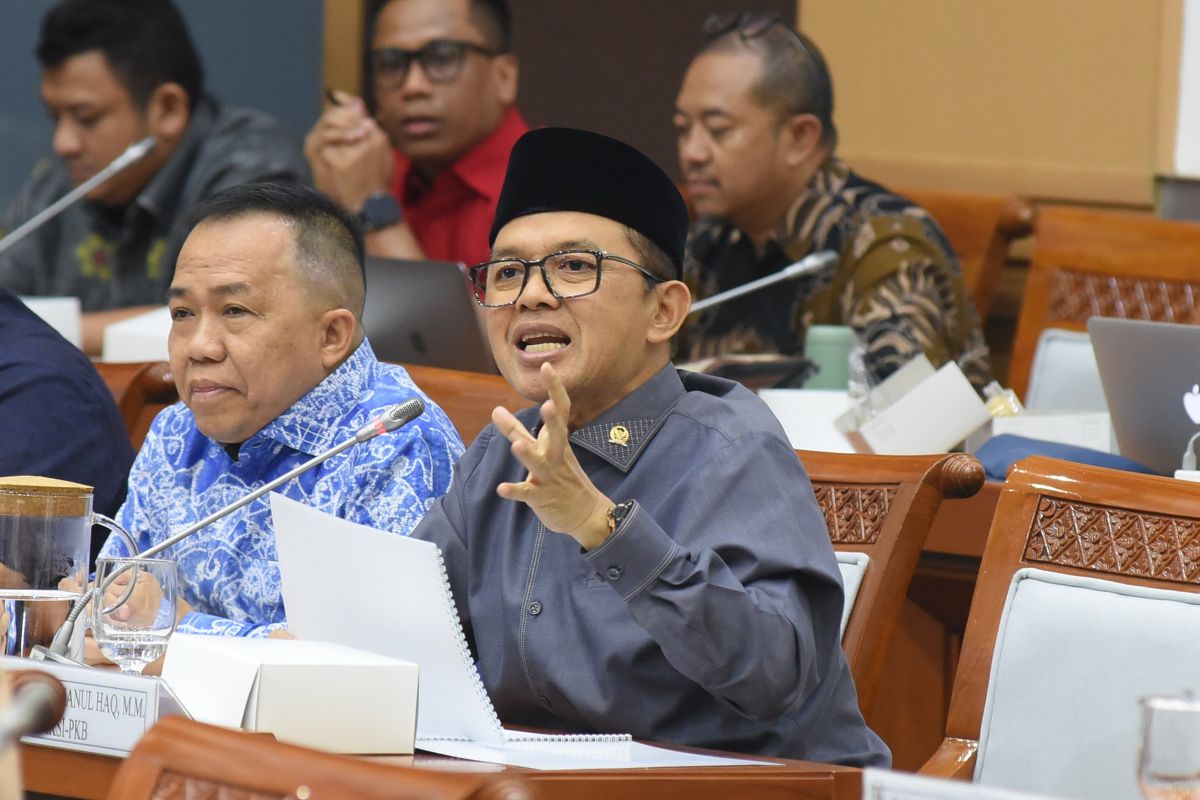
Jakarta (ANTARA) - Member of the Indonesian House of Representatives Commission VIII, Maman Imanulhaq, stated that AS, the perpetrator of the sexual abuse of female students at Pondok Pesantren Ndholo Kusumo in Pati, Central Java, must be punished in accordance with Law Number 12 of 2022 on Sexual Violence Crimes.
“The perpetrator must be prosecuted to the fullest extent of the law, including aggravated penalties under the TPKS Law. There must be no compromises, mediations, or internal settlements,” Maman said in a statement received in Jakarta on Friday.
He emphasised that AS must receive the maximum punishment because, in addition to committing sexual violence against dozens of students, the perpetrator is also alleged to have intimidated the victims and their families when they attempted to reveal the case.
He explained that Article 15 of the TPKS Law stipulates that the prison sentence for the perpetrator may be increased by one-third of the maximum penalty if the perpetrator is a religious figure educator, parent/guardian, or person with special authority who should protect the victim.
This provision, according to him, aligns with AS’s alleged actions using his power dynamics as the leader of the pesantren where the victims studied.
“The perpetrator must be severely punished. If the pesantren is proven to be negligent or involved, its permit should be revoked. However, if not, what must be done is a total overhaul with strict supervision,” Maman stated.
As a legislator in the fields of religion and social affairs, Maman also emphasised the importance of a total evaluation of the education system in pesantrens. This is given that cases of sexual violence have occurred repeatedly.
Recently, a case of sexual violence also occurred at one of the pesantrens in Ciawi, Bogor, West Java. It is alleged that 17 male students experienced sexual violence from a teacher and fellow students.
Therefore, Maman said there is a need for improvements in pesantren governance. “If it is proven that there is negligence, a flawed system, or other managers involved, then the state must freeze or revoke operational permits,” he said.
“So, closure is not the primary goal, but protecting the students is the primary goal. Closure is an option if the institution fails to ensure that,” he added.
In addition, he emphasised that the state must be present to protect victims. The focus in sexual violence cases is not only on the perpetrator but also on victim recovery, both psychologically, legally, and socially.
“A comprehensive audit of the childcare system in pesantrens. Child protection standards must be applied in all religious educational institutions, including providing safe complaint channels for male and female students,” he further said.
Furthermore, he called for the government’s commitment to make improvements, including closing gaps that could lead to sexual violence in every pesantren and various other prevention efforts.
“It is also important to note that the majority of pesantrens in Indonesia are not involved in such cases. However, the emerging cases indicate the need for serious reform so that pesantrens truly become safe spaces for students or learners,” Maman said.