
Legislator Outlines Impact of Uniform Packaging and Derivative Rules of PP No. 28 of 2024
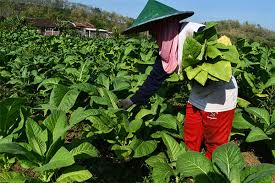
The review team from the Ministry of Coordinating Human Development and Culture, which proposed lower limits on nicotine and tar content in tobacco products, has sparked widespread protests from industry players to farmers.
In addition to the proposal for much lower nicotine and tar limits, various tobacco sector stakeholders have also requested government protection by asking for an evaluation of the plain packaging plan being prepared by the Ministry of Health (Kemenkes). This regulation has the potential to damage the national economy, violate intellectual property rights (HAKI), and trigger a drastic surge in the circulation of illegal cigarettes. Moreover, this policy is also feared to pose a threat to the protection of the legal industry, which has so far made a significant contribution to employment absorption and state revenues through excise taxes.
Member of DPR RI Commission IX from the NasDem Faction, Nurhadi, stated that every tobacco product consumption control policy should be placed within a proportional framework of public health protection. In addition, the policy also needs to consider the national socio-economic conditions.
“The discourse on uniform packaging or plain packaging initiated by Kemenkes certainly needs to be studied comprehensively. We should consider its impact on workers, tobacco farmers, tobacco product MSMEs, the tobacco industry, and state revenues, besides only looking at the health side,” said Nurhadi.
He demanded that the plain packaging policy not be made the sole domain of Kemenkes, because its substance already touches on trade law aspects and protection of legitimate business rights. Rules like that must have cross-ministerial harmonisation and thorough discussion with the DPR.
Nurhadi emphasised that the current Graphic Health Warning (GHW) mechanism actually already provides a very significant portion of health warnings. “If it is then added with a plain packaging policy that completely eliminates brand identity, of course the question arises whether this is still within the limits of the existing regulatory mandate or is excessive,” Nurhadi stressed.
He reminded President Prabowo Subianto, as the head of government, has a crucial role in ensuring that every policy runs in accordance with legal mandates and national interests. If there is potential overreach of authority by one ministry that has broad and cross-sectoral impacts, coordination must be carried out.
Nurhadi affirmed that Commission IX of the DPR RI promises to continue maximising its oversight function so that tobacco control policies remain proportional. The rules made are encouraged not to cause social unrest and encourage waves of layoffs.
Furthermore, the General Chairman of the Indonesian Tobacco Communities Alliance (AMTI), Edy Sutopo, stated that the discourse on the implementation of plain packaging is an inappropriate and counterproductive step for the business climate in Indonesia. He is concerned about the potential explosion of illegal cigarettes if the visual identity of legal products is completely uniform.
Based on several studies, the circulation of illegal cigarettes in 2025 is projected to surge to 13.9%, a very drastic increase compared to the 2023 figure which was still at 6.9%. According to Edy, plain packaging will give room for illegal products to more freely penetrate the market because the differentiating factor of packaging is increasingly reduced.
Edy also explained that brand identity consisting of writing and colour is also a right protected by Law No. 20 of 2016 on Marks and Geographical Indications. There are more than 1,000 officially registered cigarette brands that have legal rights over their intellectual property.
AMTI believes that regulations regarding packaging are currently already well regulated through Minister of Finance Regulation No. 2017 of 2021. The synergy that has been running between health information aspects and marketing should be maintained without having to kill brand existence.
If the plain packaging policy is still enforced, he said, the losses arising from this policy are predicted to extend to more parties. “The plain packaging rule is irrelevant. Many countries implementing such regulations are countries that do not have tobacco farmers, do not have clove farmers, and do not have a tobacco ecosystem,” he added.
The Ministry of Coordinating Human Development and Culture (Kemenko PMK) has affirmed its commitment to absorbing all aspirations from various stakeholders.
Various forms of rejection and objections emerged from various elements of society in the Public Testing Forum for the Study on Determining Maximum Limits for Nicotine and Tar.
In the midst of excise contributions reaching hundreds of trillions of rupiah and the involvement of millions of workers, the tobacco products industry (IHT) faces increasingly complex policy pressures.
Indonesian local tobacco has a tendency to have high nicotine content, around 2 to 8 percent.