
Legislator: One Day WFH is Not the Sole Solution for Fuel Savings
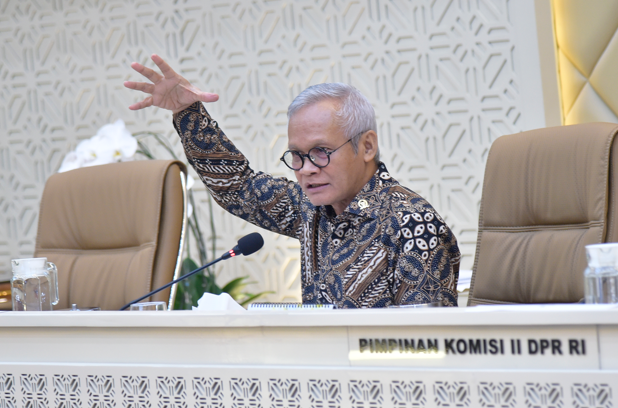
Deputy Chairman of Commission II of the Indonesian House of Representatives, Aria Bima, emphasised that the policy of Work From Home (WFH) for one day per week for civil servants (ASN) and private sector workers must not be made the sole method for saving fuel oil (BBM).
The legislator from the PDI Perjuangan Faction reminded the government to evaluate this policy in depth to ensure that public services continue to operate optimally without disruption.
Aria appreciated the WFH concept as a short-term initiative. However, he stressed that the policy should not be positioned as the sole solution to the issue of rising oil prices.
“The idea of WFH is not something new, given that work flexibility has been officially regulated through Ministry of PAN-RB Regulation Number 4 of 2025. Its target remains focused on improving institutional productivity without reducing the quality of services to the public,” said Aria Bima in his statement on Wednesday (25/3).
Aria assessed the government’s proposal as quite positive if implemented selectively. According to him, WFH one day per week is still relevant for ASN carrying out administrative tasks, managing digital documents, or in back-office positions.
Nevertheless, a different approach must be applied to ASN in direct service sectors, field operations, or other vital areas. He warned that this policy should not be misinterpreted as an additional holiday.
“The implementation of FWA (Flexible Working Arrangement) or WFH must be adjusted to the characteristics of services in each agency, because many services still require physical presence,” he explained.
Regarding the private sector, Aria asked the government to be more cautious. He suggested that policies for the private sector should be in the form of recommendations or sector-specific incentives, not uniform obligations.
He gave examples that industries such as manufacturing, logistics, retail, and health have operational characteristics that differ greatly from the digital sector. Forcing WFH comprehensively without clear parameters is deemed risky and could have a negative impact on productivity.
“If the government wants this policy to be strong, what is needed now is not just announcements, but open impact studies and clear evaluation parameters,” he added.