
Legislator: Hydro-meteorological disasters directly impact farmers
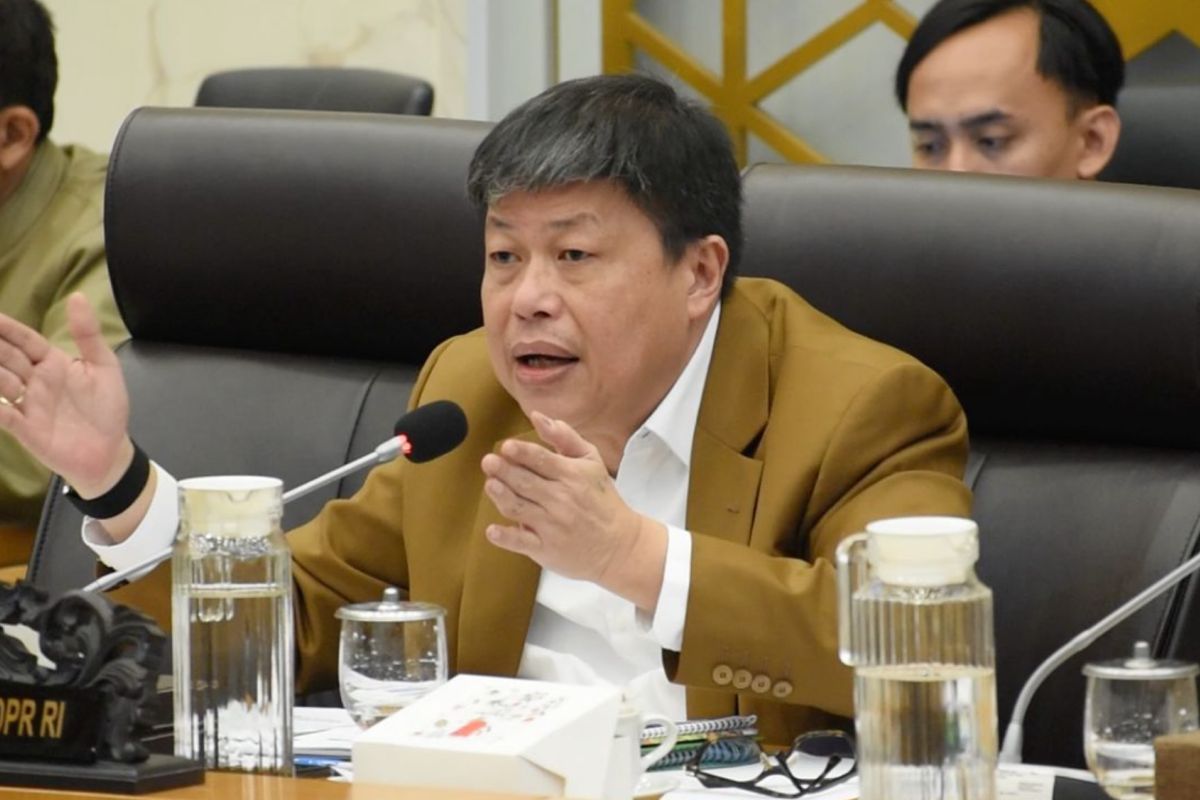
Jakarta (ANTARA) - Deputy Chairman of Commission IV of the Indonesian House of Representatives, Alex Indra Lukman, has reminded the government not to delay handling the impacts of floods caused by hydro-meteorological disasters, as this will directly affect farmers who lose their land.
“Delays and lack of thoroughness in diagnosing the impacts of floods will cause farmers to suffer even more,” said Alex Indra Lukman in Jakarta on Tuesday.
According to him, in addition to the impending crop failure, this disaster will also prevent farmers from quickly replanting their rice fields.
He mentioned that repeated flooding in Demak was triggered by the collapse of the Tuntang River embankment at the end of last weekend, which has submerged 671 hectares of rice fields.
“This flood has inundated thousands of homes and forced thousands of residents to evacuate,” he said.
According to him, rehabilitating rice fields affected by floods is not like general project work.
“This means that rehabilitating these rice fields will require a longer time due to the complex technical implementation,” he said.
He assessed the progress of rice field rehabilitation completed by the Task Force for Accelerating Post-Disaster Rehabilitation and Reconstruction in Sumatra (Satgas PRR) as of 28 March 2026.
Of a total of 42,702 hectares of rice fields targeted for rehabilitation in three affected provinces, only 991 hectares have been successfully rehabilitated.
“This means only 2.32 percent, while 5,333 hectares are in the process of handling,” he said.
According to him, the institution established through Presidential Decree 1/2026 to lead rapid recovery from natural disasters in Aceh, North Sumatra, and West Sumatra has, in detail, rehabilitated only 42 hectares of rice fields out of 31,464 hectares targeted in Aceh.
Then, 170 hectares of rice fields in North Sumatra have been successfully rehabilitated out of a target of 7,336 hectares. In West Sumatra, 779 hectares have been rehabilitated out of a target of 3,902 hectares.
“When rice fields are flooded, what is lost is not only the harvest, but also the production capital already invested by farmers, irrecoverable working time, and shifted harvesting opportunities without certainty,” he stated.
According to the DPR member from the West Sumatra I electoral district, the greatest burden from this flood actually emerges after the water recedes, precisely when farmers have to start over from zero with increasingly thin economic resilience.
“Therefore, it is important for the government to ensure that handling does not stop at merely recording the extent of affected land,” he said.
Alex assessed that what is more determining is whether the land can still be saved in the current planting season. Then, how the distribution of seed aid and production facilities is carried out, and to what extent agricultural insurance protection truly works in repeatedly vulnerable areas.
He said that without a rapid recovery scheme, production disruptions will more easily turn into price pressures that are ultimately felt by the wider community.
“There must be quick steps to address this,” he said.