
Legislator Highlights Social Assistance Distribution Amid Inflation, Urges Data Integration for Targeted Delivery
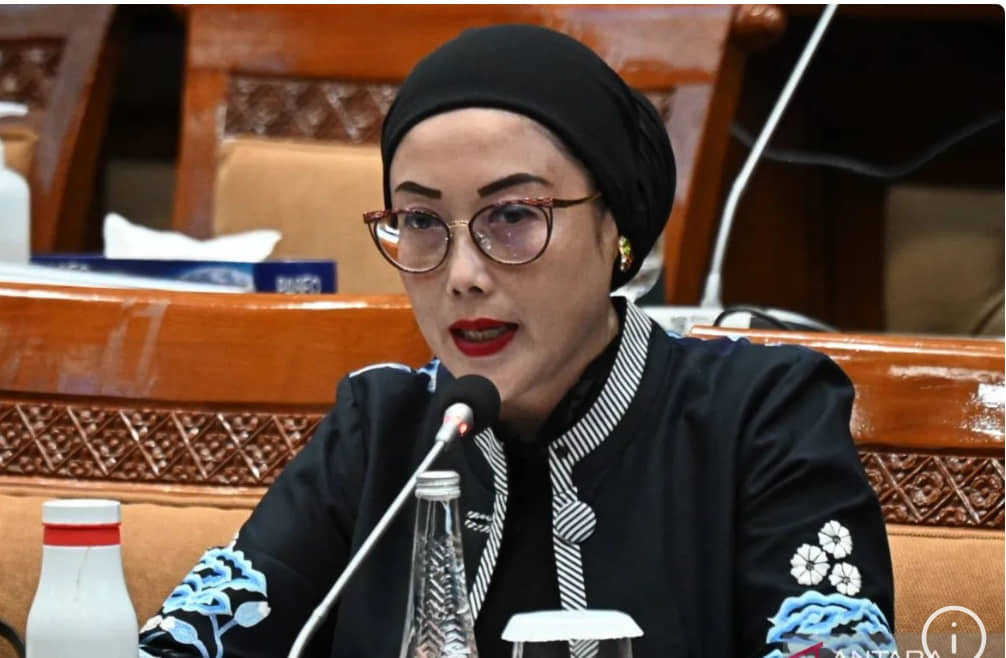
Member of DPR RI Commission VIII, Selly Andriany Gantina, has highlighted the government’s efforts in distributing social assistance (bansos) amid inflationary pressures. She assesses that issues with the chaotic data of social assistance recipients in society continue to occur.
Drawing from the technical experience of social assistance distribution in previous periods of the Ministry of Social Affairs, Selly sees that the process of distributing aid and verifying recipient data should be carried out simultaneously.
“Given the current inflationary pressures, the distribution of social assistance with the verification of recipients by the Ministry of Social Affairs should not be separated. The Social Welfare Data and Information Centre (Pusdatin) and facilitators must have the authority to verify and validate before issuing the beneficiaries to Himbara Bank,” said Selly Gantina in her press release on Thursday (26/3).
Previously, Social Affairs Minister Saifullah Yusuf planned to distribute social assistance to maintain people’s purchasing power. A direct transfer scheme would also be implemented to the recipients.
However, Selly views this initiative as still leaving problems, particularly regarding the increase in welfare deciles based on welfare levels that are deemed inaccurate and lack clear authority in their determination.
“Providing social assistance amid inflation is to maintain people’s purchasing power. Therefore, its verification must be thorough and not convoluted, lest in the end the same people keep benefiting, or even in other cases, it becomes idle funds in the bank,” said the legislator from the PDI Perjuangan Faction, Hj.
For this reason, she emphasises the importance of strengthening the role of the Ministry of Social Affairs, both at the central and field levels. This strengthening includes the Social Welfare Data and Information Centre (Pusdatin), facilitators of the Family Hope Program (PKH), Sub-district Social Welfare Officers (TKSK), and support staff for persons with disabilities and the elderly under social rehabilitation (Rehsos).
According to Selly, the Ministry of Social Affairs must be the spearhead that not only carries out administrative functions but also ensures that aid is received intact by the community, without deviations, while helping recipients understand the disbursement mechanisms.
Furthermore, the legislator from the West Java VIII electoral district revealed that various field problems still exist, including brokerage practices in managing social assistance. This condition is seen as an indication that aid distribution is not yet fully clean and still opens loopholes for deviations.
“Tackling inflation is one way through social assistance, but do not let social assistance be given but become a feast for irresponsible parties. The state must not lose to such practices,” she asserted.
Selly emphasised that social assistance remains an important instrument in maintaining household consumption stability. However, she reminds that this policy should not merely be a short-term response, but based on mitigation by identifying newly affected community groups from economic pressures.
“Social assistance must be mitigation-based, not just distribution. It must be clear who is affected and in need, and protect them,” she stated.
In addition, Selly also emphasised the importance of reforming social assistance data by opening wide spaces for public participation. She believes the public needs to be given access to participate in data updates, from proposing new recipients, correcting inaccurate data, to reporting deviations in the field.
“Spaces for public participation must be opened wide so that social assistance data is more accurate and transparent,” she explained.
To strengthen social assistance governance, Selly also encourages the preventive involvement of Law Enforcement Apparatus (APH) from the early stages, both in the data collection process and distribution. Supervision, according to her, must be comprehensive, including on the field distribution system and banking disbursement mechanisms.
She also highlighted banking that often becomes an obstacle in disbursing social assistance. Selly mentioned that many recipients still cannot access aid due to administrative issues, such as name errors, data inconsistencies, to problematic accounts.
As a result, aid that should be received cannot be utilised by the community.
For example, Selly once found cases of social assistance funds that have been idle for years in accounts due to recipient name writing errors. This shows the weakness of integration between government data and banking systems, which directly impacts people’s rights.
“Do not let banking regulations complicate the people. That aid is their right and must be accessible easily,” she asserted.
Therefore, she emphasised that social assistance improvements must be carried out comprehensively from upstream to downstream, starting from strengthening facilitation, improving data systems, to strict distribution supervision.
“Social assistance is not just about being distributed, but must be ensured to be on target, the right amount, and truly received by the community without obstacles,” said Selly Gantina.