
Legislator: Food Self-Sufficiency Vital for National Stability and Independence
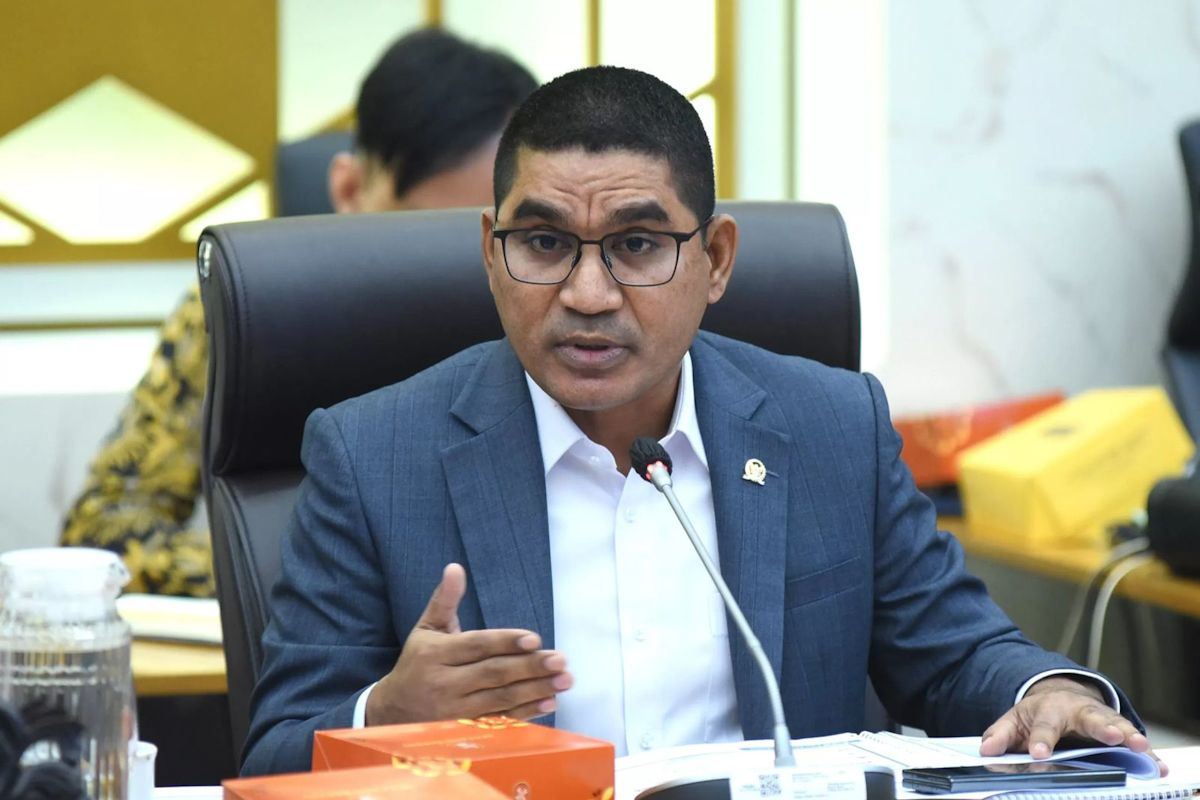
Ahmad Yohan, Vice Chairman of Commission IV of Indonesia’s People’s Representative Council (DPR), stressed the importance of food self-sufficiency as a strategic agenda to maintain national stability, strengthen sovereignty, national resilience, and public welfare.
“This nation has the resources, land, farmers, technology, and capability to achieve food self-sufficiency,” he said in a statement in Jakarta on Saturday.
He called on all national elements to remain optimistic and united in overseeing the government’s food self-sufficiency agenda.
“Challenges exist, including climate change and El Niño, but the fact is we can overcome them through various preventive measures taken by the government alongside farmers across Indonesia,” he added.
“In the face of increasingly volatile global dynamics, Indonesia must strengthen its ability to meet food needs independently to avoid reliance on other countries,” he stressed.
“The capacity to produce food domestically is a crucial foundation for maintaining national stability and strengthening Indonesia’s position in global competition,” he said.
“When the nation is moving towards self-sufficiency, what is needed is support, oversight, and constructive criticism, not baseless pessimism,” he said.
As Commission IV Vice Chairman overseeing agriculture, environment, forestry, and fisheries, Yohan stressed that food self-sufficiency can only be achieved if all parties prioritise national interests over sectoral ones.
“Therefore, narratives that foster optimism, unity, and confidence in the nation’s capabilities must be prioritised to keep national energy focused on shared goals,” he said.
“Pessimistic narratives often arise from misreading recent climate trends,” he added.
“Many predicted Indonesia would face a ‘Godzilla El Niño’, but according to BMKG and BRIN, the likelihood is low. We must avoid narratives that could cause public panic and threaten national stability,” he said.
He said Indonesia’s success in reducing import dependency is not always welcomed by all parties.
“The stronger Indonesia’s ability to meet its own food needs, the stronger the nation’s position against global pressures, making self-sufficiency a cornerstone of national independence,” he explained.
“When Indonesia becomes more capable of meeting its own food needs, some parties are uncomfortable as they have previously profited from import dependency,” he said.
He urged all parties to remain united and not be easily divided by issues that could fracture the nation.
He also supported the government’s efforts to strengthen food sector oversight and eradicate food mafia that have harmed farmers and the public.
Minister of Agriculture Andi Amran Sulaiman stated that Indonesia will not import medium rice in 2025, while the government rice reserve (CBP) managed by Bulog reached 5.3 million tonnes by end-May 2026, the highest in Indonesia’s history.
Besides rice, Indonesia has achieved self-sufficiency in consumption sugar, large chillies, bird’s eye chillies, corn, cooking oil, chicken meat, chicken eggs, and shallots. Feed corn imports have ceased since 2025 as domestic production meets demand.
He said Indonesia’s food self-sufficiency is due to President Prabowo Subianto’s policies favouring farmers, including deregulation and simplification of subsidy fertiliser distribution to improve farmer access.
Under President Prabowo Subianto, 145 regulations on fertiliser distribution were cut to expedite subsidy management, with subsidy volume increased to 9.55 million tonnes and the government purchase price (HPP) for paddy raised to Rp6,500 per kilogram across all qualities.
Strengthening the agricultural sector is also supported by other policies, including irrigation construction and rehabilitation, agricultural machinery assistance, and enhanced food distribution oversight with the Food Task Force to prevent malpractices and food mafia.
These measures are showing positive impacts on farmer welfare. According to Statistics Indonesia (BPS), the Farmer Income Index (NTP) in March 2026 reached 125.35, the highest in 34 years.
Support from various parties, including field agricultural extension officers (PPL), TNI-Polri, and other stakeholders, has also contributed to safeguarding Indonesia’s food self-sufficiency.