
Legislator Calls for Temporary Halt to Reclamation on Serangan Island
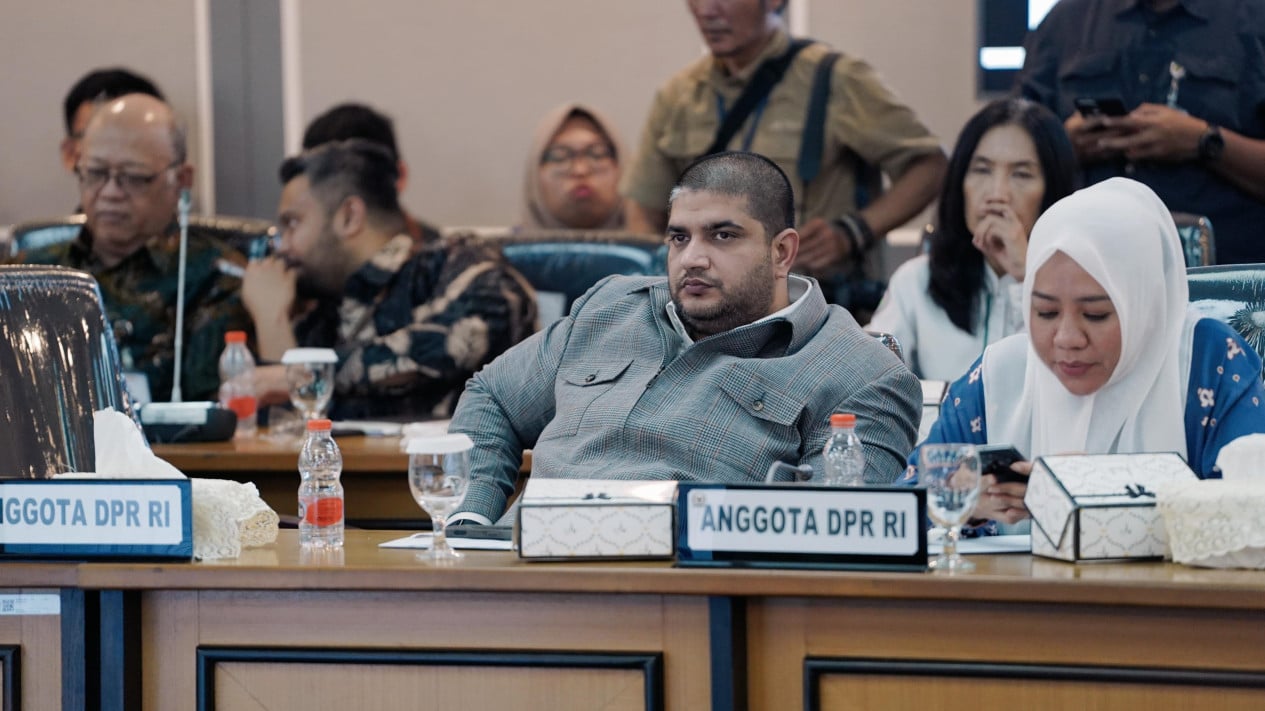
Jakarta, VIVA – A member of Commission IV of the Indonesian House of Representatives (DPR RI), Rajiv, has requested a temporary halt to reclamation activities on Serangan Island, Bali. This is intended to facilitate an evaluation to prevent further widespread damage and ensure that development proceeds without harming the ecosystem and local communities. He also called on the central and regional governments to evaluate the reclamation activities that have been ongoing for nearly four decades on the island. “I request the temporary suspension of all development activities, reclamation, land compaction, vegetation clearing, and the use of heavy machinery in the Serangan Island area,” Rajiv stated in his remarks on Monday, 27 April 2026. He explained that this temporary halt would continue until all permitting documents, land status, environmental impact assessments, and spatial planning compliance are thoroughly examined in an open manner. According to him, this step is not an anti-investment stance but a precautionary mechanism to prevent broader damage and ensure that development does not come at the expense of the ecosystem and local communities. Rajiv also highlighted the extensive reclamation on Serangan Island, Bali, and the destruction of mangrove ecosystems. Over the decades, the reclamation has caused drastic changes to the landscape. Based on spatial data he obtained, from 1985 to 2024, due to the reclamation of Serangan Island’s coastline, its area has increased from 169.64 hectares to 600.96 hectares. “Over nearly four decades, the area of Serangan Island has grown by 431.32 hectares. That means, on average, it expands by 10 hectares each year,” he revealed. Rajiv stated that Serangan Island, formerly a small island serving ecological, social, cultural, and economic functions for coastal communities, has now undergone drastic landscape changes due to reclamation. “The main issue with the reclamation of Serangan Island is not merely the addition of land, but the loss of the ecological functions of the coastal space that previously supported local community life,” he said. Research conducted by scientists from Universitas Gadjah Mada (UGM) records that the reclamation policy on Serangan Island’s coast has caused negative impacts such as coastal abrasion, loss or damage to ecosystems, and social conflicts due to the loss of livelihoods and land acquisition issues. “There is academic research by UGM researchers that finds the impacts of reclamation are not only physical but also affect the right to life of coastal communities who have long depended on the sea, mangroves, and traditional fishing grounds,” he said.