
Legislator: Asset Forfeiture Must Be Constitutional, Not Based on Suspicion
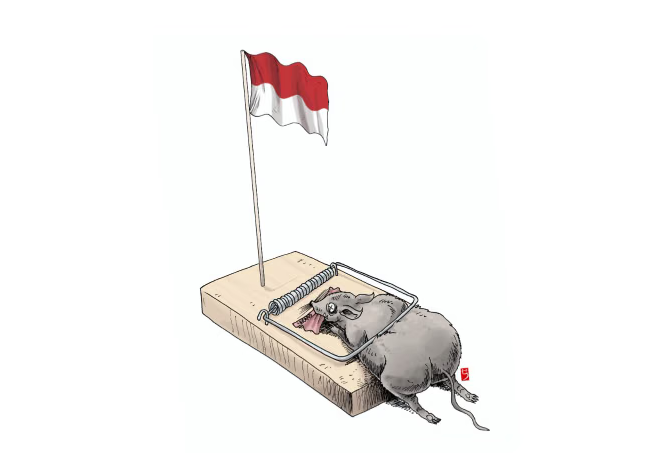
The government faces a policy dilemma with no truly comfortable options.
Member of Commission III of the Indonesian House of Representatives (DPR RI), Rikwanto, has emphasised that the Draft Law (RUU) on Asset Forfeiture Related to Criminal Acts must be prepared with a high degree of prudence. This aims to ensure the policy continues to protect citizens’ property rights and upholds the principle of presumption of innocence.
Rikwanto stated this after receiving input from the Indonesian Law Students Association (PERMAHI) during a Public Hearing (RDPU) at the DPR RI Building, Senayan, Jakarta, on Wednesday (8/4).
Rikwanto stressed that every asset forfeiture effort must have a clear legal connection to the predicate crime. He reminded that this mechanism must not be abused merely based on suspicion regarding someone’s wealth.
“Asset forfeiture must remain constitutional, not violate the law, and prioritise human rights, including considering good-faith third parties. There must be a criminal act first. It cannot be that just because someone has a lot of assets, they are immediately seized,” said Rikwanto.
Regarding the Non-Conviction Based (NCB) mechanism or asset forfeiture without a criminal conviction, this Golkar Party Faction politician explained that its application is only possible in certain emergency conditions, such as when the suspect has died, fled, or is permanently ill.
Nevertheless, Rikwanto noted that the process cannot be carried out unilaterally by law enforcement officials, but must go through verification of strong evidence before a judge.
“Everything must be verified and have a clear connection to the criminal act, then submitted to the judge for a seizure determination,” said the former South Kalimantan Police Chief.
In addition to legal aspects, Rikwanto also highlighted post-forfeiture challenges, namely the management of state assets. Rikwanto mentioned that seized assets often consist of productive items such as plantations, mines, and ponds, whose value can diminish if not managed properly.
“After being forfeited, these assets must be managed well. Their value can change over time, so mechanisms or appropriate institutions need to be considered for managing them,” he revealed.