
Legislative Body: Indigenous Peoples Bill Must Address Agrarian Conflicts
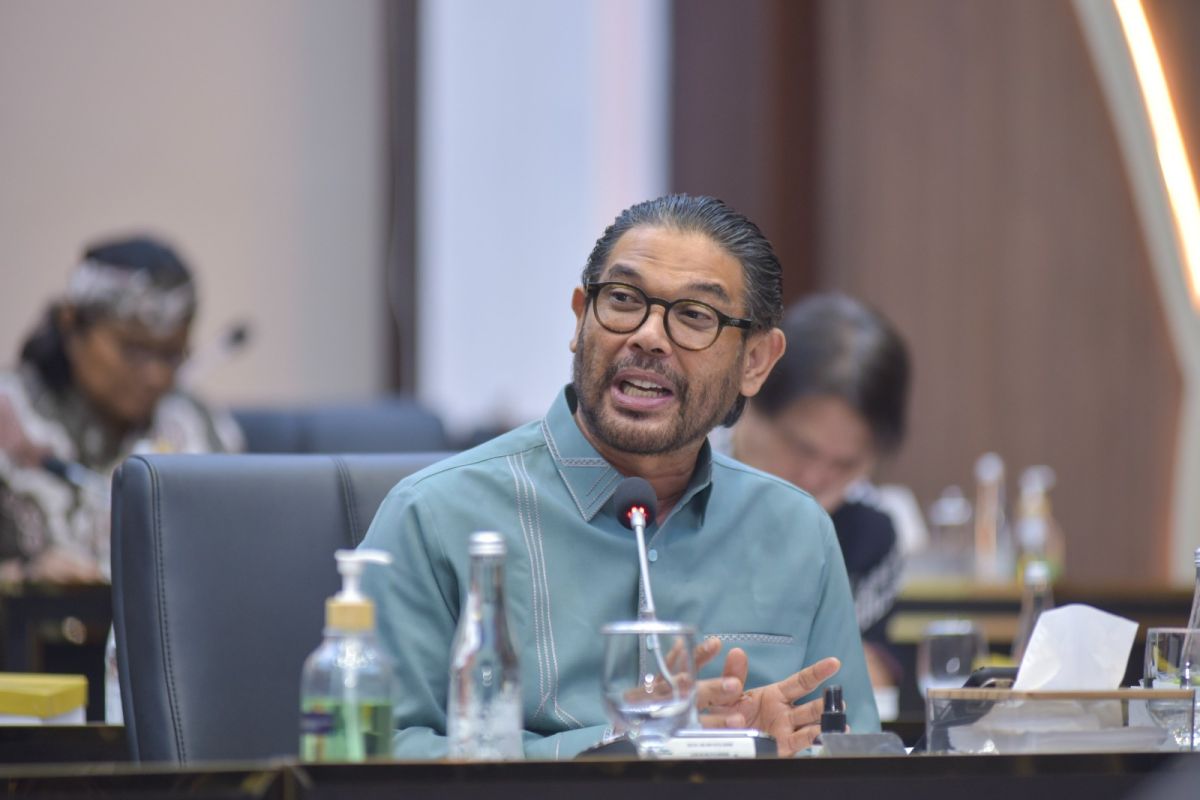
Jakarta (ANTARA) - Member of the House of Representatives’ Legislation Body Nasir Djamil stated that the Bill on Indigenous Peoples must address the agrarian conflicts that have long involved customary law communities.
“This bill must address the conflicts that have occurred so far, while also providing clear protection for indigenous peoples,” Nasir said during a public hearing in the parliamentary complex, Senayan, Jakarta, on Wednesday.
According to him, the increasingly complex issue of agrarian conflicts is the main reason for the urgency of discussing the Indigenous Peoples Bill. Limitations on land and the rising development needs have triggered competition that leads to conflict.
Moreover, land is a resource that cannot be multiplied, so the pressure on its utilisation increases over time.
This situation, Nasir added, is exacerbated by the high development needs that often overlap with areas that have long been the living spaces of indigenous peoples.
A large part of Indonesia’s territory is still dominated by forest areas that hold rich natural resources. This makes those areas targets for various interests, including development and investment.
“Within the forests, there are many natural resources. In the end, forests also become targets, and that’s where conflicts arise,” he said.
According to Nasir, the conflicts that occur are not merely legal issues, but also concern social justice and recognition of the rights of indigenous peoples who have long lived and depended on those areas.
On the other hand, he said the Indigenous Peoples Bill must be able to bridge the interests between investment and the protection of indigenous peoples so that development can continue without sacrificing their rights.
Nasir conveyed this because there is still inequality experienced by indigenous peoples in investment practices in the regions. Indigenous peoples are often in an unfavourable position, even though investments are carried out in their communal territories.
In many cases, Nasir added, indigenous peoples are only involved as limited labourers without access to decision-making or ownership in investments.
He also highlighted the minimal involvement of indigenous peoples in share ownership or economic benefits from investments that utilise their customary lands.
This condition is seen as reflecting the lack of justice in the distribution of development benefits.
“This law must ensure that indigenous peoples are no longer just spectators, but also part of the development benefits,” he stated.
On Wednesday, the DPR RI’s Legislation Body held a public hearing as part of the preparation of the Indigenous Peoples Bill, featuring academics, namely Prof. Maria S.W. Sumardjono, Prof. Zuzy Anna, and E. Joeni Arianto Kurniawan, Ph.D.