
Legal Team: Yaqut's Designation as Suspect Violates Procedure and Breaches New Criminal Code
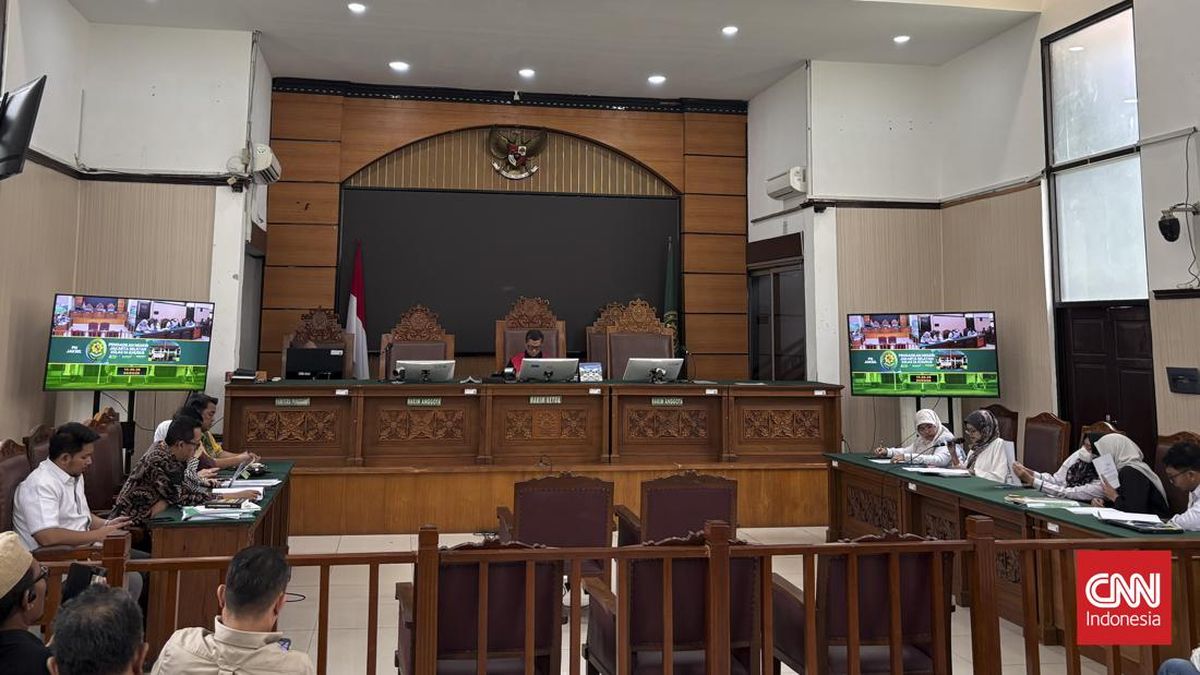
The legal team of former Minister of Religious Affairs (Menag) Yaqut Cholil Qoumas has concluded that the designation as a suspect by the Corruption Eradication Commission (KPK) against their client is procedurally defective and violates the newly reformed Criminal Procedure Code (KUHAP).
Yaqut’s legal team cited testimony from a state administrative law expert from the KPK, Immanuel Sudjatmoko, who confirmed that government authority cannot be created unilaterally by officials but must be obtained through legitimate means: attribution, delegation, or mandate.
According to the defence, attributive authority carries exclusive powers, meaning other officials are prohibited from interfering with or assuming such authority unless the law provides grounds for it. Furthermore, all attributive authority must be exercised by a definitive official explicitly appointed by law.
The legal team noted that the KPK’s expert stated that amendments to legislation can legitimately cause government officials to lose authority, particularly when the amendment explicitly removes the instruments of old authority.
“The criminal law expert presented by the respondent, Professor Dr. Erdianto Effendi S.H., M.HUM., affirmed that the designation of a suspect as specified in Article 90 paragraph (2) of the new KUHAP must be set forth in a Letter of Suspect Designation signed by the investigator and communicated to the suspect no more than one day after the Letter is issued,” said Yaqut’s legal team, quoted from the conclusion submitted to the pre-trial judge at Jakarta South District Court on Monday (9 March).
Following the amendment to the KPK Law, the KPK leadership no longer holds the status of investigator and therefore no longer possesses the attributive authority to designate an individual as a suspect.
“This aligns with testimony from state administrative law experts presented by the applicant, Dr. Oce Madril S.H., M.H., and criminal law experts Dr. Mahrus Ali S.H., M.H., and Dr. Mudzakir S.H., M.H., who fundamentally affirmed that the designation of a suspect is the authority of the investigator and cannot be exercised by any party other than the investigator,” said Yaqut’s legal team.
The defence argued that the KPK also failed to meet the requirement of two legitimate pieces of evidence when designating Yaqut as a suspect, as the evidence used by the KPK lacked relevance to the essential element of the criminal offence consisting of “damaging state finances or the state economy”.
Yaqut’s legal team views this as fundamentally critical because, following the Constitutional Court Decision Number 25/PUU-XIV/2016, the provisions of Article 2 paragraph (1) and Article 3 of the Corruption Law (and their counterparts in Articles 603 and 604 of the new Criminal Code) must be understood as material offences—offences requiring the prior existence of a real and certain consequence consisting of state financial or economic loss before an individual can legally be designated as a suspect.
“This was confirmed by the criminal law expert presented by the respondent (KPK), Professor Dr. Erdianto Effendi S.H., M.HUM., who explained that a material offence is a criminal act considered complete once the prohibited consequence has arisen, and in material offences there must be a consequence from the conduct before law enforcement proceedings can commence,” said Yaqut’s legal team.
Based on these arguments, Yaqut’s legal team requested that the pre-trial judge declare the KPK’s letter regarding the designation of Yaqut as a suspect null and void and without binding legal force.
Yaqut’s legal team also requested that the three Investigation Orders (Sprindik) that formed the basis for the KPK’s designation of their client as a suspect be declared invalid and without binding legal force.
“In the principal case: declare that the applicant’s petition is fully accepted and granted,” said Yaqut’s legal team.
Meanwhile, KPK spokesman Budi Prasetyo expressed hope that the single pre-trial judge Sulistyo Muhammad Dwi Putro will reject Yaqut’s pre-trial petition entirely.
“We are confident that the judge will accept the KPK’s response arguments through the Legal Bureau and declare that all formal aspects of the investigation procedure, including the designation of a suspect, comply with legal provisions and that valid evidence is sufficient,” said Budi.
“Therefore, we are confident that in tomorrow’s decision the judge will reject the applicant’s petition and declare the designation of suspect YCQ [Yaqut Cholil Qoumas] in this case to be valid,” he said.
Yaqut, together with his special staff member named Ishfah Abidal Aziz, known as Gus Alex, was designated by the KPK as a suspect in an alleged corruption case involving additional hajj quotas. However, neither has been detained.
The KPK has requested the Directorate General of Immigration to prevent Yaqut and Ishfah from leaving the country for a period of six months until 12 August 2026.
During the ongoing investigation, the KPK has conducted searches at various locations including Yaqut’s residence in Condet, East Jakarta; hajj and umrah travel agency offices in Jakarta; the homes of Ministry of Religious Affairs civil servants in Depok; and the office of the Directorate General of Hajj and Umrah Implementation (PHU) at the Ministry of Religious Affairs.
Many items of evidence allegedly related to the case were seized, including documents, digital evidence, vehicles, and property.
Based on calculations by the State Audit Board (BPK), the state is alleged to have suffered losses of Rp622,090,207,166.41 (Rp622 billion) from the alleged corruption case involving additional hajj quotas for the hajj seasons of 2023 and 2024.
This figure emerged some time after Yaqut and Ishfah were designated and announced by the KPK as suspects.