
Legal Practitioner Proposes Reconstruction of Bankruptcy Regulations for SOEs
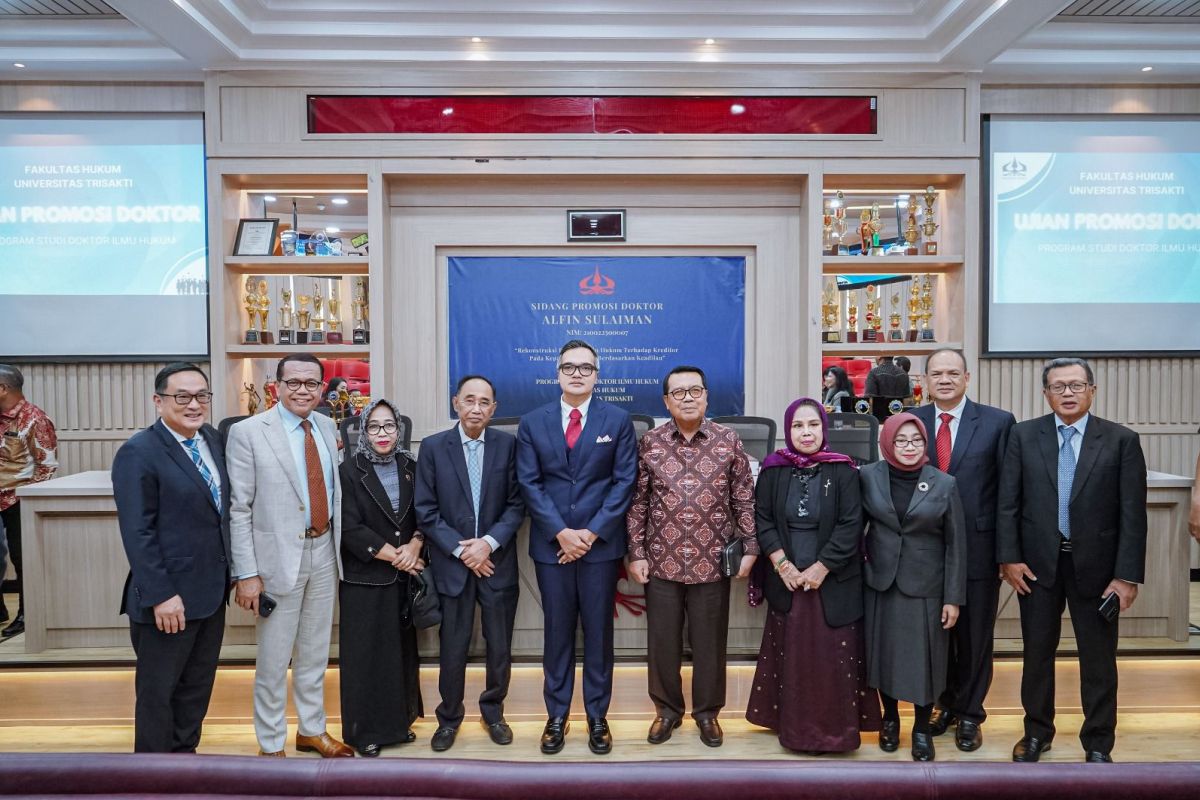
Jakarta (ANTARA) - Legal practitioner Alfin Sulaiman has proposed a reconstruction of bankruptcy regulations for State-Owned Enterprises (SOEs), amid issues of payment defaults faced by red-plate companies.
According to Alfin, the regulation of SOE bankruptcies in Indonesia remains highly limited. Currently, these provisions are only governed by Law No. 37 of 2004 on Bankruptcy and Suspension of Debt Payment Obligations (PKPU).
“Meanwhile, the SOE Law, which has been revised several times, including through Law No. 1 of 2025 and Law No. 16 of 2025, does not specifically regulate SOE bankruptcies or creditor protections,” Alfin stated in a press release received in Jakarta on Tuesday.
He said that regulatory reconstruction could include adding specific provisions on SOE bankruptcies to the SOE Law, clarifying asset execution mechanisms, and drafting government regulations on debt forgiveness and optimising recovery rates or debt return levels in SOEs.
Alfin added that the state has a special responsibility in managing and supervising SOEs, including when red-plate companies face financial difficulties that could lead to bankruptcy, and post-bankruptcy in terms of protections for various parties interacting with SOEs, one of which is creditors with legal rights.
He explained that SOEs are dominant business actors in various developing countries, including Indonesia.
The capital structure of SOEs is not only sourced from state equity participation but also from debt financing as regulated in Law No. 19 of 2003 on SOEs.
However, he said, problems arise when SOEs experience payment defaults leading to bankruptcy, as occurred with PT Kertas Kraft Aceh (Persero), PT Merpati Nusantara Airlines (Persero), and PT Istaka Karya (Persero).
In addition, he revealed that debt recovery rates in bankruptcies in Indonesia are still relatively low.
Based on data from the World Bank’s Ease of Doing Business, the average debt recovery in Indonesia is only around 20% for concurrent creditors and 49% for secured creditors.
Even in SOE cases, Alfin continued, the figures can be even lower, so legal protections for creditors in bankruptcies are not yet optimal.
Alfin opined that the low recovery rates are caused by various factors, one of which is regulatory uncertainty that creates conflicts between state finance regimes and SOE finances.
He stated that this impacts the hindered process of asset settlement, making creditors’ positions vulnerable and not optimally protected.
Therefore, he said, Indonesia does not yet have a comprehensive regulatory framework.
He also added that disharmonised rules often create obstacles in executing SOE assets due to the perception that those assets are part of state finances that must be protected.
“SOEs that have gone bankrupt apparently have creditor receivable recovery rates based on research results taken from the curators of each bankrupt SOE, where the average is only around 10%,” he said.
Therefore, Alfin emphasised that Article 33 of the 1945 Constitution provides the constitutional basis that positions SOEs as state instruments for public welfare.
Thus, he continued, the state has a responsibility to protect all parties interacting with SOEs, including creditors.
On the other hand, Alfin also encouraged an active role from the government, the House of Representatives (DPR), and SOE management bodies such as Danantara and the SOE Management Agency (BP) to strengthen governance, increase transparency, and implement prudent principles to minimise bankruptcy risks.
The proposal is part of Alfin’s dissertation titled Reconstruction of Legal Protections for Creditors in SOE Bankruptcies Based on Justice.
In his dissertation, Alfin proposes three main problem formulations, namely regarding the form of legal protection for creditors, its implementation in practice, and the reconstruction of legal protections moving forward based on justice.