
Lebaran amid Natural Warning Signs
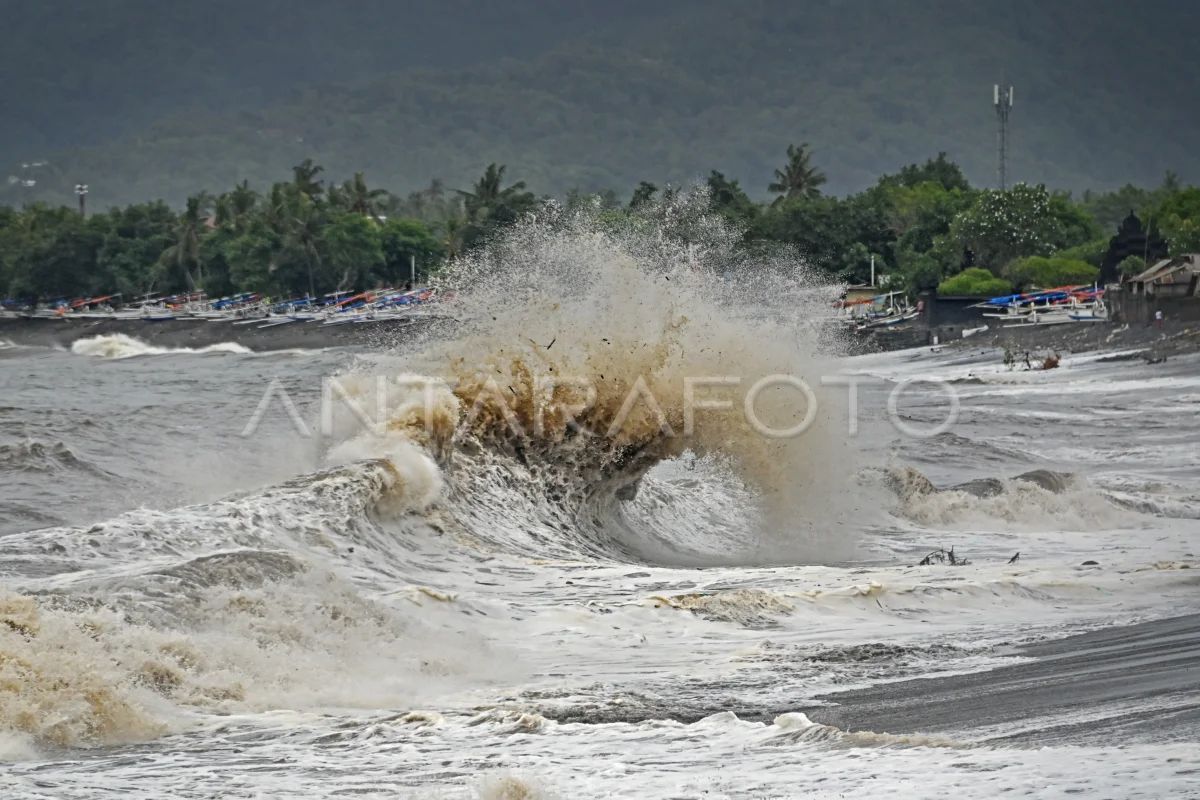
Mataram — The sky in West Nusa Tenggara (NTB) in mid-March often appears deceptive. Mornings may be clear, afternoons cloudy, and rain may fall suddenly towards evening.
Amid the closing days of Ramadhan, this rhythm of nature is far more than ordinary change. It arrives alongside increased mobility among residents, mass migration traffic, and tourism reaching a peak as Lebaran approaches.
On one hand, communities prepare to celebrate the day of triumph. On the other, nature sends signals that vigilance should not be lowered.
Over recent days, warnings about potential extreme weather in NTB have emerged repeatedly. The concerns extend beyond rain to include strong winds, high waves, and tidal flooding threatening coastal areas.
This phenomenon does not stand alone. It is part of seasonal dynamics moving towards a transitional phase. It is precisely during this transition that risks often increase due to higher weather uncertainty.
Double Risk
Data from the Meteorological, Climatological and Geophysical Agency (BMKG) indicates that during the period of 16 to 22 March 2026, NTB faces potential clear to cloudy skies and moderate-intensity rain.
On some early days, rain may be accompanied by lightning and strong winds, particularly from afternoon through night.
The affected areas are not limited to one or two locations, but span nearly all strategic regions in NTB. From North Lombok to Bima, from tourist areas to main migration routes, all fall within the warning map.
Notably, this condition occurs when NTB is already entering a phase of declining heavy rain. The probability of extreme rain has indeed declined to approximately 30 to 50 per cent, yet the probability of moderate rain remains high, even exceeding 90 per cent in some areas.
This means rain continues to occur frequently, though not always at very high intensity.
This situation creates a false sense of security. Many people believe the threat has diminished, whilst the high frequency of rain still poses potential disruption, especially if it occurs repeatedly within a short timeframe.
In coastal areas, the threat is even more complex. BMKG warns of potential tidal flooding due to maximum sea level rise triggered by the new moon phase. Tidal height is estimated to reach approximately 1.9 metres, sufficient to inundate low-lying areas.
Several areas, such as Ampenan, Lembar, and Labuhan Lombok on Lombok Island, as well as areas on Sumbawa Island, feature on the high-risk list. In the context of NTB as an archipelago province with hundreds of small islands, this threat becomes highly significant.
This condition becomes especially critical as it coincides with Lebaran, when community activity in coastal areas increases. Ports become congested, beach tourism peaks, and inter-regional mobility depends on maritime transport.