
Lebanon on the Brink of US-Iran Conflict
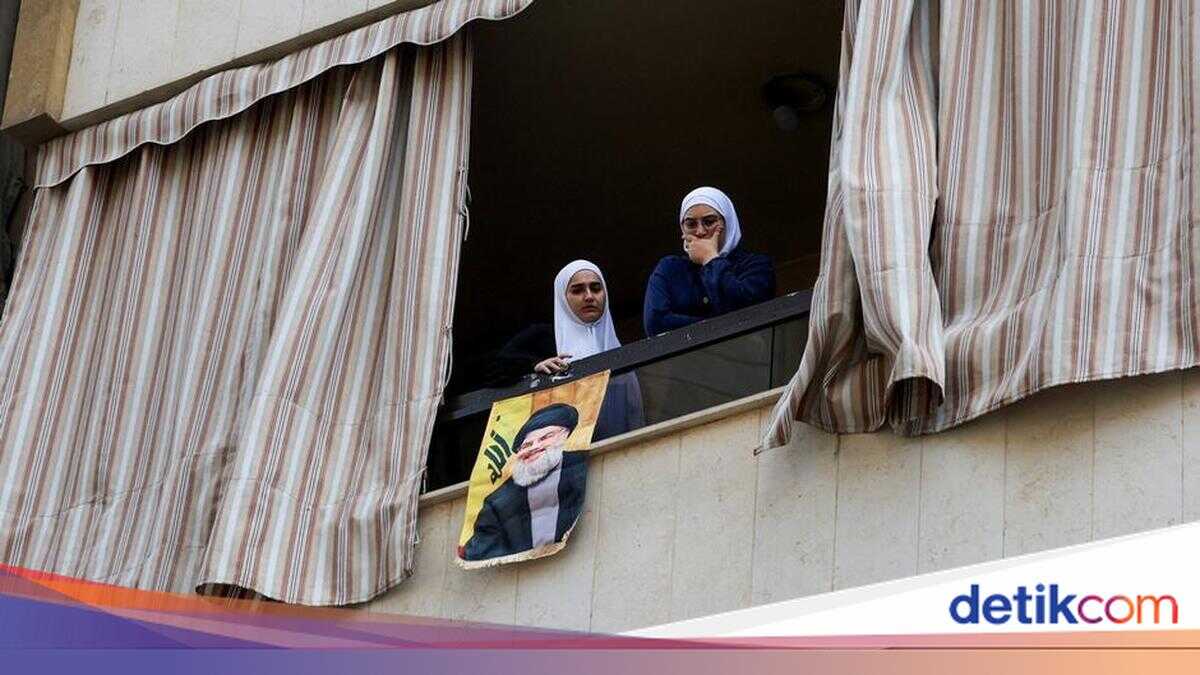
Tensions between the United States and Iran are intensifying once more. The threat of open military conflict in the Middle East is no longer merely rhetorical. Caught in the midst of this turmoil, Lebanon’s position appears increasingly precarious.
Lebanese Prime Minister Nawaf Salam has repeatedly stressed that his country will not be drawn into foreign disputes. Earlier this week, he even urged Hezbollah not to drag Lebanon into “another adventure”, referring to involvement in Israeli military operations in Gaza.
However, a different signal emerged from leadership of the Shiite militant group. The Iran-backed organisation’s secretary general, Naim Qassem, stated in January that any American attack on Iran would be considered an attack on Hezbollah. “When the time comes to take a stance, we will not hesitate,” he declared in a television address.
Israel—Washington’s principal ally in the region—responded with stern warnings. Should Hezbollah become involved in a US-Iran war, Beirut would become a target, including civilian infrastructure. Two Lebanese officials confirmed these threats this week.
Burcu Ozcelik, senior Middle East security researcher at the Royal United Services Institute (RUSI), assessed that Iran “almost certainly expects Hezbollah’s contribution if war breaks out—very likely by pressuring Israel”, she said. However, according to her, Hezbollah now faces a far more complex domestic landscape.
“The integration pressure from Lebanese President Joseph Aoun and Hezbollah’s long-term interests as a political actor domestically increase the cost of open warfare,” Ozcelik added.
Divided and weakened
Hezbollah, whose military wing is classified as a terrorist organisation by the United States, Germany, and several other nations, began attacking Israel a day after Hamas launched terror attacks on 7 October 2023.
A ceasefire in November 2024 ended 11 months of clashes and two months of open warfare between Israel and Hezbollah. During that period, Israel killed most of Hezbollah’s leadership and destroyed its infrastructure and weapons arsenals. Southern Lebanon and parts of Beirut were devastated. Approximately 4,000 people were killed. The World Bank estimates reconstruction costs at USD 11 billion or approximately 184 trillion rupiah.
The ceasefire agreement required Hezbollah’s disarmament. So far, the group has only surrendered weapons south of the Litani River. They refuse to disarm entirely, arguing they still need to defend themselves against Israeli attacks and five occupation points at the border.
Israel insists it will continue targeting Hezbollah as long as it poses a threat. Hezbollah itself forms part of an Iranian-led ‘axis of resistance’—which also includes Hamas in Gaza, the Houthis in Yemen, and various Iraqi militias—that views the United States and Israel as principal enemies.
Salam said disarmament efforts would proceed to the next phase, extending beyond the area between the border and the Litani River. He described disarmament as an “irrevocable sovereignty choice”. However, implementation of the second phase—north of the Litani—still depends on several factors, including the outcome of a support conference for the Lebanese Armed Forces scheduled for 5 March 2026 in Paris, with participation from the United States, Saudi Arabia, Qatar, Egypt, and France.
A report from the Institute for the Study of War warned that delays in disarmament will create space for Hezbollah to rebuild its strength. However, Mohanad Hage Ali from the Malcolm H. Kerr Carnegie Middle East Center in Beirut assessed that Hezbollah has not yet returned to its pre-war strength levels.
“The group is far weaker and fragmented. Its decision-making process is increasingly divided,” he said.
The military wing opposes disarmament. By contrast, the political wing—which holds significant parliamentary seats and operates hospitals and social services—is more open to dialogue. Within the domestic political context, the voice of Lebanon’s Shiite community, which forms Hezbollah’s political base, is judged to be more decisive in determining policy direction.
Ozcelik predicted that if escalation occurs, Hezbollah might opt for symbolic participation: limited and measured attacks on Israeli targets to demonstrate solidarity with Tehran, but remaining below the threshold that could trigger massive retaliation.
Citizens in war’s shadow
Amid elite manoeuvring, Lebanese citizens find themselves anxious observers once more. Since 2019, the country has been shaken by economic and political crisis, the devastating Beirut Port explosion in August 2020, and the Hezbollah-Israel conflict in 2023-2024.
Hopes for international reconstruction are slim, as many tie it to Hezbollah’s disarmament.
“I feel hopeless,” said Nadim El Riz, 35, a videographer living near Sidon in southern Lebanon. He believes a major and deadly war between Iran and its proxies against the United States and Israel is merely a matter of time.
Similar concerns were expressed by Raymond Khoury, a fitness trainer in Beirut. He worries his country will be dragged into war because of Hezbollah’s direct links with Iran.
Meanwhile, Fatima Naim, 27, chose to cope differently: by denying the looming threat. She admitted trying not to think about worst-case scenarios because she feels she has no control over events.
For now, she chose to live as if in “another world”, rather than in constant fear.