
Learning Javanese Script Now Possible by Touch, Braille Version Available
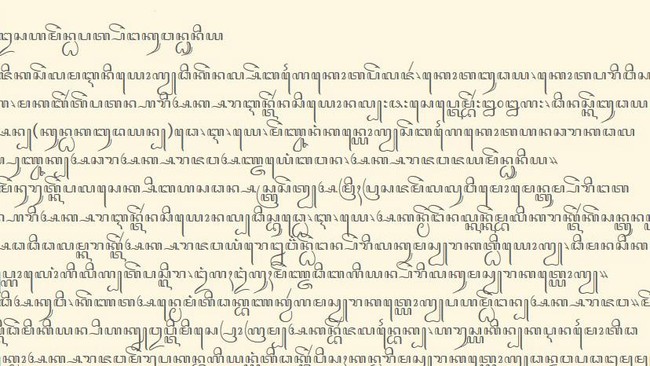
The issue of inclusive education has resurfaced during the commemoration of National Education Day 2026. In Indonesia, access to reading materials for the visually impaired remains extremely limited, even for basic resources such as textbooks and cultural literacy materials.
Data from the Ministry of Education, Culture, Research, and Technology indicates that by the end of 2024, only around 5% of textbooks and general reading materials are available in disability-friendly formats, such as Braille or audio. Globally, the World Blind Union records that more than 90% of written works are inaccessible to the visually impaired.
This situation is not only about limitations in educational access but also risks causing the younger generation to lose connection with cultural heritage, including regional scripts like Javanese script.
Amid this, Nayla Marinlee Auramadina, a student in the Javanese Literature programme at the Faculty of Cultural Sciences, University of Indonesia, is offering a solution. She has developed a Braille-based Javanese script learning system named Sandhya-Braille.
Unlike conventional Braille methods that follow Latin letter patterns, this system is designed to adapt to the syllabic structure of Javanese script. With this approach, she says, learning is no longer per letter but directly to sound units, making it easier for the visually impaired to understand.
“This approach makes the learning process more systematic and aligned with the structure of the Javanese language, allowing users to learn more independently,” Marin stated in her explanation, quoted on Monday (4/5/2026).
Sandhya-Braille was developed using linguistic, mathematical, and pedagogical approaches. The system includes mapping of special codes to transformation rules for symbols that can be read tactilely or through touch.
Marin says Sandhya-Braille not only serves as a reading aid for the blind but also as a model for inclusive learning that can be expanded to broaden access to cultural literacy.
She hopes that the system she developed does not stop as an academic project but can be truly implemented so that the visually impaired can learn Javanese script and even access ancient manuscripts.
This effort is seen as aligned with global targets in the Sustainable Development Goals (SDGs), particularly on quality education and reducing inequalities. Nevertheless, challenges persist, such as the relatively high production costs for developing and distributing this learning system widely.