
Learning from Warren Buffett: The Secret to Smart Investing Through the 'Circle of Competence'
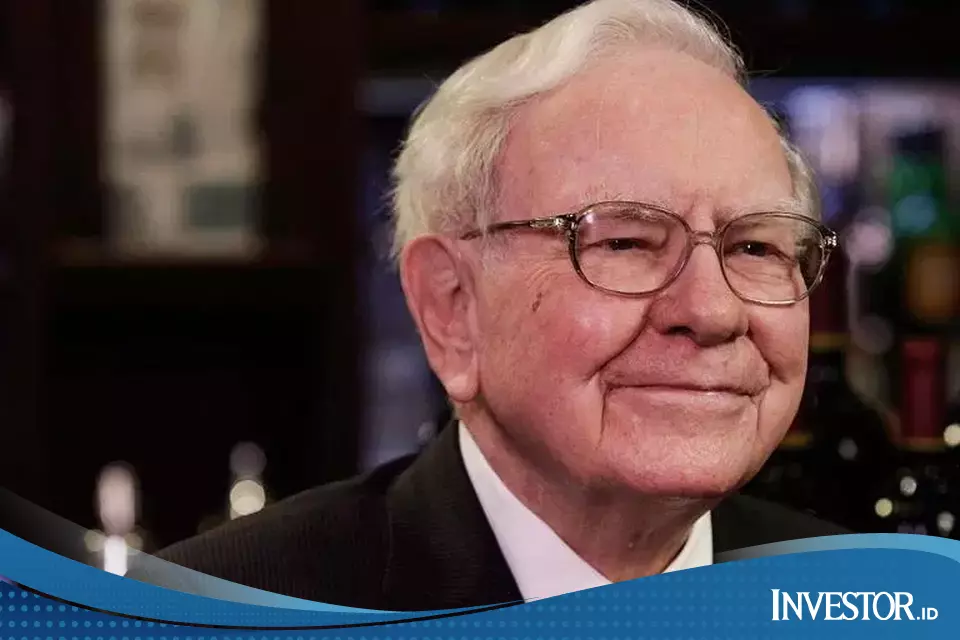
Warren Buffett, the architect of Berkshire Hathaway’s investment empire, frequently asserts that his success stems not from intricate strategies but from discipline. In his 1996 shareholder letter, he articulated a fundamental principle: you need not be an expert in every company. “You only need to be able to evaluate companies within your ‘circle of competence’. The size of the circle is not crucial; however, understanding its boundaries is vital,” Buffett wrote, as cited by Investopedia.
What Is a Circle of Competence?
For Buffett, investing is not about chasing hot trends or employing complex mathematical formulas. The objective is straightforward: purchase businesses that are easy to understand at a rational price, whose profits are virtually certain to increase over the next 5, 10, or even 20 years. This consistency is evident in his decision to invest in Coca-Cola when others hesitated, or his avoidance of the dot-com technology frenzy in the late 1990s. This strategy helps investors remain focused on what a company does and why the business matters, thereby avoiding fatal errors that devastate portfolios.
How to Apply Buffett’s Rule Today
How can everyday investors use this principle? The first step is to honestly evaluate industries or products you know well, perhaps through employment, hobbies, or personal interests.
Here is a practical guide for assessing an investment:
Understand the Business Model: Invest only if you grasp how the company generates revenue, who its customers are, and what its long-term position is.
Seek Competitive Advantage: Check whether the company has loyal users and barriers to entry for competitors (moat), rather than merely relying on growth projections.
Don’t Be Seduced by Trends: Focus on stable businesses you understand rather than jumping into foreign sectors simply because they are popular.
Be Aware of Your Limits: Expanding your knowledge to widen your circle of competence is highly recommended, but overconfidence that pushes you too far beyond those boundaries can trigger significant losses.
A compelling example is Apple Inc. Initially, Buffett avoided the technology sector because it fell outside his competence. However, once he recognised that Apple had built unparalleled customer loyalty, he saw Apple not merely as a technology company but as a company producing essential consumer goods.
Buffett often says that investing is not a game in which someone with an IQ of 160 beats someone with an IQ of 130. Rather, investing is about temperament and self-control. In an exceptionally dynamic stock market, emotions such as fear and greed frequently push investors to make impulsive decisions. The “Circle of Competence” principle serves as an anchor to prevent investors from being buffeted by market noise. By remaining in an area of mastery, an investor gains confidence to endure market downturns and composure to resist the temptation to follow trends during bubbles.
Ultimately, financial success stems not from how much you know, but from your ability to recognise what you do not know.