
Learning from the 1998 Crisis, BI Has a Powerful Weapon to Secure Indonesia's Money Market
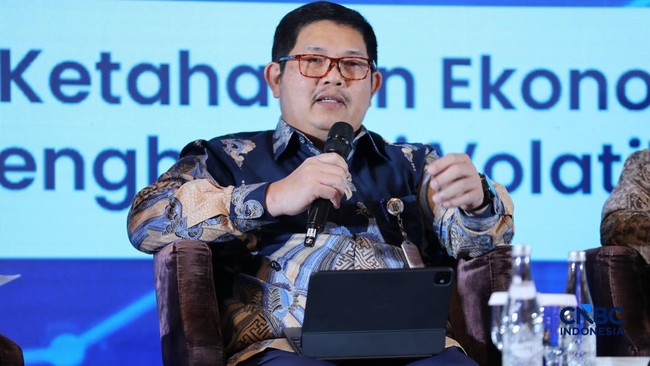
Bank Indonesia (BI) has revealed that it has learned extensively from the 1998 financial crisis in addressing shocks that pressure the rupiah’s exchange rate and Indonesia’s money market. As is well known, at that time, the rupiah’s exchange rate, which was initially stable around Rp2,500 per US dollar, suddenly plunged sharply to over Rp15,000 per dollar in early 1998. Even, the rupiah once reached a very weak level of Rp16,800/US$. The Head of the Monetary Management and Securities Assets Department (DPMA) of Bank Indonesia (BI), Erwin Gunawan Hutapea, stated that the central bank, in conditions of full uncertainty pressuring the financial market, would encourage market mechanisms to work effectively. This is to encourage foreign capital inflows to start entering, so BI’s role is merely to safeguard the market. If there is excess liquidity volume, BI will absorb it without disturbing the market mechanism. In safeguarding the exchange rate and domestic financial market, BI will utilise layers of defence, including foreign exchange reserves. BI also has swap agreements to support foreign exchange reserves with various central banks of other countries. This ‘ammunition’ can be used whenever needed. As a note, Indonesia has bilateral swap arrangements with several countries such as China, Japan, and South Korea. This cooperation is outlined in the Chiang Mai Initiative and, in addition, there is a multilateral scheme with ASEAN countries. “Learning from 98, the central bank learned with a safety net so we have regional and global arrangements. The layers of defence are ready and in adequate amounts. Now, if it prolongs, we of course hope for the best,” Erwin emphasised. Although it has strong layers of defence, BI also encourages entrepreneurs to carry out hedging or risk mitigation. This hedging is used to lock in exposure to rupiah pressures. “We encourage you, if it’s like someone planning to go home for holidays, it’s better to book a ticket rather than show up without reservation. Hedging instruments have developed, please use them as insurance to lock in exchange rate exposure,” said Erwin. With measured hedging, entrepreneurs do not need to immediately go to the spot market to buy dollars. He also asked entrepreneurs to buy hedging instruments that have been provided by banks. This step helps distribute dollars. “Don’t come to the market to buy spot… We urge the use of hedging, which can be natural and instruments as permitted by the regulator. For example, reservation through hedging instruments helps so that dollar demand can be distributed,” he emphasised.