
Learning from Past Mistakes, Indonesia Should Not Back Down on Windfall Tax
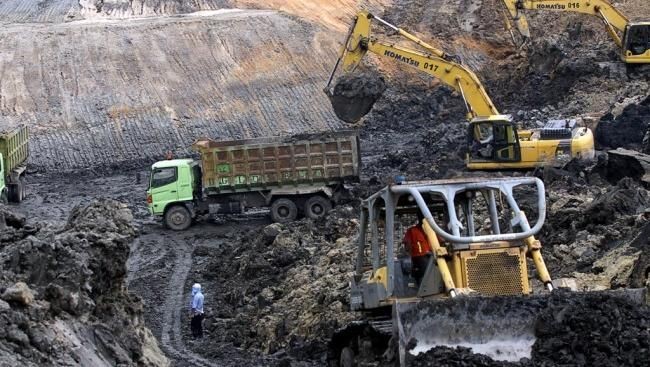
The government plans to implement a windfall tax scheme, including an export duty on coal, amid the significant potential for rising prices of Indonesia’s key export commodities on the global market. As is known, the increase in coal prices is an effect of the war between Iran and the United States (US) and Israel in the Middle East region. The implementation of this durian runtuh or windfall tax, also known as economic rent tax, is believed to be able to add to the state’s coffers in order to strengthen fiscal conditions. M. Rosyid Jazuli, a lecturer in the Master’s Programme in Management at Universitas Paramadina, highlighted that Indonesia’s main challenge in implementing the windfall tax is not only in terms of policy but also in the institutional aspects of managing windfall profits. He reminded that Indonesia once experienced a golden era from the oil and gas sector in the 1970s, which contributed greatly to national economic growth. However, that condition did not continue to the present day. “In the past, we enjoyed the oil boom, but now the windfall profits from oil and gas are gone. However, we have new windfall sources from CPO, nickel, and coal,” he said. Nevertheless, he assessed that there is a missing institution in managing those profits. “We do not yet have an institution that specifically manages windfall profits, even though we have many benchmarks from other countries,” he explained. He also highlighted the repeated failures in forming sovereign wealth funds based on natural resources in Indonesia, although the discourse has emerged for a long time. “We should have had a sovereign wealth fund from the petroleum fund since the New Order era, but it did not materialise. Efforts in 2015 and 2021 also failed,” he revealed. According to him, one of the main causes is the weak investment capacity and integrity of fund managers. Rosyid revealed that fund managers often lack adequate capacity and integrity, even getting entangled in KKN practices. Examples such as the Asabri and Jiwasraya cases serve as important lessons. He emphasised that the success of fund management like in Norway does not only depend on resources but also on good governance. “What needs to be emulated is independence, strict fiscal rules, global investment diversification, and radical transparency. Without strong political commitment, all good policy designs will never be realised,” he said. Meanwhile, Ariyo DP Irhamna, a lecturer in the Management Programme at Universitas Paramadina who is also a researcher at INDEF, explained that over the last 15 years, the structure of state revenues from the natural resources sector has undergone very significant changes. “The contribution of crude oil to PNBP SDA has dropped drastically from 64% in 2009 to 34% in 2024. Natural gas also fell from 24% to 14%. Conversely, the minerals and coal sector has surged from 9.5% to 51% in 2025,” he stated. This change shows a fundamental shift in the sources of state revenue. However, he assessed that Indonesia’s fiscal policy has not been able to keep up with this change. “Our fiscal design still uses instruments inherited from the oil and gas era, so it cannot optimally capture windfall profits,” he asserted. Therefore, he proposed two paths for policy reform. First, short-term reform through revisions to progressive royalty policies without needing to create new taxes. According to him, regulatory revisions are needed to include profit proxy parameters and capacity utilisation so that windfalls can be captured more proportionately. Second, long-term reform through the establishment of progressive natural resource rent taxes. “This tax is designed to capture economic rent, with progressive rates during booms and zero during busts, making it fairer and more adaptive to commodity price cycles,” he said. He also emphasised the importance of establishing a Revenue Stabilisation Fund as an instrument to maintain long-term fiscal stability. The Rector of Universitas Paramadina, Didik J. Rachbini, affirmed that commodity price volatility is a recurring phenomenon in Indonesia’s economic history, from the New Order era to the present. “We have repeatedly faced global oil price shocks, and their impact has always been significant on the national economy,” he said. He explained that rising energy prices not only increase production costs but also put great pressure on the state budget through subsidies. “Oil price crises pressure the economy through increased energy costs, subsidy fiscal pressures, and currency weakening,” he added. Nevertheless, he sees that the current situation also opens strategic opportunities. This is because Indonesia’s natural resources have an advantage as production costs are in rupiah, while exports are in dollars. “This provides great benefits that must be utilised,” he asserted. He emphasised that windfall tax policies must be designed carefully so as not to hinder the business world but still able to encourage efficiency. This momentum, according to Didik, must not be missed. “Companies must be encouraged to be more efficient, while the state ensures that the profits obtained can be used for public interests,” he concluded.