
Learning from MH Thamrin to Become a Global City
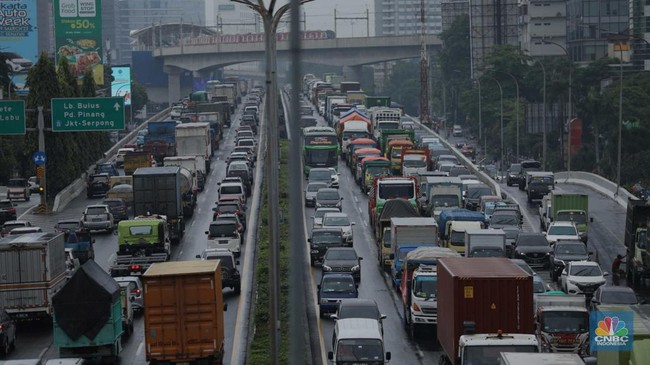
Regular Transjakarta passengers on the Blok M-Kota route are undoubtedly familiar with Jalan MH. Thamrin. This thoroughfare stretches from the Horse Statue in the north to the HI Roundabout in the south, and near the Horse Statue stands a monument to the prominent figure whose name the road bears. Gazing out from the blue and white bus, passengers see Jalan MH. Thamrin as a wide avenue flanked by skyscrapers on both sides. These buildings appear proud of their towering stature, with their glass facades shimmering in the sunlight or reflecting the street lamps at night. As one of the capital’s key protocol roads, Jalan MH. Thamrin exudes magnificence. Both those born and raised in Jakarta and newcomers can view it as a symbol of the nation’s progress in building its life entering the modern era. If Jakarta now aspires to become a ‘global city’, then this road has already transformed into the city’s face to the international world.
However, something troubles the minds and hearts of people. For those more familiar with the city, Jalan MH. Thamrin is only a small part of Jakarta. The reality is far from ideal. In many other places, what prevails is haphazard development, chaotic urban planning, damaged pavements, and potholed roads that endanger the safety of motorists. Not the order, grandeur, luxury, and beauty seen on Jalan MH. Thamrin. In fact, moving just slightly away from the ends of Jalan MH. Thamrin, one can visit areas like Harmoni, Pecenongan, Tanah Abang, and Kebon Kacang, which are marked by disorder in everything from building placement and narrow streets to dangling cables and uncontrolled pedestrian traffic. Instantly, the dream of Jakarta becoming a ‘global city’ turns into a daydream when confronted with the reality on the ground.
Here, we return to MH. Thamrin, the great figure whose name has been mentioned many times. There is actually an irony that arises when discussing the figure of MH. Thamrin and Jalan MH. Thamrin together. It is ironic because Thamrin once criticised the development gap in this city while serving as a member of the Batavia City Council (Gemeenteraad Batavia) from 1919 to 1929 during the colonial period. In the book ‘MH Thamrin: Anak Betawi Pejuang Republik’ (2025), Thamrin is noted to have seen Batavia as a beautiful painting. Meanwhile, its kampungs were like worthless blank canvases. However, in those kampungs deemed worthless lived many people who struggled every day to live and support their loved ones. Since long ago, Jakarta, formerly known as Batavia, had already been an international city where foreigners stopped and traded. Yet, its rulers did not use the wealth from that trading activity to build the city for all its citizens. There were always groups of people who were marginalised.
Thus, Thamrin’s presence breathed fresh air into Jakarta. During his tenure as a member of the Batavia City Council, Thamrin pioneered ‘kampongverbetering’, the improvement of kampungs in Jakarta to enhance sanitation, drainage, and clean water supply. He also requested the construction of water pumps to clean the dirty streets there. Thamrin’s influence in building and organising the kampungs can still be felt today, long after his death in 1941. In the late 1960s, DKI Jakarta Governor Ali Sadikin intensified kampung improvements. He believed that clean kampungs and a healthy environment would encourage the community to be active, including in building their economy.
Today, Jakarta under the leadership of Pramono Anung has succeeded in eliminating ‘severe’ slum areas. After achieving this, Jakarta can develop its kampungs to ‘level up’. The city even has the ambitious goal of improving 50 slum community units (RW) by 2027. This is certainly encouraging news. Although, Thamrin, as a senior to Bang Ali and Mas Pram, might not be too quick to show his joy. Because, then and now, Jakarta is plagued by many problems. Besides settlement issues, he also paid attention to education, employment, the economy, and sports. There is a similarity between this era and the time when Thamrin was alive. Jakarta still faces problems in those areas. The difference lies in the response of Jakarta’s leaders to these problems, and their hopes for the city’s future development through all the obstacles, so that it can grow into a mature and fully-fledged ‘global city’.
Regarding the issue of settlements, Jakarta has indeed succeeded in eliminating ‘severe’ slum areas and halving the number of ‘slum’ community units by 2026. This is significant progress. However, the remaining task of improving the other half of the slum community units is no less significant. The number is still in the hundreds. Not to mention if we move beyond the figures on paper and look at the reality on the ground. When using the KRL commuter line to travel from one place to another, traces of disorder and squalor are still visible on either side of the carriage. No matter how hard the DKI Jakarta Provincial Government tries to emphasise that the number of slum community units has decreased, that is the reality that still exists.