
Leaked Documents Reveal Australian Residents' Fears Over AUKUS Nuclear Submarine Base
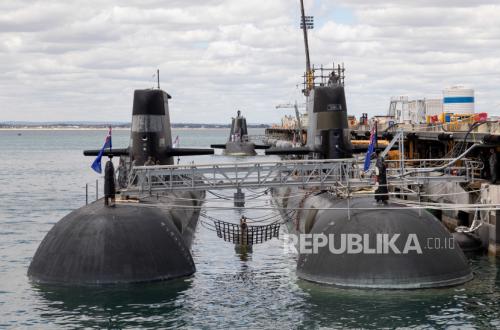
REPUBLIKA.CO.ID, JAKARTA – Previously confidential New South Wales (NSW) government documents reveal serious concerns regarding the planned construction of an Australian nuclear submarine base in Port Kembla, approximately 75 kilometres south of Sydney.
In the documents, the NSW government acknowledges that the base could potentially become a target for military attacks and trigger public fear over the risk of nuclear reactor leaks.
Port Kembla has long been considered the strongest candidate to become the home port for Australia’s fleet of nuclear submarines on the east coast as part of the AUKUS defence alliance with the United States and the United Kingdom. However, the project is expected to face significant public opposition.
“Residents are likely to view a nuclear base on the east coast as a source of risk due to the presence of nuclear reactors within the submarines, and the military base could potentially become a military target,” reads an analysis by the NSW government.
The document also states: “The East Coast Naval Base (ECNB) will house submarines with highly enriched uranium-fuelled nuclear reactors. In the event of military conflict, the ECNB could become a target for Australia’s military adversaries,” as reported by The Guardian and several Western news agencies.
Public concerns extend beyond the threat of war to include the potential for environmental disaster in the event of an incident involving the submarine’s nuclear reactor.
“Therefore, residents of NSW may view the ECNB in the same way as a nuclear power plant as a source of environmental risk.”
The documents, submitted to the NSW parliament at the request of Green Party member Abigail Boyd, date back to the Dominic Perrottet government period from 2022-2023. In an initial assessment, the state government determined that Port Kembla was the most suitable location for the nuclear submarine base due to its port capacity, which can accommodate submarines, dry docks, and additional naval facilities.
The NSW government estimates that the project could bring economic benefits of up to AUD 426 million through infrastructure development, improved public services, and the creation of high-paying technical jobs.