
Layers of the Iran Crisis and the Cracking of the Old World Order in Global Media Analysis
The global geopolitical landscape appears calm on the surface, but beneath it, powerful currents are shifting longstanding balances. Attacks on Iran are no longer mere episodes of regional conflict, but rather intersection points of layered crises: global legitimacy crises, energy crises, and even internal power direction crises within Iran itself.
From the diplomacy rooms of the G7, which has lost its decisiveness, to the Strait of Hormuz transforming into a knot of global economic pressure, one message is becoming clearly readable: the old world order does not collapse in a single explosion, but cracks slowly, and Iran now stands precisely on that fault line.
The Global Times editorial identifies one of the most striking aspects—not just the war itself, but the collective moral failure of major countries. The G7’s joint statement, which should serve as a global ethical reference, is instead seen as lacking the courage to explicitly name the conflict’s perpetrators.
“This declaration fails to say ‘stop the bombings’,” the editorial writes, while assessing that the language used is deliberately obscured to avoid assigning responsibility.
In this reading, the issue is not merely phrasing, but the power structure. The United States, as the main actor in the conflict, is paradoxically in the same forum expected to act as a balancer.
As a result, the G7 is deemed “constitutionally unable to hold the conflict’s initiators accountable.” This criticism points to a deeper conclusion: the West’s moral legitimacy in regulating global conflicts is undergoing serious erosion.
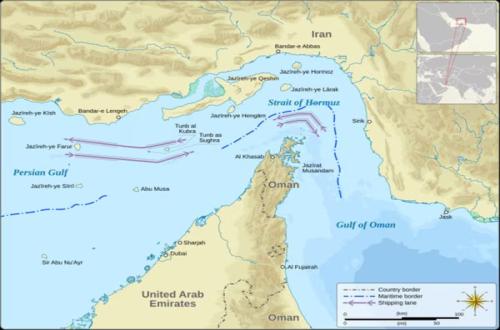
If Global Times highlights global political failures, then Nafja Sabbah al-Kuwari in Al Jazeera shifts attention to the most sensitive point in this conflict, the Strait of Hormuz. She describes this crisis as a “multidimensional geopolitical crisis” that concerns not only regional security but also global energy stability.
Three Possibilities Related to the Strait of Hormuz
Al-Kuwari maps out three possible paths that could be taken. First, regional military action without direct US involvement, which is seen as high-risk due to the limited military capacity of Gulf countries.
Second, coordinated military operations with the United States, which falls within the framework of coercive diplomacy.
Third, and considered the most realistic, is Iran’s strategy of maintaining control over the strait as a bargaining tool in negotiations.
She emphasises, “This crisis cannot be reduced to a binary choice between war and peace,” but rather is a “structured bargaining contest” where military pressure and diplomatic channels run in parallel. In this framework, the role of mediators like Pakistan becomes crucial as a bridge to maintain de-escalation possibilities.