
Lawyers: KPK Lacks Sufficient Evidence to Charge Yaqut as Haj Suspect
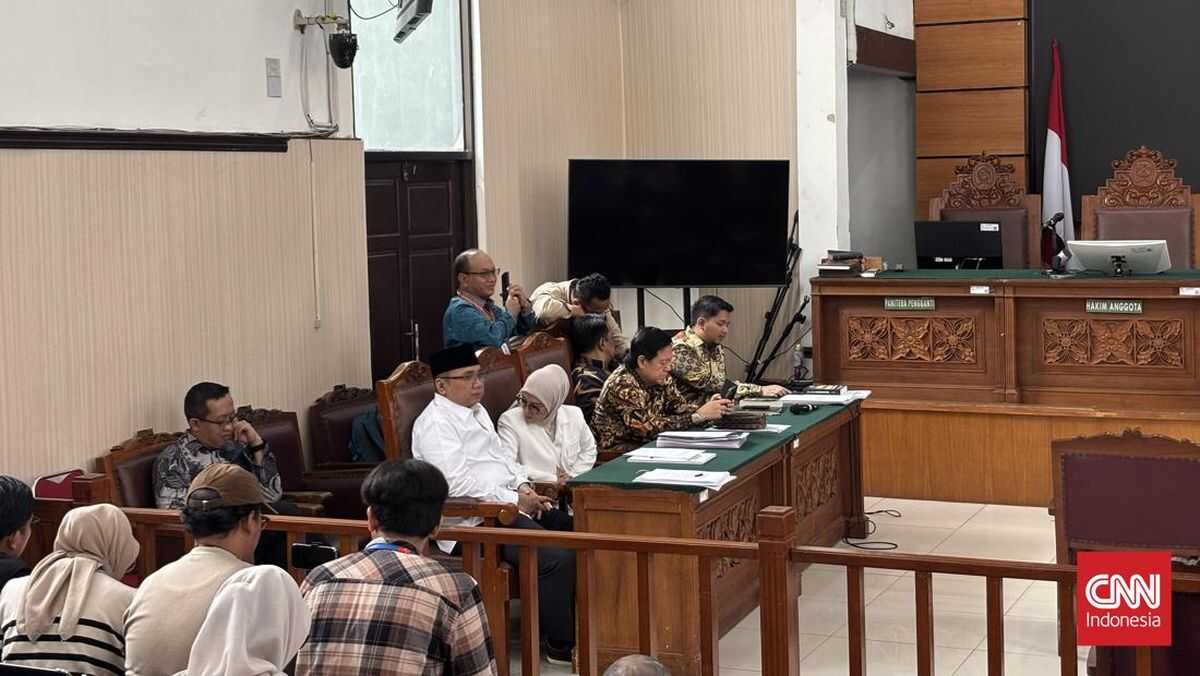
The team of lawyers for former Religious Affairs Minister Yaqut Cholil Qoumas has stated that the Corruption Eradication Commission (KPK) did not possess sufficient evidence when naming his client a suspect in the case of alleged corruption related to Haj quota. One of Yaqut’s legal team, Mellisa Anggraini, revealed that the designation of Yaqut as a suspect did not meet the provisions of Article 90(1) KUHAP newly. This is because the minimum standard of two evidentiary items is not only about quantity but two valid, relevant evidences that existed before the suspect designation, in line with Supreme Court Regulation Number 4 of 2016 dated 19 April 2016 on Prohibition of Reconsideration of Pretrial and Constitutional Court Decision No. 21/PUU-XII/2014.
In the case charged under Article 2(1) and/or Article 3 of the Corruption Law (UU Tipikor), after the Constitutional Court Decision No. 25/PUU-XIV/2016 which removed the phrase “dapat” before the element “merugikan keuangan negara atau perekonomian negara” causing the element “merugikan keuangan negara atau perekonomian negara” to be stated as a material offence requiring actual and calculable loss rather than mere potential loss. This aligns with the definition of state loss in Law No. 1 of 2004 on State Treasury and Law No. 15 of 2006 on the Audit Board (BPK).
Therefore, the evidence that is legitimate and relevant to the element of state loss must be in the form of an audit/report detailing the state loss calculation issued by the competent authority according to statutory provisions. “At the time of the suspect designation by the Respondent, there was no evidence in the form of an audit result/loss calculation report from the competent body. Therefore the designation of the Suspect against the Applicant by the Respondent does not meet the minimum grounds for sufficient evidence and must therefore be declared unlawful and without binding legal force,” Mellisa told the South Jakarta District Court in a preliminary objection hearing on Tuesday (3/3).
Mellisa explained that KUHAP Articles 90(1) and (2) require designation of a suspect to be performed by an “Investigator” and documented in a Suspect Declaration signed by the Investigator. The new KUHAP also defines “Investigator” restrictively as Polri (Police), PPNS, or investigators empowered by law. In the context of KPK, Mellisa said Article 21 of the KPK Law amendment no longer places the KPK leadership as Investigators, so the KPK leadership is not empowered to sign actions that by law must be performed by an Investigator.
Mellisa said the KPK’s enforcement powers under Article 6(e) and Article 11 of the amended KPK Law are relevant primarily where cases involve state losses as regulated in Article 1(1) and Article 2 of Law No. 17 of 2003 on State Finances.
State loss is defined restrictively as a shortage of money, securities, and goods whose amount is real and certain in accordance with Article 1, point 22 of Law No. 1 of 2004 on State Treasury and Article 1, point 15 of Law No. 15 of 2006 on the BPK (Audit Board).
According to Mellisa, the Haj quota that became the object of the suspect designation is not included in the definition of state finances as regulated in Article 1(1) and Article 2 of Law No. 17/2003 on State Finances and Losses as regulated in Article 1, point 22 of Law No. 1/2004 on State Treasury and Article 1, point 15 of Law No. 15/2006 on the BPK. “Thus, the object of the present case that forms the basis of the Respondent’s presumed wrongdoing is not relevant to the state loss element under the Respondent’s authority as set out in Article 6(e) and Article 11 of the amended KPK Law,” Mellisa said.
She added that the Minister of Religion Regulation No. 130 of 2024 which the KPK used as the basis for evidence also does not meet the sufficiency of evidence to conclude there was an Unlawful Act (PMH) and/or abuse of authority. “KMA 130/2024 is positioned as an administrative decision issued by the Applicant as the Minister of Religion in conducting Haj and Umrah worship services, including reflecting on on-site conditions for the smooth operation and safety of pilgrims, and grounded in the Ta’limatul Hajj international agreement which notes additional quotas of 10,000 for the Regular Zone and 10,000 for the Special Zone,” she said.
Based on these considerations, Yaqut’s camp has asked the South Jakarta District Court judge Sulistyo Muhammad Dwi Putro to annul the three search-and-seizure warrants (Sprindik) that underpinned KPK’s legal processing of him as a suspect in the alleged Haj quota addition case. The three letters are: Sprin.Dik/61/DIK.00/01/08/2025 dated 8 August 2025; Sprin.Dik/61A.2025/DIK.00/01/11/2025 dated 21 November 2025; and Sprin.Dik/01/Dik.00/01/01/2026 dated 8 January 2026.
“Having listened to and granted the applicant’s request in full,” said another Yaqut legal representative, Andi Safran.
Yaqut, along with his Special Assistant Ishfah Abidal Aziz alias Gus Alex, had been named by the KPK as suspects in the case of alleged corruption over additional Haj quotas. However, neither has been detained.
Nevertheless, the KPK has asked the Directorate General of Immigration to once again prevent Yaqut and Ishfah from leaving the country for a period of six months up to 12 August 2026.
In the investigation process, the KPK has raided multiple locations, including Yaqut’s residence in Condet, East Jakarta; a Haj and Umrah travel agency in Jakarta; a government official from the Ministry of Religious Affairs in Depok; and the Haj and Umrah Directorate General (PHU) space within the Ministry. A large amount of evidence, including documents and Electronic Evidence (BBE), is believed to be related to the case.