
Law Minister Plans to Reduce Several Service Tariffs to Zero Percent
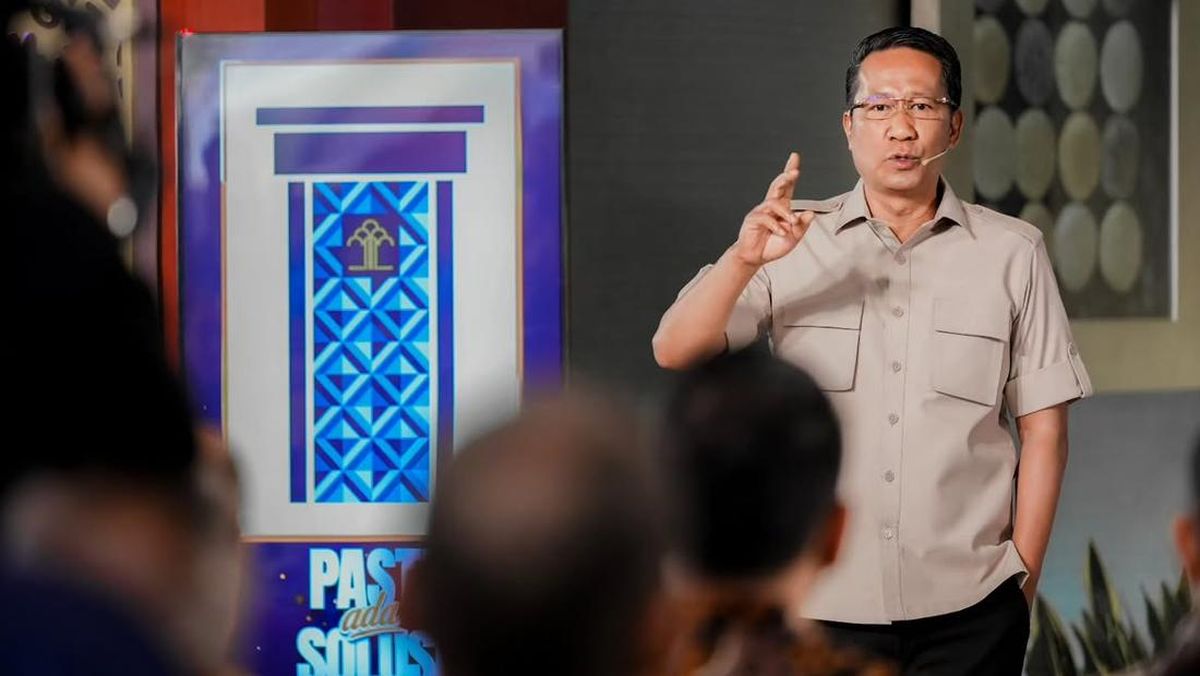
Indonesia’s Minister of Law, Supratman Andi Agtas, has opened the door to reducing a number of service tariffs within the Ministry of Law to as low as zero per cent.
Supratman explained that tariff exemptions can be made through a ministerial decree, without the need to amend Government Regulation (PP) No. 30 of 2026 on the Types and Tariffs of Non-Tax State Revenues (PNBP) applicable to the Ministry of Law.
“If any tariff is to be reduced to zero per cent, that can be done simply through a ministerial decree,” Supratman said after the ‘Pasti Ada Solusi (PAS)’ event at the Ministry of Law’s Pengayoman Building in Jakarta on Friday (24 July).
The Gerindra Party politician explained that this mechanism does not apply to all types of services.
If a tariff adjustment requires an amendment to the Government Regulation, the policy must go through further study and be decided by the President.
“But if the reduction requires changing the Government Regulation, it must be studied and submitted back for that decision,” he said.
Supratman explained that one service certain to be exempted from tariffs is the registration of copyright for songs and music. He will study other sectors, such as fine arts and others.
“What is certain to be reduced to zero is the registration of copyright for songs and music,” he added.
Separately, Supratman said the Ministry of Law will evaluate the increase in a number of service tariffs that have recently drawn public scrutiny.
The evaluation will be carried out through internal meetings with the Directorate General of General Legal Administration (AHU) and the Directorate General of Intellectual Property (DJKI).
One of the services to be reviewed is the increase in tariffs for renouncing Indonesian citizenship and the naturalisation of foreign nationals.
“We will study and review this again, and we will discuss internally the increases in question,” he said.
Supratman emphasised that the government will listen to public input as part of the tariff policy evaluation process.
“In essence, once again, this becomes material for evaluation by the Ministry of Law, to hear what the public’s voice is,” he concluded.