
Latest Updates on the Iran War: Gas Plant Bombed, US Weapons Sell Briskly
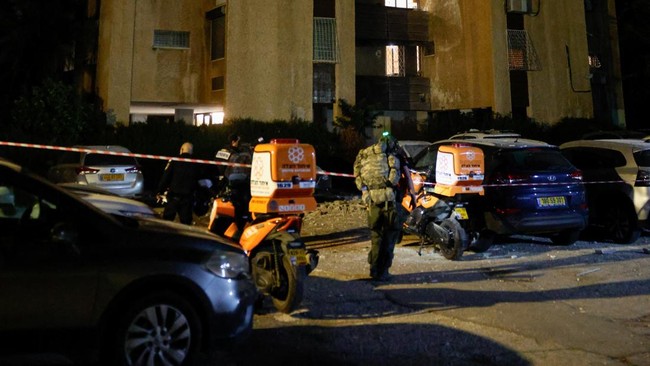
Israel has once again launched a new wave of attacks on Iran on Friday (20/3/2026) local time. This attack underscores the escalating conflict that has been widening since it broke out on 28 February 2026.
An Israeli military spokesperson stated that the attack targeted strategic infrastructure in Tehran. “The IDF has just begun a wave of attacks against the Iranian regime’s infrastructure in the heart of Tehran,” he said, as quoted by Reuters.
The attack occurred amid warnings from US President Donald Trump against Israel targeting Iran’s energy facilities. However, Prime Minister Benjamin Netanyahu proceeded with certain military operations independently.
The conflict, now involving the US and Israel against Iran, has killed thousands and triggered global instability, particularly in the energy sector. Its impact extends beyond the military to the world economy, with energy markets being one of the most affected sectors.
Here are other updates related to the Iran war, compiled from various sources:
Escalation Spreads, Gulf Region Heats Up
The conflict escalation has now spread to the Gulf region, the global energy production hub. Bahrain, Kuwait, and the United Arab Emirates have reportedly faced missile attacks, showing that the war is no longer limited to Iran and Israel.
Iran has also attacked strategic energy facilities in the region, including Ras Laffan in Qatar, the world’s largest liquefied natural gas (LNG) processing centre.
These attacks have caused major damage and disrupted part of the global energy supply, worsening concerns over a long-term energy crisis.
Additionally, oil facilities in Saudi Arabia have become targets, indicating that global energy distribution routes are now threatened.
Iran’s military has even stated that the conflict has entered a “new phase”, with threats of further attacks on energy infrastructure of US-allied countries.
Oil and Gas Price Volatility
The direct impact of this escalation is a sharp surge in global energy prices. Brent crude prices once spiked to around $115 per barrel before correcting, reflecting high market volatility.
This rise was triggered by concerns over supply disruptions from the Middle East, especially since the Strait of Hormuz, a vital route for about 20% of the world’s oil, is at risk of disruption.
Since the war began, oil prices have already risen significantly. In the first six days of the conflict alone, crude oil prices jumped around 18%.
Although they dipped due to de-escalation signals, markets remain volatile due to high uncertainty. Global investment banks warn that oil prices could surge further if disruptions in the Strait of Hormuz persist.
US and Israel Not in Sync
Amid the escalation, differences in strategy between the United States and Israel have emerged. US Director of National Intelligence Tulsi Gabbard stated that the two countries’ objectives are not fully aligned, with Israel focusing on Iran’s leadership while the US targets its military capabilities.
This difference is evident from the attacks on Iran’s energy facilities, which Washington was not fully aware of.
On the other hand, several Israeli officials claim the operations were still coordinated, though not always repeatable.
This situation shows coordination gaps in the military alliance facing the complex conflict.
Amid these differences, political pressure on Trump has increased, particularly regarding the impact of rising energy prices on the US domestic economy.
US Profits Rp 256 Trillion
Amid the conflict, the United States has approved massive arms sales to Gulf countries. Valued at $16.5 billion or around Rp 256 trillion, it includes drones, missiles, radar, and fighter jets.
This move aims to strengthen the defence of US allies in the region, now a conflict hotspot.
The US government describes the sales as part of a strategy to maintain regional security stability. However, the step is also seen as potentially prolonging the conflict and heightening geopolitical tensions.
On the other hand, this increase in military spending coincides with US efforts to mitigate the impact of surging energy prices domestically.
Iran Guarantees Participation in World Cup
The conflict’s impact has also extended to the world of sports, particularly the 2026 FIFA World Cup. Iran has assured its continued participation in the tournament but refuses to play in the United States.
“We will boycott America, but we will not boycott the World Cup,” said President of the Iranian Football Federation, Mehdi Taj, as quoted by Al Jazeera.
As an alternative, Iran is seeking to relocate matches to Mexico for security reasons. This decision reflects rising political tensions affecting global events.
Additionally, the conflict raises concerns about the safety of players and officials during the tournament.