
Latest Survey: Iran War Just the Beginning, Major Catastrophe Already Looming
Jakarta, CNBC Indonesia - Pressure on the global economy is becoming increasingly evident as the impact of the Iran war spreads widely, particularly through surges in energy prices. Production costs are soaring, business activity is slowing, and concerns over inflation and food supplies are intensifying.
Several latest surveys released on Thursday (23/4/2026) indicate weakening business and consumer sentiment in various countries. Indicators monitored by S&P Global show conditions that could worsen in the near term.
The Eurozone is one of the hardest hit areas. The main business activity index fell from 50.7 in March to 48.6 in April, below the 50 threshold indicating contraction. Meanwhile, the input price index surged sharply to 76.9 from 68.9 previously, reflecting the spike in production costs faced by industry.
The services sector, the backbone of the region’s economy, also weakened with the index dropping to 47.4 from 50.2, lower than market expectations.
“The Eurozone is facing deepening economic difficulties due to the war in the Middle East,” said Chris Williamson, Chief Business Economist at S&P Global, quoted by Reuters. “Widespread supply shortages could pressure growth while increasing price pressures in the coming weeks.”
In the United States (US), economic activity shows improvement but remains overshadowed by similar pressures. The manufacturing PMI index rose to 54.0 from 52.3, while the services sector returned to expansion territory at 51.3 from 49.8 previously.
Nevertheless, Williamson assesses that this improvement does not reflect a strong economy. “The April PMI indices are generally consistent with an economy struggling to achieve annual growth above 1%,” he said.
On the other hand, several countries such as Japan, India, the UK, and France recorded output increases. However, this rise is more driven by anticipatory measures from companies accelerating production before supply chain disruptions worsen.
This phenomenon recalls similar patterns in the past, when businesses ramped up production early to avoid risks of tariff hikes or supply disruptions, usually followed by slowdowns in subsequent periods.
From a corporate perspective, the war’s impact is starting to feel real. Based on a Reuters review of 166 global companies, 26 firms cut or withdrew financial projections, 38 indicated price increases, and 32 warned of financial impacts due to the conflict.
Major companies like Danone and Otis Worldwide have even highlighted delivery disruptions as a major risk in their performance reports.
The surge in energy prices is also fuelling global inflation. In the US, consumer inflation jumped to a near four-year high in March, while price pressures are also occurring in the UK and Eurozone.
Nevertheless, some sectors still show resilience. Massive investments in artificial intelligence (AI) continue to bolster the technology sector’s performance, while market volatility benefits trading firms.
London Stock Exchange Group, for instance, forecasts upper-range annual revenue growth after recording solid first-quarter performance due to a surge in trading activity.
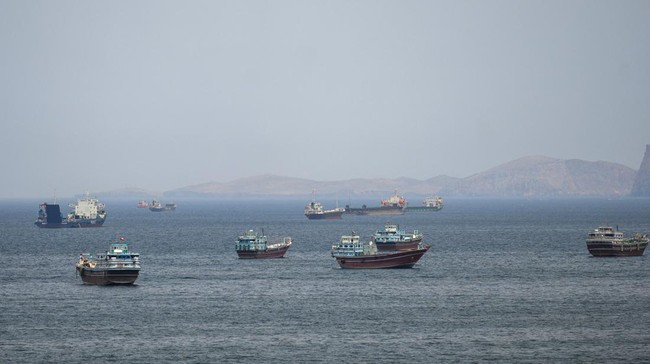
However, uncertainty remains high. Energy distribution disruptions, particularly in vital routes like the Strait of Hormuz, are a crucial factor determining the future direction of the global economy.
The International Monetary Fund (IMF) has cut its global growth projection to 3.1% this year. The institution even warns of potentially worse scenarios, including a global recession if the conflict persists.