
Latest Survey: Indonesia and Allies Prefer China Over the US, Why?
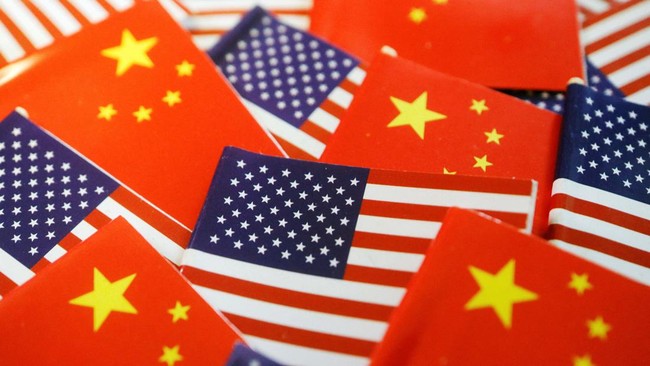
Jakarta, CNBC Indonesia - The geopolitical power map in Southeast Asia has undergone a drastic shift this year. A slim majority of respondents across the Southeast Asian region now prefer to side with China over the United States (US) if forced to choose between the two major powers.
Citing the annual State of Southeast Asia 2026 report released on Tuesday (7/4/2026), 52% of respondents chose China, while 48% chose the US. The survey posed a hypothetical forced-choice question between the two strategic rivals to respondents in the region.
This latest finding places Beijing back in the lead position after previously trailing Washington from 2020 to 2023, and in 2025 when it only garnered 47.7%. Beijing had only briefly led in 2024 with 50.5% since the question was first asked in the 2020 edition.
“These results underscore how delicately balanced regional sentiment remains, with relatively narrow margins separating the two superpowers in several consecutive survey editions,” the report states.
Now in its eighth year, the report is compiled by the ISEAS-Yusof Ishak Institute in Singapore to examine regional perceptions of strategic issues and the influence of major powers. The institute adds that the relatively narrow regional margin (52-48) reflects a highly divided strategic landscape, rather than a decisive shift towards one pole.
This year’s survey was conducted from 5 January to 20 February with a total of 2,008 respondents from 11 ASEAN member countries, including Timor Leste which joined in October 2025. Respondents include researchers, media representatives, non-governmental organisations (NGOs), government officials, private sector, and civil society members.
Regional Support Uneven
With a combined population of around 680 million and continuously growing economic strength, Southeast Asia is becoming increasingly crucial for the interests of both the US and China. However, behind this main result, responses to the forced-choice question vary greatly across Southeast Asia, reflecting national perspective differences.
Support for siding with China is monitored as very strong in Indonesia (80.1%), followed by Malaysia (68%), Singapore (66.3%), Timor Leste (58.2%), Thailand (55%), and Brunei (53.5%). In contrast, support for the US remains solid in the Philippines (76.8%), as well as Myanmar (61.4%), Cambodia (61%), and Vietnam (59.2%), while Laos records an almost even split.
“Countries with deep economic interdependence with China appear more inclined towards Beijing, while traditional US security partners, especially the Philippines, remain aligned with Washington,” the report states.
The report also mentions that these results show that although respondents continue to favour neutrality in principle, structural and economic realities can shape alignment preferences if forced to choose. At the same time, expectations for improved relations with China are beginning to take hold across ASEAN.
When asked how they view the evolution of their country’s relations with China over the next three years, a majority of 55.6% of respondents believe those relations will improve or significantly improve. This signals a generally optimistic view of the bilateral trajectory with Beijing, despite ongoing strategic tensions in parts of the region.
The report adds that the survey results show China continues to be viewed as a highly necessary partner, where its influence is expected to remain constructive or at least manageable. This confidence is particularly strong in Timor Leste, Laos, Indonesia, Brunei, Malaysia, and Cambodia.
However, the data also reveals clear differences within ASEAN, with the Philippines standing out as a stark exception. 55% of respondents in the Philippines expect relations to worsen or significantly worsen amid ongoing frictions in the South China Sea.
Certain factors remain potentially eroding positive perceptions of the world’s second-largest economy. Chinese interference in the domestic affairs of ASEAN member countries emerges as the main concern in the region (30.3%), followed by Beijing’s intimidation tactics in the South China Sea and Mekong (28%), and economic coercion through trade and tourism (22.1%).
“The importance of the domestic interference issue indicates that anxieties are increasingly internal rather than purely geopolitical,” the report reveals.
Respondents in Myanmar, Indonesia, Laos, Thailand, and Singapore recorded very high concerns over influence operations, including through social media and outreach to ethnic Chinese communities. The ISEAS-Yusof Ishak Institute assesses this as showing high sensitivity around sovereignty, political autonomy, and information integrity in the current era of digital penetration.
ASEAN-US Relations
Regarding relations with the US under a potential second Donald Trump term, the survey findings reveal more cautious and uncertain views across ASEAN. At the regional level, 37.7% of respondents believe relations will remain the same, which is the dominant view in the report.
Cumulatively, 32.8% expect improvement, while 29.5% anticipate a decline in relationship quality. By comparison, last year’s survey found that 39.8% of respondents expected relations to remain unchanged, 46% anticipated improvement, and 14.2% foresaw deterioration.
“Compared to last year, optimism appears to have softened, with fewer respondents anticipating clear improvement and more adopting a wait-and-see stance,” the 2026 report states.