
Latest Research on the Annular Solar Eclipse of 17 February: Observation Routes and Scientific Preparations
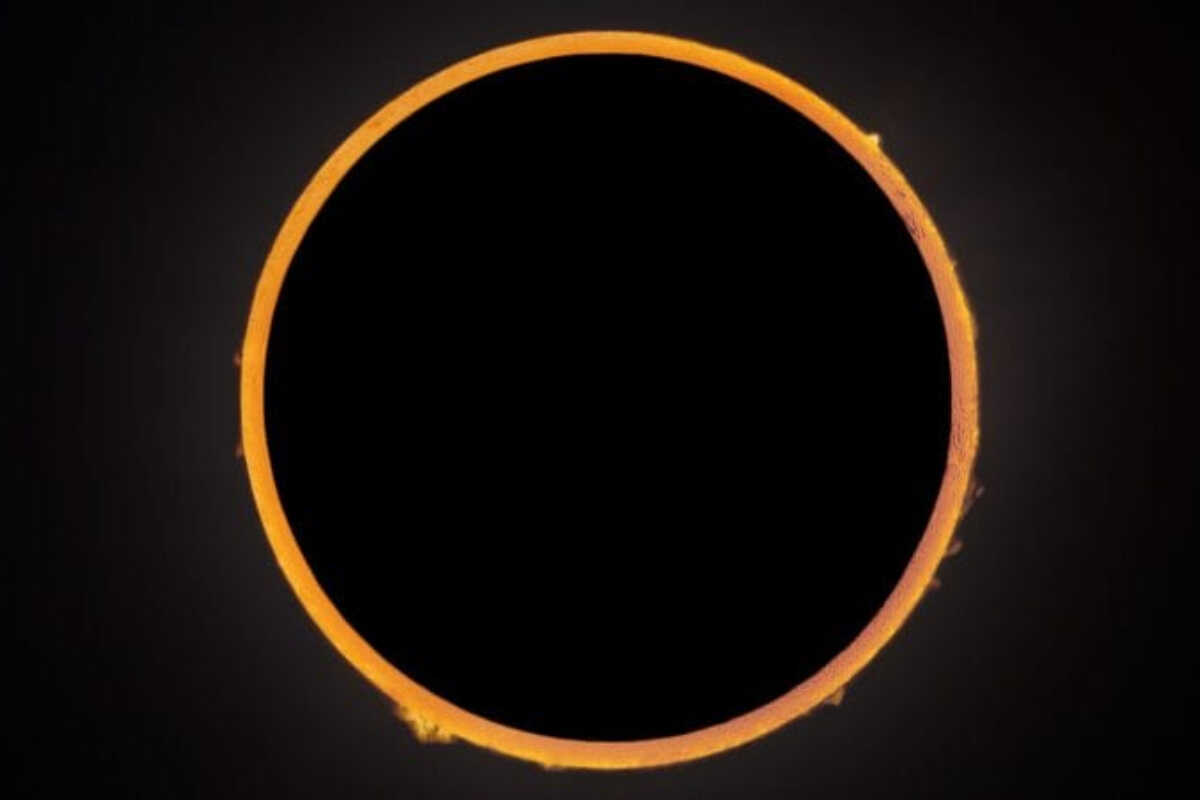
The latest developments regarding the annular solar eclipse on 17 February 2026 show several updates regarding the observation route, the readiness of research stations, and the potential for live broadcasts for the global public.
This astronomical phenomenon is confirmed to cross remote areas around Antarctica and the Southern Ocean. Based on updated observation data, the ‘ring of fire’ path remains centred on the Antarctic ice region, with a maximum duration of the ring phase of approximately 2 minutes and 20 seconds at the optimal point.
Several research stations have confirmed their readiness for observation. These include the Concordia Research Station, managed by France and Italy, and the Mirny Station, owned by Russia in Queen Mary Land.
Both locations are expected to experience a ring phase of more than one minute with relatively stable sky conditions, weather permitting.
Meanwhile, the McMurdo Station, operated by the United States, is confirmed to only witness a partial eclipse, with approximately 86 percent of the Sun’s disc covered by the Moon.
Updated trajectory data shows that a small part of southern South America and southern Africa remains within the partial eclipse zone. However, the majority of the main path remains in remote waters, so the opportunity for direct public observation is very limited.
Indonesia is once again confirmed not to be included in the observation area. When the peak phase occurs at 12:12:04 UTC (19:12:04 WIB), the Sun will already be below the horizon for the Indonesian region.
Scientists are using this moment to study the dynamics of the Sun’s corona, the characteristics of the Moon’s atmosphere, and the effects of solar radiation in the South Polar region.
Although the observation locations are difficult to reach, several international astronomical institutions are reportedly preparing documentation and online broadcasts so that people around the world can still follow the phenomenon.
An annular solar eclipse occurs when the Moon is at its farthest point from Earth (apogee), so its apparent size is smaller than the Sun. This condition creates the effect of a bright ring of light around the Moon.
For additional information, people in Indonesia will still have the opportunity to witness a total lunar eclipse on 3 March 2026, which can be observed from the Indonesian region.
This phenomenon on 17 February 2026 once again confirms how the configuration of the positions of the Earth, Moon, and Sun creates spectacular celestial events, as well as being an important moment for the global scientific community to deepen astronomical research in the extreme Antarctic region.
Source: Accanines
The comet C/2026 A1 (MAPS), a rare member of the Kreutz sungrazer, is predicted to shine brightly in the Earth’s sky in April 2026, as bright as Venus, if it survives the heat of the Sun.
A complete guide on how to see the parade of 6 planets aligned at the end of February 2026. Tips on location, best time in Indonesia, and the equipment needed.
Find a complete schedule and how to see the parade of 6 planets aligned in February 2026 from the Indonesian region. A rare phenomenon at the beginning of Ramadan!
Explore a collection of myths about solar eclipses from various cultures around the world and the scientific facts to prove their truth. The most complete astronomy education.
Astronomers explain that a solar eclipse is not a random event, but a phenomenon that can be predicted scientifically through calculations of the Moon and Earth’s orbits.
Copyright @ 2026 Media Group - mediaindonesia. All Rights Reserved