
Latest Poll: Majority of US Citizens Confused About Trump's Intentions in Iran
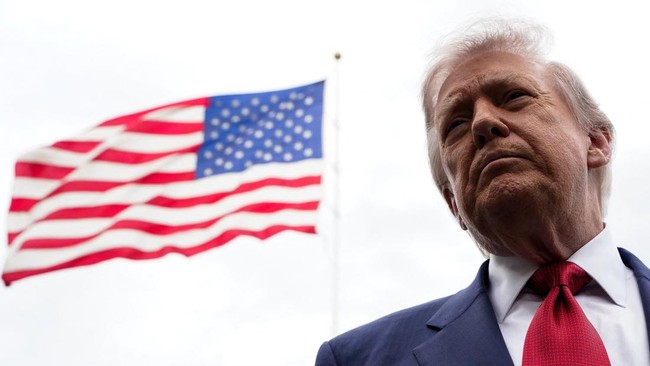
Public support in the United States for President Donald Trump continues to face significant pressure amid the protracted war against Iran. The latest Reuters/Ipsos poll indicates that the majority of US citizens believe Trump has failed to clearly explain the reasons for their country’s involvement in the conflict, which has shaken the global energy markets and sharply driven up domestic petrol prices.
Although Trump’s approval rating has slightly improved from its lowest point a few weeks ago, the majority of US citizens still link the rise in energy prices and the worsening of household economic conditions to his administration’s policies. This situation poses a serious threat to the Republican Party ahead of the congressional midterm elections in November.
The war, which began with a joint US-Israeli bombing campaign against Iran on 28 February, is increasingly pressuring everyday American life. Many citizens are now considering cancelling their summer holiday plans due to the high cost of fuel, while uncertainty about the conflict’s end continues to loom.
The Reuters/Ipsos poll, completed on Monday (11/5/2026), shows that two out of three US citizens believe President Donald Trump has not provided adequate explanations for the reasons the US is at war with Iran.
In the four-day survey, around 66% of respondents, including one in three Republican voters and nearly all Democratic voters, said Trump has not “clearly explained the objectives of US military involvement in Iran.”
The war, which has lasted more than two months, began on 28 February through a joint US and Israeli bombing campaign against Iran. The conflict temporarily eased in recent weeks as both sides began floating peace proposals, but its economic impacts continue to be felt in the US.
One of the most tangible impacts is the surge in petrol prices, which have risen by around 50% nationally. This increase was triggered by Iran’s effective closure of the Strait of Hormuz, a vital route that typically carries about one-fifth of the world’s oil trade, despite US warships attempting to reopen the route for oil tankers.
The Reuters/Ipsos poll shows growing public concern over household economic conditions.
As many as 63% of US citizens said their household finances have been affected by the latest petrol price increases. This figure is up from the Reuters/Ipsos poll on 17-19 March, which showed 55% of respondents experiencing similar pressures.
Nevertheless, Trump’s approval rating has slightly improved. Around 36% of respondents expressed approval of Trump’s performance, up two percentage points from the late April poll that placed his satisfaction rating at 34%, the lowest level during his second term.
However, Trump’s popularity remains below the 40% level he had before the war began. When starting his term in January 2025 after winning the 2024 election, Trump recorded an approval rating of 47% thanks to promises to lower the cost of living for Americans.
The poll has a margin of error of around 3 percentage points.
The poll results also indicate that the public is beginning to blame the Trump administration for the surge in fuel prices.
Around three-quarters of US citizens, including half of Republican voters, believe the Trump administration bears at least substantial responsibility for the petrol price increases.
When asked which political party is most responsible, 65% of respondents pointed to the Republicans, while only 27% blamed the Democrats.
Concerns over energy prices are also expected to influence the political landscape ahead of the US congressional midterm elections. The Republicans currently hold slim majorities in both the House of Representatives and the Senate.
The Republican strategy to retain control of the House received a boost from several recent court rulings that could result in more favourable electoral districts for the party. However, Republican strategists believe their chances would be much better if petrol prices fall in the near term.
The problem is that there are no signs of an agreement between Washington and Tehran being reached soon.
Around three out of 10 US citizens said they are likely to reduce their summer holiday plans if petrol prices remain high. Many respondents admitted they would cancel trips or opt for shorter distances.
Trump himself has repeatedly promised that petrol prices will fall when the war ends. However, analysts warn that a decline in energy prices is unlikely to occur quickly even if the conflict eases.
The poll also shows that the US public has yet to see which side is truly gaining the upper hand in the conflict.
Only one in three US citizens believes the US has the advantage in the war against Iran. Meanwhile, around one in seven respondents believe Iran has the upper hand. The rest say they are unsure or believe no side is truly in the lead.
The latest Reuters/Ipsos poll was conducted online and involved 1,254 adult respondents across the US.