
Latest Iran-US Negotiations Hit a Dead End?
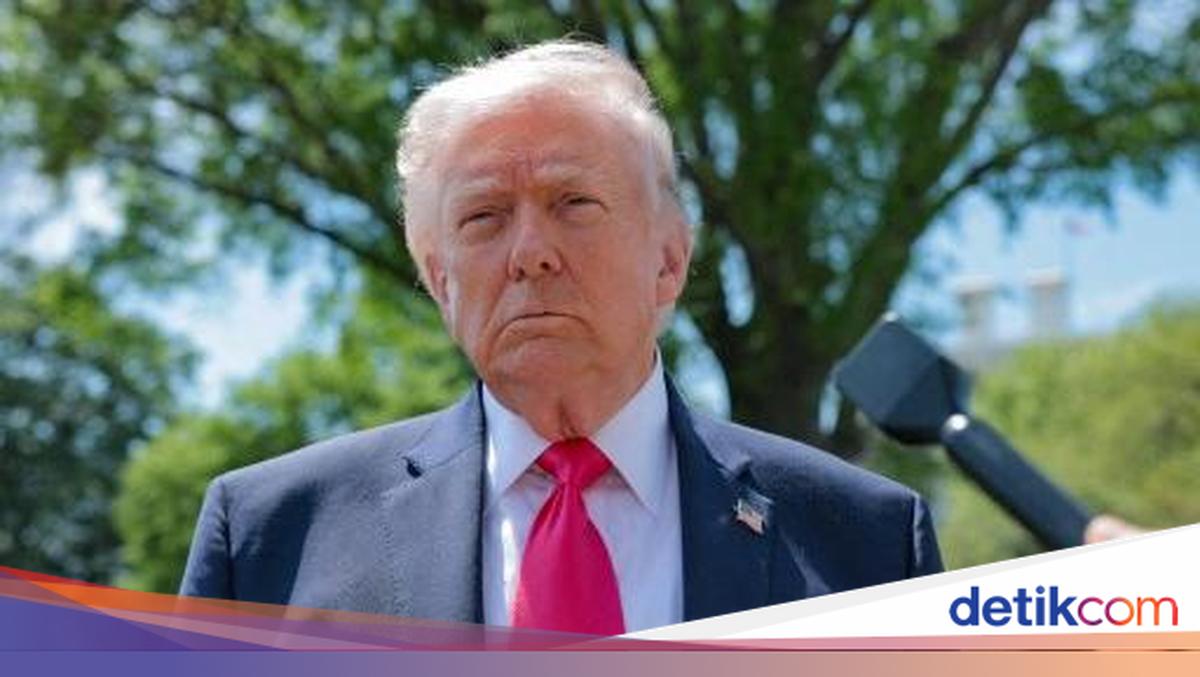
Peace negotiations between the United States (US) and Iran have yet to reach an agreement. Iran’s new proposal regarding the Strait of Hormuz has displeased President Donald Trump.
According to Anadolu Agency on Tuesday (28 April 2026), Trump received an explanation of Iran’s new proposal during a meeting in the White House Situation Room on Monday (27 April). The latest proposal prioritises Iran reopening the Strait of Hormuz, on the condition that the US lifts its naval blockade on Tehran’s ports.
According to several US and Iranian officials, the proposal does not address what should be done with Tehran’s nuclear programme.
It is unclear exactly what has dissatisfied Trump with Iran’s proposal. However, he has long insisted on the US’s two nuclear demands.
An unnamed US official said accepting Iran’s proposal would openly deny Trump’s victory.
“The United States will not negotiate through the press—we have clearly explained our boundaries, and the president will only make a deal that is good for the American people and the world,” stated White House spokesperson Olivia Wales to the NYT.
Iran’s new proposal was first reported by US media outlet Axios on Sunday (26 April) local time, shortly after reporting that Iran’s Foreign Minister Abbas Araghchi had submitted the proposal to mediator Pakistan.
According to Axios, Iran’s latest proposal suggests extending the ceasefire for a long period or making it permanent, while nuclear negotiations would only begin after the Strait of Hormuz is reopened and the US naval blockade is lifted.
The US has insisted that Iran suspend uranium enrichment for at least a decade and move its enriched uranium supplies out of the country. Tehran has not officially accepted those demands.
Iran Demands Guarantees Against Repeated US-Israel Attacks
The Iranian government has emphasised that it needs credible guarantees against further attacks from the United States (US) and Israel before it can ensure security in the oil-rich Gulf region.
Quoted by AFP on Tuesday (28 April 2026), the statement was delivered by Iran’s Ambassador to the United Nations (UN), Amir Saeid Iravani, during a UN Security Council session initiated by Bahrain.
In the meeting at UN headquarters on Monday (27 April), dozens of countries condemned Iran for taking control of the vital Strait of Hormuz.
However, Iravani stressed that stability in the region can only be achieved if aggression is stopped, accompanied by “credible guarantees” for no further attacks in the future.
“Lasting stability and security in the Persian Gulf and the broader region can only be achieved through the sustained and permanent cessation of aggression against Iran, accompanied by credible guarantees against the recurrence of attacks and full respect for Iran’s legitimate sovereign rights and interests,” Iravani stated before the UN Security Council.
Iravani also complained that countries only criticised Iran without condemning the US naval blockade on Tehran’s ports.
“The United States acts like pirates and terrorists, targeting commercial ships through coercion and intimidation, terrorising crews, illegally seizing vessels, and holding crew members hostage,” he said.
“However, none of those expressing concern for international navigation dared to mention or condemn these terrorist acts in today’s meeting,” Iravani criticised the UN Security Council member states.
Iravani also accused the US and Israel of launching an “unjustified large-scale war of aggression” against Iran. He blamed the allied duo for escalating tensions in the region and disrupting maritime security in the Strait of Hormuz.
“Since 28 February, the United States and the Israeli regime have waged an unjustified large-scale war of aggression against Iran,” said Iravani, as reported by TRT World.
He accused US and Israeli aggression against Iran of violating the UN Charter and threatening regional and global stability.
Iravani described the US’s imposition of a maritime blockade, including the seizure of Iranian commercial ships and detention of crews, as “dangerous measures” and “violations of international law”.
US-Iran Spat Over Nuclear Programme
The US and Iran clashed at the United Nations (UN) forum over Tehran’s nuclear programme. The US protested Iran’s election as one of dozens of vice-presidents in a month-long conference to review the Nuclear Non-Proliferation Treaty (NPT).
Various groups nominated 34 vice-presidents for the conference, with conference chair, Vietnam’s UN Ambassador Do Hung Viet, stating that Iran was selected by “the Non-Aligned Movement group and other countries”.
US Assistant Secretary for the Bureau of Arms Control and Non-Proliferation, Christopher Yeaw, said at the conference that Iran’s election was an “insult” to the NPT.
He assessed that “it is undeniable that Iran has long shown contempt for its NPT non-proliferation commitments” and has refused to cooperate with UN nuclear watchdogs to resolve questions about Tehran’s nuclear programme.
Yeaw called Iran’s election “a highly embarrassing matter that tarnishes the credibility of this conference”.
The US reaction was rejected by Iran’s Ambassador to the International Atomic Energy Agency (IAEA), Reza Najafi. He described the US statement as “baseless and politically motivated”.
“It is unjustifiable that the United States, as the only country to have used nuclear weapons, and a country that continues to expand and modernise its nuclear arsenal… seeks to position itself as an arbiter of compliance,” said Najafi.